

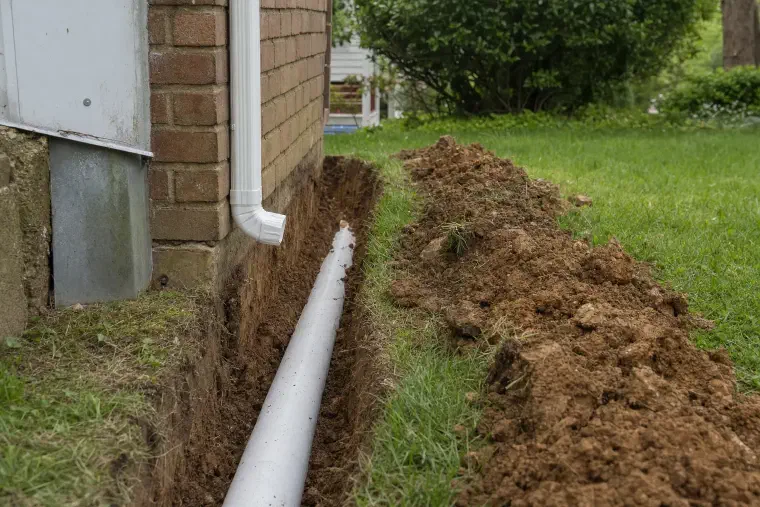
Yes, a downspout can drain into an underground pipe, and it is a good way to carry roof water far from the house. The pipe has to be solid, it has to slope downhill all the way, and it has to end somewhere that can take the water. Where it ends matters more than anything else.
The short version
- A buried pipe works well when it is solid, sloped down and clear at the far end.
- It should not connect to the drain around your foundation.
- It can end on a lower part of the yard, in a dry well, or at a storm drain where your county allows it.
- Leaves and shingle grit slip into the pipe and clog it, so the gutters above have to stay clean.
- If you do not know where an old buried line goes, find out before you trust it.
Can a downspout connect to an underground pipe?
Yes. Plenty of houses are built this way, and it is the usual fix when you want the water gone without a hose lying across the lawn. A federal guide says to connect the downspouts to piping that carries water to a sloping final grade (opens in a new tab) farther than 5 feet from the foundation.
That same guide gives a second option: an underground catchment farther than 10 feet out. Either way, the water leaves the house and does not come back to it.
Where should an underground downspout pipe end?
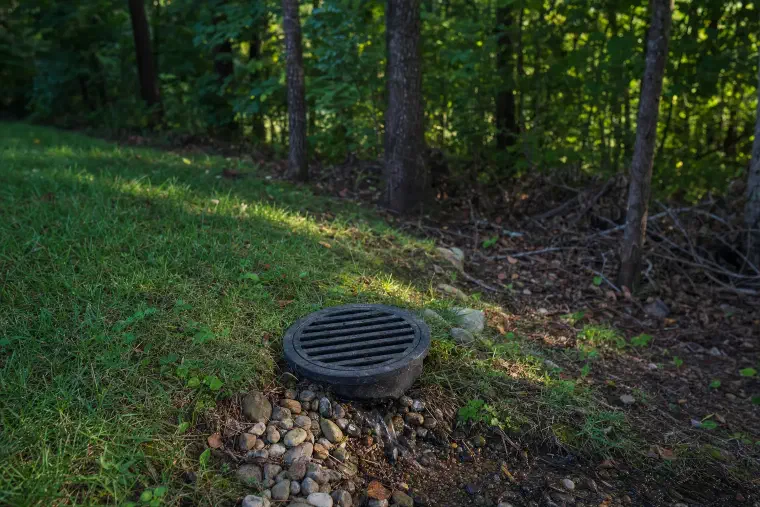
On open ground that slopes away from the house, or in a dry well. A dry well is a buried pit filled with gravel that lets water soak in slowly. A pipe that just stops in the soil is the one bad answer, because the water has nowhere to go.
Here is how the usual endings compare:
| Where the pipe ends | Good for | Watch out for |
|---|---|---|
| A lower part of the yard, open to daylight | Sloped lots | Water running onto a neighbor, a walk or the driveway |
| A dry well | Flat lots | Needs room, and soil that drains |
| A storm drain | Lots with no room | Your county and HOA may have rules |
This Old House says a dry well should be at least 10 feet from the foundation and 3 feet from any property line (opens in a new tab). A stormwater brief from University of Maryland Extension notes that downspout water is often directed to another impervious surface such as a street (opens in a new tab), and that is the kind of ending to check on first.
Should a downspout drain tie into the foundation drain?
No. The foundation drain is the pipe around the footing that keeps groundwater off your basement walls. Roof water is a lot of water in a short time. The federal guide says the downspout piping should be not connected with the foundation drain system (opens in a new tab).
The annoying part is that this tie-in is easy to do by accident. An old buried line may run straight into a drain you cannot see. In a hard rain, that water can end up somewhere you do not want it.
What kind of pipe works best?
Solid pipe is the safe pick. This Old House says that if the grade allows, you can use solid PVC pipe to carry water to a lower area (opens in a new tab) of the yard, and adds that PVC pipes resist corrosion and handle large volumes of water.
Size and slope matter too. The same guide uses a 4-inch pipe (opens in a new tab) and says to slope the trench away from the house (opens in a new tab) at least 1/4 inch per foot. A pipe with a dip in it holds water, and that standing water collects grit.
Do buried downspout pipes clog?
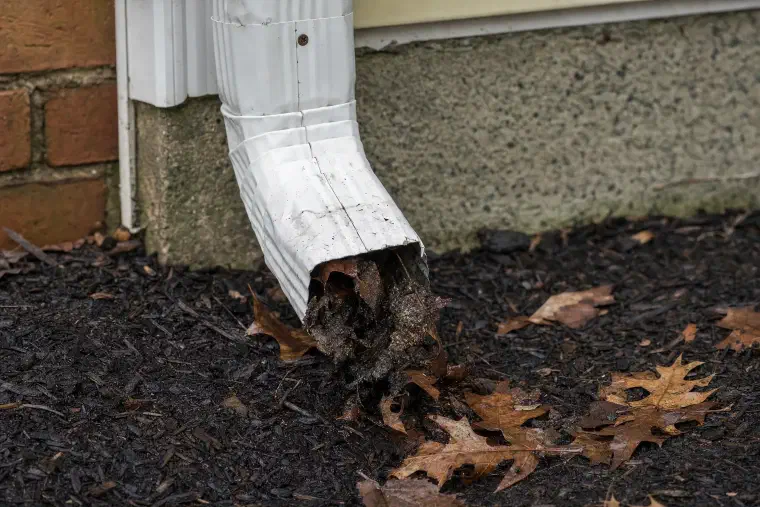
They do, and it is the main reason people regret burying one. Leaves, twigs and the grit that comes off shingles wash down the downspout and settle in the pipe. This Old House says clogs can occur from leaves, twigs and other debris (opens in a new tab) and that you can often clear one with a plumber’s snake or a garden hose.
The same page says freezing can be a concern in colder climates (opens in a new tab). A pipe full of leaf mush in January is a good way to get a frozen plug and a gutter that spills over the front.
We see the other side of this a lot. Under the big trees in Ellicott City, a full gutter spills over and soaks the fascia, the board the gutter hangs from, until it rots. Our gutter cleaning covers the troughs, the downspouts and the underground lines, so the whole path gets cleared and not just the part you can reach from a ladder.
How do I find out where my buried downspout goes?
Run a hose into the top of the downspout and watch. If water comes out of a pop-up cap or a pipe end in the yard, you have your answer. If it never shows up, the line is blocked or it goes somewhere hidden.
Do this before you change anything. The University of Maryland Extension brief tells homeowners to obtain any permits from the local government or homeowners association (opens in a new tab) before they change where a downspout sends water. It also says to cap the standpipe (opens in a new tab) when you cut off an old buried line, and not to plug it with rags.
Is an underground pipe better than a surface extension?
Not always. A pipe in the ground keeps the yard clear for mowing, and it can carry the water farther. A surface extension is cheaper and easy to check. If the pipe will be steep, long or end in a flat spot, a surface extension may be the better choice. Our piece on how far a downspout should extend goes through the lengths and the slope.
Common questions
Can I connect two downspouts to one underground pipe?
You can, but then one pipe has to carry the water from both. On a big roof that is a lot of water in a storm. When in doubt, give each downspout its own run, or have someone look at the roof area first.
Can I put a gutter guard on to keep the pipe clear?
It helps. Guards keep most leaves out of the gutter and the pipe below it, but fine grit still gets through. Our article on gutter guards covers what they stop and what they do not.
How do I know if my buried line is clogged?
Water pouring over the gutter in a storm, or backing up at the bottom of the downspout, is the usual sign. Try a hose test first. If the water does not come out the far end, the line needs clearing.
Does the roof inspection include the gutters?
Yes. Our free roof inspection includes a look at the gutters and downspouts, so you can book one if you are not sure what is wrong.
What to do next
Run a hose through your downspouts after the next dry day and see where the water comes out. If it does not come out, or it pools near the wall, call us. We can clear the lines, and our gutter repair covers downspouts that are crushed, loose or disconnected. We answer the phone any time, day or night.


