Yes, mold from a leaking roof can definitely make you sick. Indoor dampness and mold are linked to a 30 to 50 percent increase in respiratory symptoms, including cough, wheeze, and asthma attacks. Mold spores can start growing within 24 to 48 hours of water intrusion, and the health effects can range from mild irritation to serious infections for those at higher risk.
TL;DR
- Mold from a roof leak can cause allergic reactions, asthma flare-ups, and respiratory infections.
- People with asthma, allergies, or weakened immune systems face greater risk, and children and older adults are more vulnerable.
- Roof leaks feed mold in hidden spots like attics and wall cavities, often for months before anyone notices.
- Fixing the roof leak is the only permanent solution; cleaning alone won’t stop it.
- A free roof inspection can catch moisture entry points before mold becomes a health problem.
Yes, mold from a leaking roof can definitely make you sick
Mold from a roof leak can make you sick by triggering allergic reactions and respiratory problems, and prolonged exposure can lead to new-onset asthma and serious lung infections. The allergens and irritants mold releases inflame the airways, and for people with mold allergies, the immune response can be severe. Research from the National Institute of Environmental Health Sciences notes that chronic exposure has also been associated with headaches, fatigue, and in rare cases cognitive effects, though the primary threat remains respiratory.
The mold itself doesn’t need to be visible to cause symptoms. A hidden colony above a ceiling or behind a wall can release enough spores to affect the air you breathe in living spaces. The real danger isn’t a single sniff of musty air; it’s the daily, ongoing exposure that wears down the body’s defenses over weeks or months.
What health problems does mold from a roof leak actually cause?
Mold from a roof leak can cause a stuffy nose, cough, wheezing, skin rash, and sore throat, and it can worsen asthma and trigger respiratory infections like bronchitis. The EPA explains that mold produces allergens, irritants, and in some cases mycotoxins, all of which can provoke these reactions. The symptoms often look like a cold that won’t go away, or seasonal allergies that never seem to end, even when pollen counts are low.
Beyond the immediate irritation, the NIH meta-analysis shows that living in a damp, moldy environment substantially raises the odds of developing asthma and experiencing asthma exacerbations. Upper respiratory symptoms, allergic rhinitis, and hypersensitivity pneumonitis are also documented outcomes. The tricky part is that symptoms can be delayed, so someone might not connect a lingering cough to a roof leak that started weeks earlier.
Who is most at risk from mold exposure?
People with asthma, mold allergies, weakened immune systems, infants, children, and the elderly are most at risk for more severe symptoms from mold exposure. For those with asthma, mold spores can trigger attacks that require emergency treatment, and for the immunocompromised, certain molds can cause invasive infections. The CDC notes that reactions can be immediate or delayed, so someone might feel fine in the room but wake up hours later with congestion and a scratchy throat.
Infants and children are especially vulnerable because their lungs are still developing, and their immune systems are less experienced at fighting off environmental triggers. Older adults often have pre-existing respiratory conditions that mold exposure makes worse. Even otherwise healthy adults can develop new allergies or sensitivities after prolonged exposure, which is why ignoring a known leak isn’t a good strategy for anyone in the house.
How does a roof leak turn into a mold problem?
A roof leak introduces moisture into the attic, insulation, and drywall, and mold spores that are always present in the air can begin colonizing wet surfaces within 24 to 48 hours. The CDC points out that mold needs three things: moisture, a food source (like wood or paper), and the right temperature. A roof leak supplies the moisture, and the rest of the attic is already a buffet.
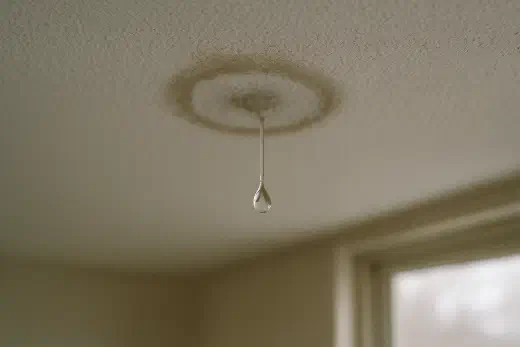
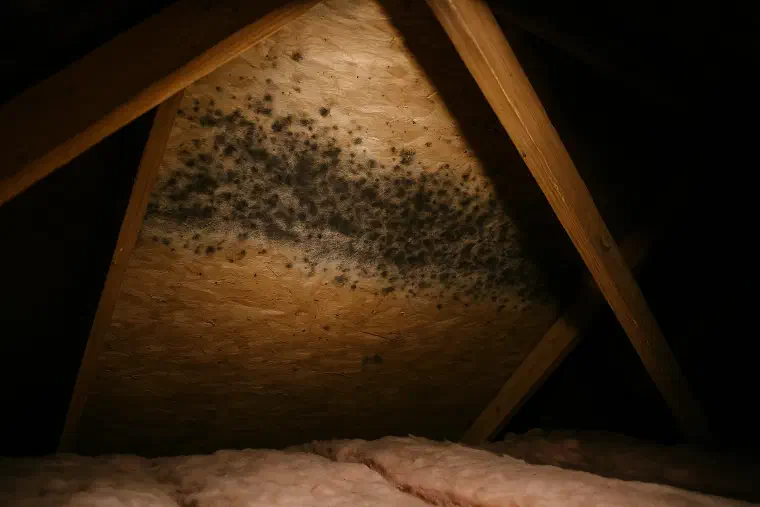
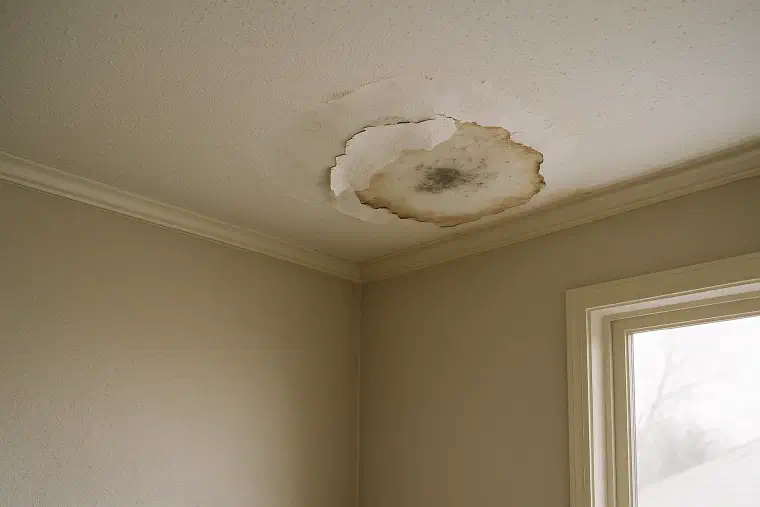
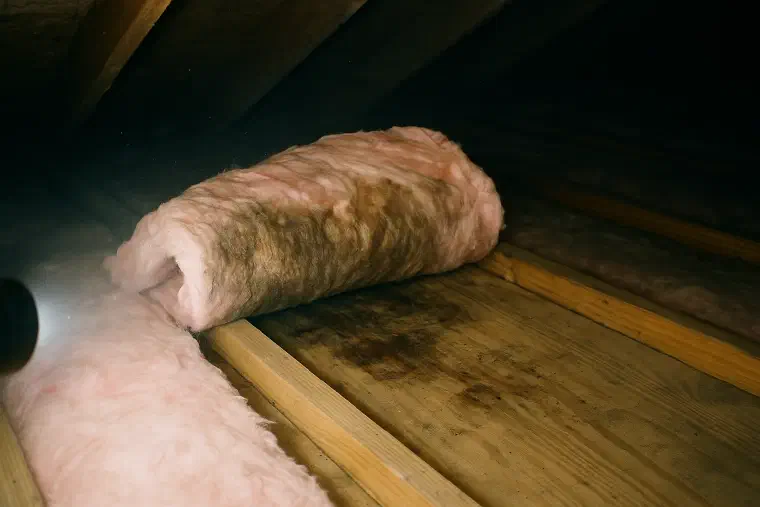
What makes roof leaks especially sneaky is that the water often spreads sideways along sheathing or down wall cavities before you ever see a stain on the ceiling. By the time a brown ring appears, the mold may have been growing for weeks. Insulation soaked from above can lose its R-value and become a damp blanket that never fully dries, creating a cycle that feeds mold even when the active leak is small.
Signs you have mold from a roof leak (not just a plumbing problem)
A musty attic smell, water stains running down a wall or following the roof slope, wet insulation, and visible mold on the underside of roof sheathing usually point to a roof leak rather than a plumbing or groundwater issue. The location and pattern of the damage are the main clues. The table below can help you trace the source.
| Roof-leak mold indicators | Plumbing or groundwater mold indicators |
|---|---|
| Ceiling stains that follow a roof slope or valley | Stains directly below a bathroom, kitchen, or pipe chase |
| Mold or mildew on attic sheathing, rafters, or top plates | Mold on baseboards, around sump pits, or in the basement |
| Wet insulation in the attic, especially after rain | Damp drywall or flooring near a water heater, washing machine, or under-sink cabinet |
| Musty odor strongest in the attic or at the top of stairs | Musty odor strongest in the basement or crawl space |
| Drip marks on attic floorboards or insulation paper | Puddling or efflorescence on concrete walls or floors |
If the signs point upward, the next step is a thorough roof check. A free roof inspection can locate the exact entry points, and an attic venting assessment can show whether trapped moisture is making the problem worse.
Why stopping the leak is the only long-term fix
Cleaning mold without fixing the leak is temporary, because mold will return as long as moisture continues to enter the building. Remediation studies show that asthma symptoms and respiratory infections drop significantly only after the underlying dampness is corrected and the mold is properly removed. Spraying bleach on a moldy attic rafter while the roof still leaks is about as effective as drying the floor while the faucet is still running.
A proper roof repair that closes every water entry point stops the cycle. In many cases, beefing up attic venting is equally important, because a poorly vented attic can keep humidity high enough to support mold even after the leak is sealed. The goal is a dry, well-ventilated space where mold can’t take hold again. That’s why Roofing NextGen Ellicott City always looks at the whole system, not just the hole.
What to do if you find mold from a roof leak
First, stop the water entry with emergency tarping if needed, then contain the mold area, clean small patches using EPA-recommended methods, hire a professional remediation company for large contamination (over 10 square feet), and finally have the roof professionally repaired to prevent recurrence. The EPA advises against using bleach on porous surfaces because it doesn’t penetrate; instead, use a detergent and water solution for non-porous surfaces and consider discarding saturated porous materials like insulation or drywall.
While you wait for a permanent fix, keep the area contained to avoid spreading spores through the house, and run a dehumidifier if the air is humid. Don’t postpone the roof repair thinking the mold will stay gone after cleaning. It won’t. An emergency roof repair can bridge the gap, and we answer the phone 24/7 when water is coming in fast.
How Roofing NextGen Ellicott City can help stop the moisture at its source
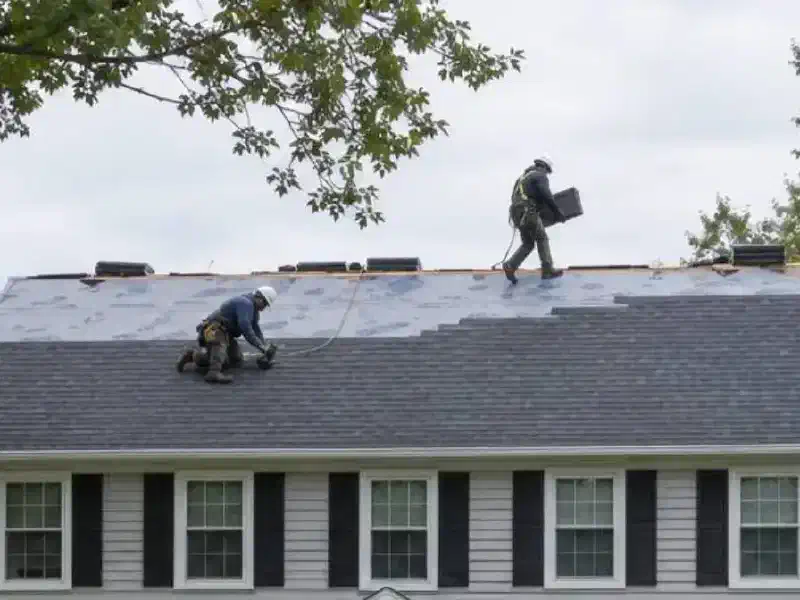
A free roof inspection from Roofing NextGen Ellicott City finds every entry point where water is getting in. We walk the roof, lift shingles to check for improper nailing or failed sealant, and access the attic when it’s safe to do so. The report includes photos and a measured square footage so you know exactly what you’re dealing with. If the fix is a localized roof repair, we’ll do just that, no pushing a whole new roof when a repair will stop the leak for good.
When the damage is too extensive for a patch, a roof installation includes new underlayment, ice-and-water shield at all vulnerable areas, new flashing, and a ventilation system designed to keep the attic dry. That last part matters because a sealed-up roof without proper airflow can still breed mold from condensation alone. We also check attic venting as part of every replacement, because a dry attic is a mold-free attic. Our phone is answered 24/7, and we’ve seen enough Howard County weather to know that a roof leak waits for nobody.
Frequently asked questions
How long does it take for mold to start growing after a roof leak?
Mold can start growing on wet materials within 24 to 48 hours, given the right temperature and a food source like wood or drywall paper. In a warm attic after a rainstorm, spores can germinate that fast, though visible colonies may take several days to appear. The sooner the moisture source is stopped, the less chance mold has to take hold.
Can I clean small mold spots myself, or do I need a professional?
Small patches (under 10 square feet) on hard surfaces can be scrubbed with detergent and water, but the EPA recommends professional remediation for larger areas, for porous materials that can’t be thoroughly dried, or when the contaminated area includes insulation or HVAC ductwork. Always wear protective gear, and seal off the work area so spores don’t spread.
Does homeowners insurance cover mold from a roof leak?
It depends on the policy and the cause. If the mold resulted from a sudden, accidental event (like a storm-ripped shingle that led to a leak), coverage is more likely. If the leak was gradual and the mold grew from neglect or lack of maintenance, many policies exclude that type of damage. Read your policy or ask your agent, and document the damage with photos.
Should I move out of my house if there is mold from a roof leak?
Most of the time, you don’t need to leave, especially if the mold is contained to a small area and remediation is underway. However, if the contamination is extensive, or if someone in the household has severe asthma, a compromised immune system, or mold allergies, temporary relocation may be the safer option while cleanup is completed. A doctor can help weigh the risk.
What’s the difference between mildew and the mold that makes you sick?
Mildew is a surface-level fungus that usually appears as a flat, powdery white or gray growth on damp surfaces like shower tile. It can cause mild allergy symptoms but is generally less invasive. The mold that grows from a roof leak tends to be darker (black, green, or brown) and can penetrate porous materials, releasing more spores and mycotoxins, which are more likely to trigger serious respiratory reactions.