

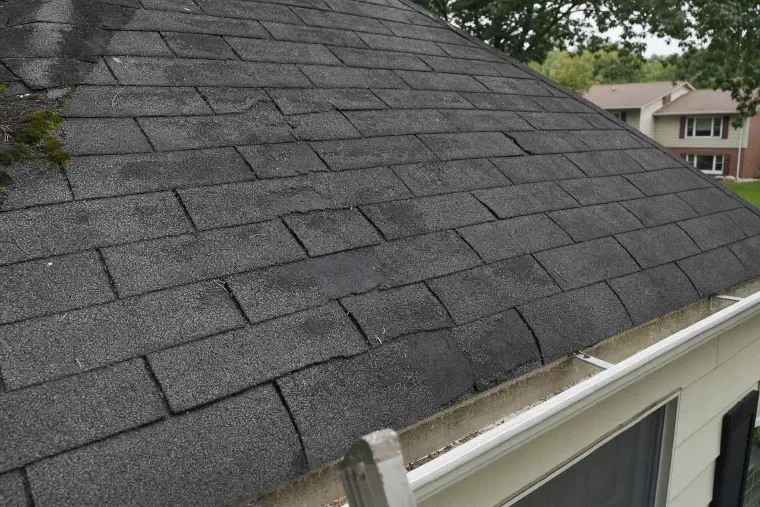
Sometimes you can put a metal roof over shingles, but it is rarely the best way to do it. The building code allows it in some cases, and some metal systems are made for it. The catch is that you cannot see or fix the wood deck under the old shingles, and that is where most roof trouble hides.
The short version
- The code can allow a metal roof over one layer of sound shingles, but not over wet or worn-out ones.
- A roof that already has two layers has to come off first.
- Metal over shingles needs a flat, ventilated base, usually wood strips, not metal laid straight on the shingles.
- Standing seam panels typically need a solid deck, which the old shingles are not.
- We lean toward a tear-off, because it lets us see and fix the deck.
Does the building code allow a metal roof over old shingles?
Often yes, with conditions. The model residential code lets a new roof go over an existing one when the new covering follows its maker’s instructions (opens in a new tab). It also says a complete, separate system such as standing seam metal, built to carry its own loads, does not need the old roof removed (opens in a new tab).
The same guide lists when the old roof must come off first. That includes water-soaked or worn-out roofing (opens in a new tab) and a roof that already has two or more layers. It is one city’s summary of the model code, not Howard County’s rulebook, so ask the county permit office what it has adopted before you plan anything.
What goes wrong when metal sits on old shingles?
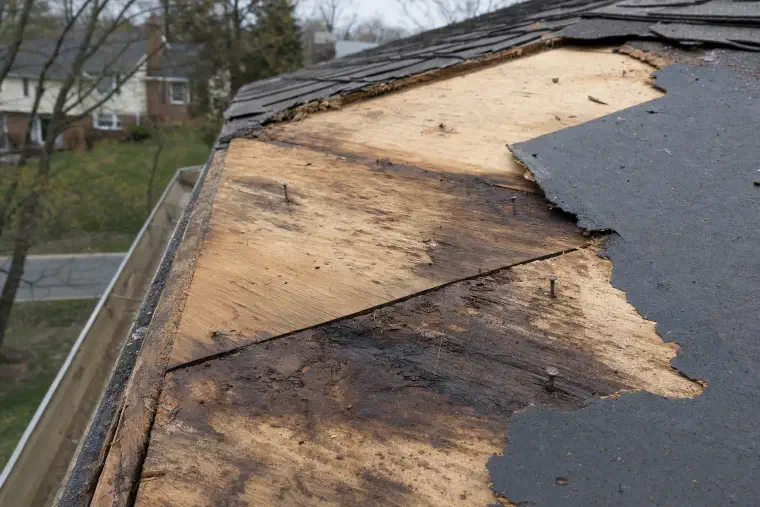
The old roof gets buried, and nobody can inspect it again. We see the same with a second layer of shingles: it traps heat, hides the condition of the deck and cannot be checked. Metal over shingles hides the deck in the same way.
Three problems tend to follow:
- Rot you never saw. A soft or damp board under the shingles stays under the metal. Metal roofs can last 40 to 70 years (opens in a new tab), so a bad board has a long time to get worse.
- Trapped moisture. Water vapor and any damp in the old layer have nowhere to go. That is why installers lift the metal off the shingles instead of laying it flat on them.
- Bumps. Old shingles curl and lose their surface. Metal laid on top can show every ridge and cupped edge underneath.
How do installers put metal over shingles at all?
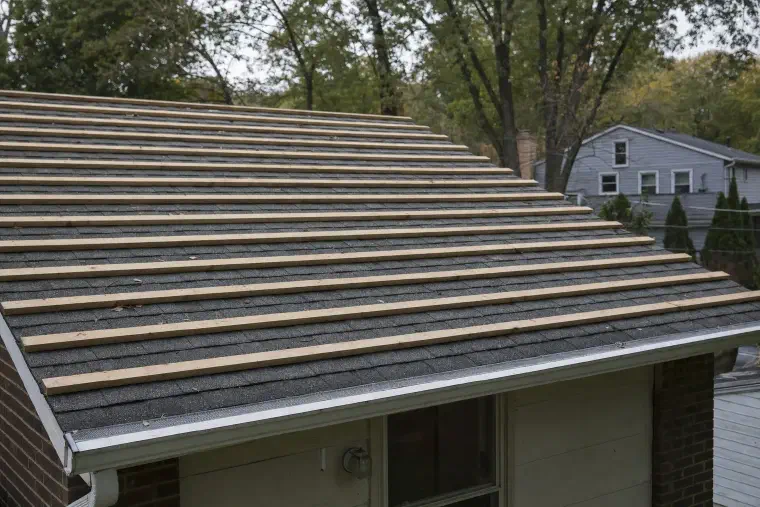
They add a flat base on top of the old roof. The usual way is wood strips, called battens or furring, fastened in rows through the shingles into the deck, with the metal screwed to those. The strips also leave a gap for air. The Building America guide says venting can be done with battens (opens in a new tab) between the roof deck and the metal.
Not every metal panel works this way. The same guide says exposed-fastener panels are stiff enough (opens in a new tab) to go over spaced wood battens, while standing seam panels typically must go on a solid deck (opens in a new tab), not over strapping. Standing seam is the style most people picture when they want a clean modern look, and we explain how its seams differ in snap lock vs mechanically seamed standing seam.
Should you tear the shingles off first?
In our experience, yes, and that is how our metal installs are done. We take the old roof off so we can look at the deck, replace any rotted wood and fasten the new panels to sound wood. The same Building America guide lists the steps for a roof replacement, and the first is to remove all existing roofing (opens in a new tab), then check the deck for rot or wear.
Tear-off is not extra work we invented. Our roof installation work already includes tearing off the existing roof, up to two layers, with the dumpster, haul-away and disposal fees. A second layer beyond that adds a per-square charge. Standing seam metal typically runs two to two and a half times the price of asphalt. Our piece on what a metal roof costs breaks that down.
Is it cheaper to leave the shingles on?
Up front, usually a little. You skip the tear-off and the disposal. Over the life of the roof it is less clear, because a hidden problem costs more to fix once metal is screwed down on top of it.
| Metal over old shingles | Metal after a tear-off | |
|---|---|---|
| Tear-off and disposal | Skipped | Part of the job |
| Deck checked and fixed | No, it stays hidden | Yes, rotted boards replaced |
| Base for the metal | Wood strips on the old roof | Solid deck, or strips if the panel allows |
| Choice of panel | Narrower, often exposed-fastener | Wider, including standing seam |
| Moisture risk | Higher, harder to see | Lower, you can see the deck |
| Later repairs | Harder, two roofs deep | Easier to reach |
Asphalt shingles around here realistically last 18 to 25 years. If your roof is near the end of that, there is a fair chance the deck under it has had a rough life.
When might metal over shingles make sense?
Only in narrow cases. The roof has a single layer, the shingles are flat and dry, the deck is sound, and the metal maker’s instructions allow it. Even then, we would want someone to open a few spots and look before any panel goes on.
A buried flat roof under the shingles is another thing we watch for. It makes the job unpredictable, and it is one more reason to see what is down there. If you want a second opinion, our free roof inspection includes a walk on the roof and a written report, with no obligation to book work.
Common questions
Can you put a metal roof over two layers of shingles?
No, not under the model code. It requires removing the old roofing (opens in a new tab) where the roof already has two or more applications of any roof covering. The weight and the hidden deck problems are the reason.
Do you need underlayment between the shingles and the metal?
It depends on the panel and the system, so follow the maker’s instructions. The Building America guide says a continuous layer of felt, synthetic underlayment or membrane (opens in a new tab) is needed to protect the sheathing from condensation. We cover the choices in what goes under a metal roof.
Does metal over shingles hurt the metal roof warranty?
It can, so read the warranty before you sign. Some makers require a solid deck or a certain base, and a roof laid another way may not qualify. Ask for the metal maker’s written instructions for installing over an existing roof.
What to do next
If you are thinking about metal, start by finding out what is under your shingles. Have the roof looked at, then decide whether to overlay or tear off. Our metal roofing installation page explains where metal makes sense, and we will tell you honestly when it does not. Ask for a free quote and we will talk it through.


