Gutter guards don’t cause ice dams. Heat leaking from your house into the attic does that. But ice can build up on and around a guard, and some shapes of guard hold snow and ice more than others.
The short version
- A guard doesn’t make the heat that melts the snow, so it can’t start a dam.
- Some guards, especially curved covers, give snow and ice a shelf to sit on.
- Fine mesh that sits flush with the gutter is the kind made for snowy regions.
- Clear gutters matter more than guards for ice at the edge.
- Air sealing and insulation in the attic are what stop dams.
Do gutter guards cause ice dams?
No. The University of Massachusetts says gutters do not cause ice dams (opens in a new tab), and a cover over a gutter doesn’t change the reason one forms. The same author says an ice dam needs snow, heat to melt the snow and cold (opens in a new tab).
A guard supplies none of those three. It’s a screen that sits on a trough, and it doesn’t warm the roof.
So why do so many people blame their guards? Timing. The ice shows up at the gutter, the guards went on a year or two ago, and the two get linked. The gutter is the lowest and coldest edge of the roof, so it’s where you see the ice first.
Where do ice dams come from?
They come from heat escaping into the attic. The U.S. Department of Energy’s Building America program lists the ingredients as snow on the roof, a poorly air sealed or insulated attic, and freezing temperatures (opens in a new tab).
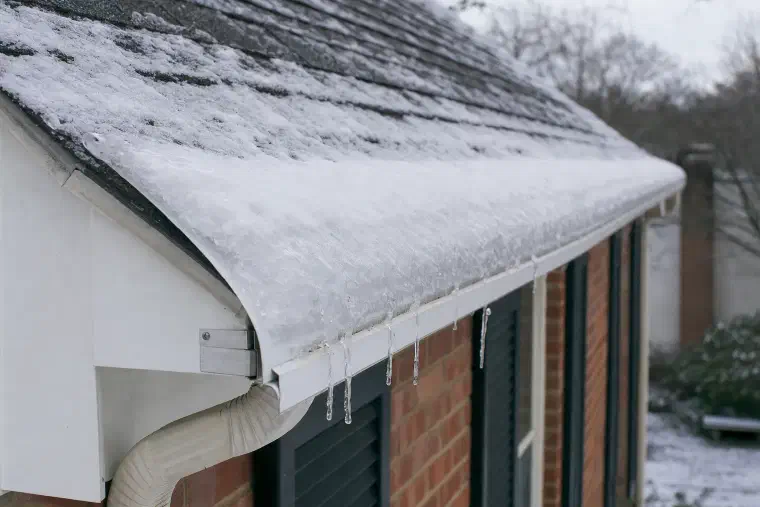
Warm air melts the snow from underneath. The water runs down to the overhang, which sits outside the warm part of the house, and freezes again. That band of ice is the dam.
The University of Minnesota Extension’s long-term fix starts by making the ceiling airtight (opens in a new tab) so warm, moist air can’t flow into the attic, then adding insulation. Nothing in that list is a gutter or a guard. For the whole fix in order, see our guide on how to prevent ice dams.
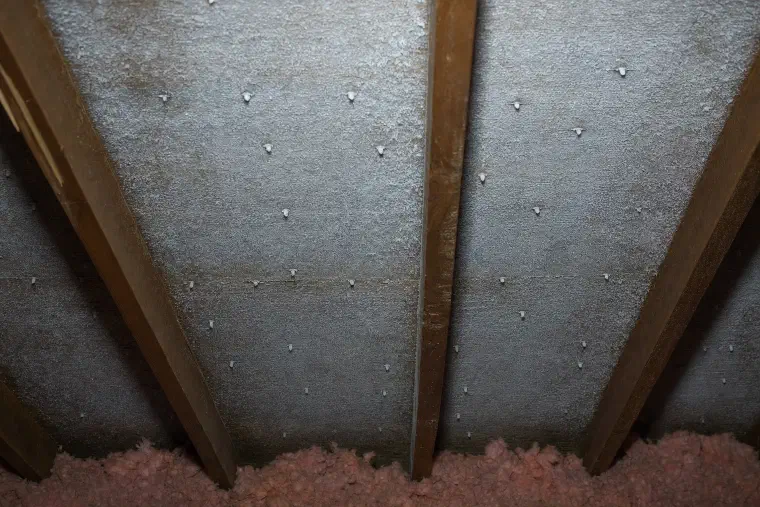
Frost on the underside of the roof boards on a cold morning is a good clue. We think winter is the best time to look into an attic, because that frost shows where warm, damp air is getting up there. It’s invisible the rest of the year.
Can ice still build up on a gutter guard?
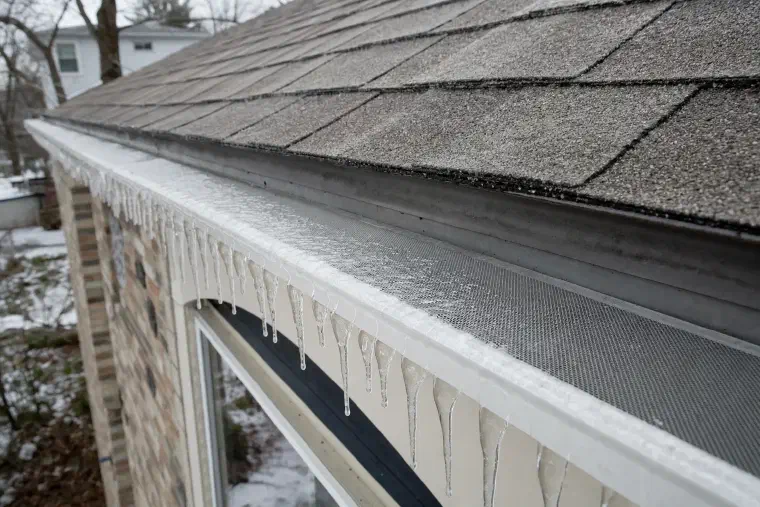
Yes. A guard keeps leaves out, but meltwater still has to get past it, and when it freezes on or under the guard, you get ice. This Old House lists ice dams and icicles in cold weather (opens in a new tab) as a common drawback of gutter guards.
That’s different from a guard causing the dam. The dam would form anyway. The guard changes where the ice ends up and how easy it is to see.
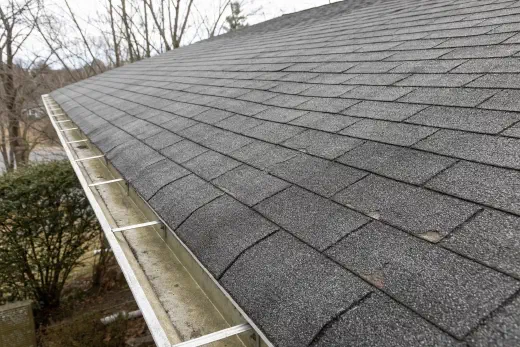
There’s one more thing to know. With a guard on, you can’t look down into the trough from a ladder, so a gutter that’s full of ice or slush underneath isn’t obvious until something bends. The Asphalt Roofing Manufacturers Association says ice dams can come from frozen slush backing up in gutters (opens in a new tab), and tells homeowners to keep gutters and downspouts free of debris.
Which gutter guards are worst for ice?
Curved covers that stick out past the gutter, usually called reverse-curve or surface-tension guards. This Old House warns against them in cold areas because a lot of snow and ice can accumulate (opens in a new tab) on the curved surface.
Here is how the common types compare in winter:
| Guard type | What it does with snow and ice | Our take for a snowy winter |
|---|---|---|
| Reverse-curve cover | Holds snow and ice on its curved top | Skip it in a cold area |
| Flat fine mesh | Sits flush, so snow slides over it more like the roof | The better choice here |
| Brush insert | Debris and wet snow can mat the bristles | Needs more checking |
| Plastic cover | Can get brittle and crack in the cold | Not our first pick |
The brush and plastic rows come from the same This Old House guide: in snowy areas debris can become matted (opens in a new tab) in the bristles, and in colder regions PVC may become brittle and more likely to crack. The same guide describes micro-mesh as right for snow-prone regions. We walk through that type in are micro mesh gutter guards worth it.
Do gutter guards stop ice dams?
No, and no guard claims to be the cure. A guard fights leaves, not heat loss. If your attic is leaking warm air, you can have the best guard on the market and still get a dam.
What a clean gutter does is stop adding to the problem. A trough that’s packed with wet leaves holds water, and water freezes into a solid shelf at the roof edge. Whether a guard keeps the trough that clean depends on your trees and your roof, and we cover that in are gutter guards worth it.
Many people reach for heat cables next. The University of Massachusetts author says the cable creates an ice dam just above it (opens in a new tab), so it moves the problem up the roof.
What should you do if you already have guards?
Leave them on, and go after the cause. In order:
- Check the attic on a cold morning. Frost on the underside of the roof boards means warm, damp air is getting up there.
- Seal the gaps in the ceiling. The Department of Energy’s list of leak points includes gaps around electrical wiring (opens in a new tab), recessed lights, plumbing stacks and attic hatches.
- Add insulation once the air leaks are shut. Insulating first buries the leaks.
- Look at the gutter from the side in late fall. A bowed guard or a sagging run is a sign the trough below has trouble.
- If your guards are the curved kind and the ice is heavy, talk to a gutter pro about swapping them. That’s a job we cover under gutter installation.
Ventilation that lets the underside of the roof stay cold also helps. It’s the most overlooked piece, and we see weak attic airflow a lot on older houses. An attic that isn’t sealed and insulated well enough can’t be rescued by airflow alone.
Common questions
Should I take my gutter guards off in winter?
Usually not. Taking them off doesn’t stop a dam, because the dam forms on the roof. It also leaves the trough open to leaves and slush. If a curved cover is piling up ice every year, a swap to a flush mesh in spring is the better move.
Do gutter guards make icicles worse?
They can change where icicles hang. This Old House lists icicles as a drawback of guards in cold weather. Long icicles also point to water getting past the dam, and the Department of Energy says they’re often a sign that more liquid water is building up (opens in a new tab) behind it.
Can ice damage the gutter under a guard?
Yes. The University of Massachusetts says that as gutters fill with ice they often bend and rip away from the house (opens in a new tab), bringing the fascia, fasteners and downspouts with them. A guard doesn’t change the weight of ice in the trough.
What to do next
If you’re picking guards for a new or replaced gutter, ask for a flat fine mesh in the same quote. If you already have a dam each winter, the cause is upstairs. Our free roof inspection includes a look at the gutters and, when it’s safe to get up there, the attic.