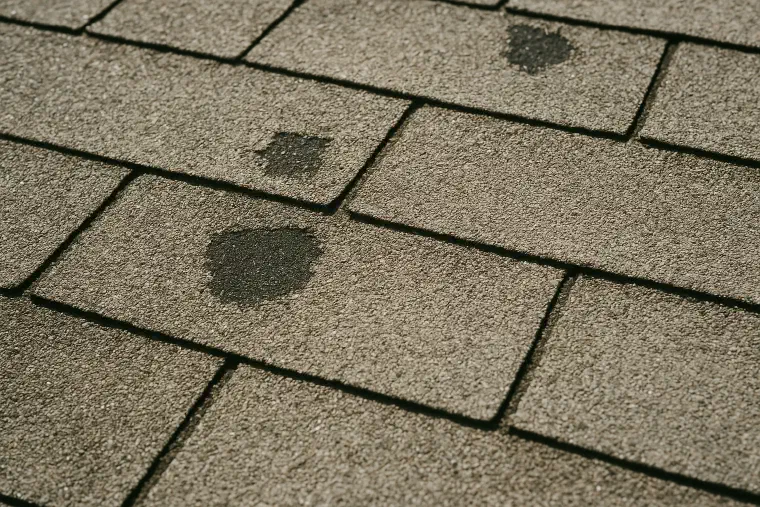
A 30-year asphalt shingle is a warranty class, not a lifespan promise. In real-world conditions, a well-installed architectural roof can deliver 22 to 28 years, but in Maryland’s heat and humidity, 18 to 25 years is more realistic. The label describes a tier of coverage, not a countdown clock.
TL;DR
- “30-year” is a marketing label, not a service-life guarantee.
- With perfect installation and ventilation, you might see 22 to 28 years; in Howard County, expect 18, 25.
- Poor attic ventilation can slash roof life nearly in half.
- Invisible installation defects like high-nailing often cause early failure.
- Regular inspections catch problems before a ceiling stain appears.
What does the “30-year” label actually mean?
The “30-year” on a shingle package is a warranty class, not a lifespan prediction. Shingle manufacturers assign these labels based on accelerated lab tests that simulate decades of weather in a few months. In the controlled environment of a test chamber, the best architectural shingles can hold up for 30 years of simulated wear. On a real roof, though, things look different. Most 30-year architectural shingles actually last 22 to 28 years under good conditions, and some experts note that the number is a warranty ceiling, not a typical outcome. Real-world estimates from roofers who track this data put the typical lifespan at 80 to 85 percent of the rated number, or about 24 to 26 years.
We tell homeowners that in Maryland, asphalt shingles realistically last 18 to 25 years. That’s not a knock on the product; it’s a recognition that our climate works a roof harder than a lab ever will. When you’re planning a new roof installation, it helps to set your expectations around those real-world numbers, not the marketing label.
How long do 30-year shingles really last in Howard County?
In Howard County, 30-year architectural shingles typically reach 20 to 25 years, with well-maintained roofs sometimes pushing into the upper twenties. The gap between that and the label comes down to climate. Maryland’s summers bring intense UV radiation and humidity that accelerate granule loss and seal failure. Winter freeze-thaw cycles cause shingles to expand and contract, gradually breaking the bonds that keep them watertight. A study of Maryland-specific roof aging found that humid, variable weather regularly cuts a shingle’s effective life well short of its rated maximum. That’s consistent with what many homeowners find across the country: the realistic range is 20 to 25 years, not 30.
We see this every day in Ellicott City roofing. Homes tucked under tree canopy or with south-facing slopes that bake all afternoon rarely get near that 30-year mark. The good news is that you can spot the trouble early with a trained eye, and many roofs that look worn still have years of service left with the right repairs.
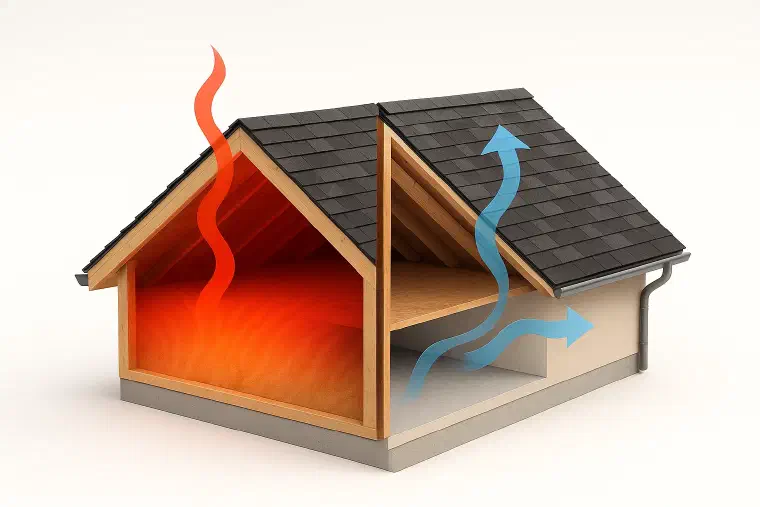
Why poor ventilation can cut a shingle roof’s life nearly in half
Because an unvented attic traps heat and moisture, baking shingles from underneath and raising surface temperatures far beyond the shingle’s rating. An attic that can’t breathe turns into an oven in summer, driving shingle surface temperatures 50 to 80 degrees higher than the outside air. That extra heat breaks down the asphalt mat, causing shingles to curl, lose granules, and fail at the seal strip years before they should. In winter, the same trapped warmth contributes to ice damming, which forces water under the shingles.
We have seen this play out too many times. An unvented attic can cut a roof’s life nearly in half, and it’s the most underrated roof killer in Howard County. Often the ridge vent is installed, but the soffit vents are painted over, blocked by insulation, or never cut open. The fix is straightforward: restore a balanced intake-and-exhaust system so air can flow from the soffits to the ridge. A proper attic venting assessment is a small investment that can add years to any asphalt shingle roof.
Installation mistakes that shorten shingle life
You can buy the best shingle on the market, but if it’s nailed wrong, it won’t last half its rated life. We see installation defects on nearly every roof we tear off, and they all share one trait: they are invisible from the ground.
The most common mistake is high-nailing. Each shingle has a designated nailing zone, and if the nail goes above that line, it doesn’t bite into the course below. The shingle is held only by its self-seal strip. It looks perfect on day one, but a 50 mph wind gust can peel it off in sheets. We have seen the same shingle model last 25 years on one house and 9 on the house next door, and the difference was entirely in where the nails landed.
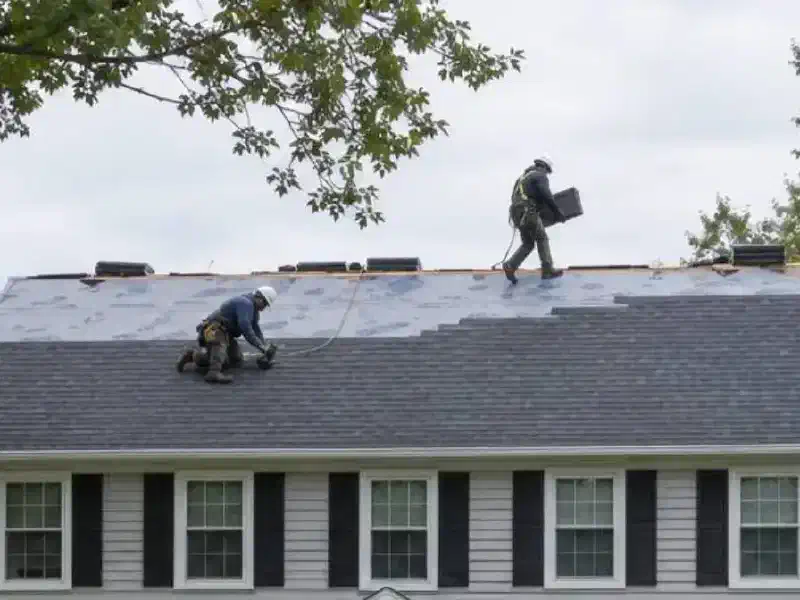
Other shortcuts that quietly eat away at your roof’s lifespan include reusing old flashing, skipping the starter strip at eaves and rakes, omitting drip edge, and installing too few fasteners per shingle. These details are what separate a roof installation that reaches the upper end of that 22-to-28-year range from one that fails in its teens. The crew’s skill matters more than the shingle brand every time.
How does climate and weather wear down a “30-year” shingle?
Maryland’s climate pushes a shingle harder than the mild, steady conditions used in lab testing. UV radiation slowly breaks down the asphalt binder, causing granule loss and brittleness. Thermal cycling, where the roof heats up and cools down daily, flexes the shingle mat and can crack it over time. Freeze-thaw cycles force moisture into microscopic gaps, expanding when it freezes and widening the cracks.
Storms often get the blame for roof damage, but they usually just expose weaknesses that were already there. A roof with properly nailed shingles and balanced ventilation tends to ride out high winds without losing a tab. The same storm can strip a poorly installed roof in minutes. We see this pattern consistently after wind events in Howard County: the homes that need storm damage repair are the ones where installation or maintenance was already behind the eight ball.
Factors that shorten a 30-year shingle’s real lifespan
A lot of things chip away at a roof’s potential, and most of them act quietly for years before a homeowner notices. The table below pulls together the biggest factors we see, how they do their damage, and roughly how many years they can steal from that 30-year label.
| Factor | How it shortens life | Approximate years lost |
|---|---|---|
| Poor attic ventilation | Trapped heat and moisture cook shingles from below, curl edges, break seals | 5 to 10 years |
| High-nailing and missing fasteners | Shingles held by sealant alone; wind peels them easily | 5 to 15 years |
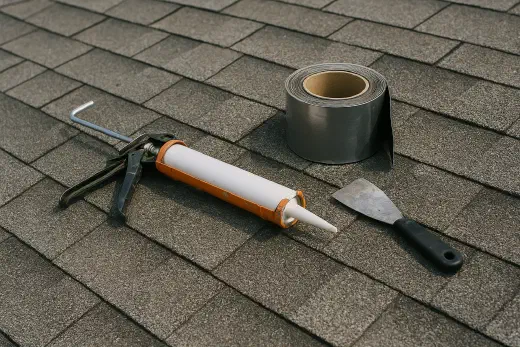
| Reused or missing flashing | Caulked joints fail in 5 to 10 years; water enters at penetrations | 3 to 8 years |
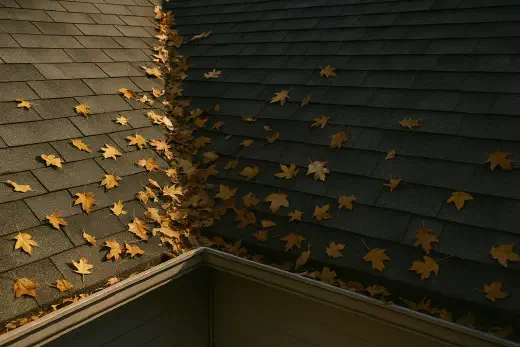
| Tree overhang and debris | Abrasion strips granules; damp shade grows moss; debris dams water | 2 to 7 years |
| Foot traffic | Granule scuffing and mat cracking, especially on hot days | 1 to 5 years |
| Two-layer roofs | Traps heat between layers; hides substrate rot; accelerates wear | 3 to 8 years |
| Missing ice-and-water shield | Freeze-thaw water intrusion at eaves and valleys | 2 to 5 years |
A single factor might not kill a roof, but combine two or three and that 30-year shingle can look geriatric by year 18. A free roof inspection is the fastest way to learn which of these are active on your home.
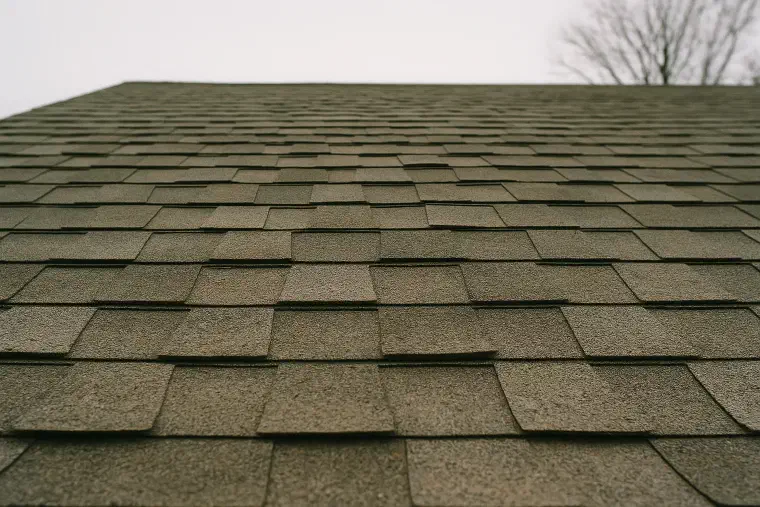
How do you know when a 30-year shingle roof is failing?
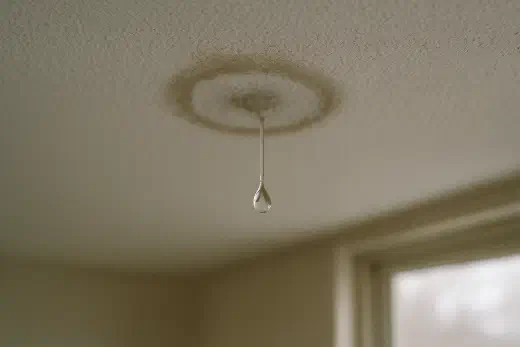
The first signs are visible on the roof itself: curling edges, cupping tabs, and widespread granule loss that exposes the asphalt mat. Inside the attic, you might see daylight through the deck or feel soft spots underfoot. A ceiling stain is not the first sign; it’s the last stage of a problem that has been running for years, and by then the decking underneath is often already damaged.
We check for these signs during every free roof inspection, walking the surface and lifting shingles where it’s safe. A written condition report with photos tells you exactly where your roof stands. If you catch cupping or granule loss early, targeted repairs can keep the roof serviceable. If multiple slopes are curling or the deck feels spongy, it’s time to talk about a full replacement.
When should you repair vs. replace a roof that didn’t last 30 years?
Repair is the right call when the damage is limited to one or two spots and the decking underneath is sound. Most roofs do not need replacing; they need the one spot that is letting water in found and fixed properly. If a small section of flashing has pulled loose or a few shingles are missing after a storm, a roof repair can buy you years.
Replacement starts to make sense when the problems are spread across the roof. Widespread granule loss, curling across multiple slopes, soft decking, or a pattern of leaks in different locations all point toward a new roof. At that stage, patching becomes a game of whack-a-mole, and the cost of repeated repairs often approaches what a roof replacement would cost anyway. We always start by looking for the repair that will actually hold, because a roof that can be fixed should be fixed. But we will also tell you plainly when the math no longer works.
Frequently asked questions
Can I get a full 30 years out of my 30-year shingles if I maintain them perfectly?
Even with perfect maintenance, the real-world ceiling for a 30-year architectural shingle in Maryland is closer to 25 to 28 years. Maintenance, such as cleaning gutters and trimming overhanging branches, slows wear, but it cannot undo the effects of UV radiation and thermal cycling. A roof that is installed flawlessly and ventilated beautifully might reach 30 years, but it’s an exception, not the norm.
Are 30-year architectural shingles significantly better than 25-year shingles?
The difference often comes down to thickness and warranty coverage rather than a dramatic leap in material quality. 30-year shingles are typically a bit heavier, with a denser mat and better granule adhesion, which can add 3 to 5 years of real-world life compared to a 25-year shingle. For most homeowners, the extra upfront cost is reasonable if you plan to stay in the home, but the installation quality still matters far more than the label.
Does a 30-year shingle still protect my home after 25 years?
It can, but it depends on its condition. If the shingles are still lying flat, the granules are mostly intact, and the flashing is sound, the roof may still keep water out for several more years. However, at that age the risk of a sudden leak increases every season, and the roof may not survive a strong windstorm. An inspection is the only way to know whether it is still protecting your home or just looking like it is.
How much does it cost to replace a roof that didn’t last 30 years?
In Ellicott City, a full architectural asphalt shingle replacement for an average 3,580-square-foot roof runs roughly $25,200, with a typical range of $22,500 to $29,500. Smaller roofs start around $7,500, while larger or more complex ones can exceed $40,000. These numbers include tear-off, new underlayment, flashing, and standard architectural shingles. The final price depends on roof size, pitch, and any hidden decking damage.
What’s the difference between a 30-year architectural shingle and a 3-tab shingle?
Architectural shingles are laminated with two or more layers, giving them a thicker, dimensional look and better wind and impact resistance. 3-tab shingles are flat, single-layer strips that are lighter and cheaper but typically last only 15 to 20 years. A 30-year architectural shingle can realistically outlast a 3-tab by a decade or more in the same climate, which is why it’s the standard choice for most replacements today.