

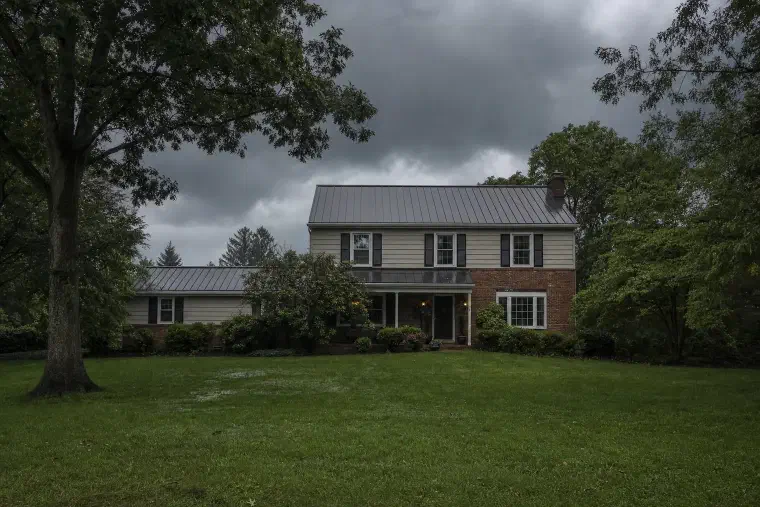
No, a metal roof does not attract lightning. The National Weather Service says metal makes no difference (opens in a new tab) to where lightning strikes. A house gets hit because of how tall it is, how pointy it is and how alone it stands, not because of what is on the roof.
The short version
- Lightning picks its target by height, pointed shape and isolation. The roofing material is not on that list.
- A metal roof will not make a strike more likely, and a shingle roof will not make it less likely.
- Metal does carry electricity, so what matters is the path a strike takes through the house.
- Inside, the risk comes from wiring and plumbing, not from the roof over your head.
- A lightning protection system is the only thing built to give a strike a safe route, and it is separate from the roof.
Does a metal roof make lightning more likely to hit your house?
No. The National Weather Service says height, pointy shape and isolation (opens in a new tab) are the dominant factors that control where a lightning bolt strikes. It also says the presence of metal makes absolutely no difference.
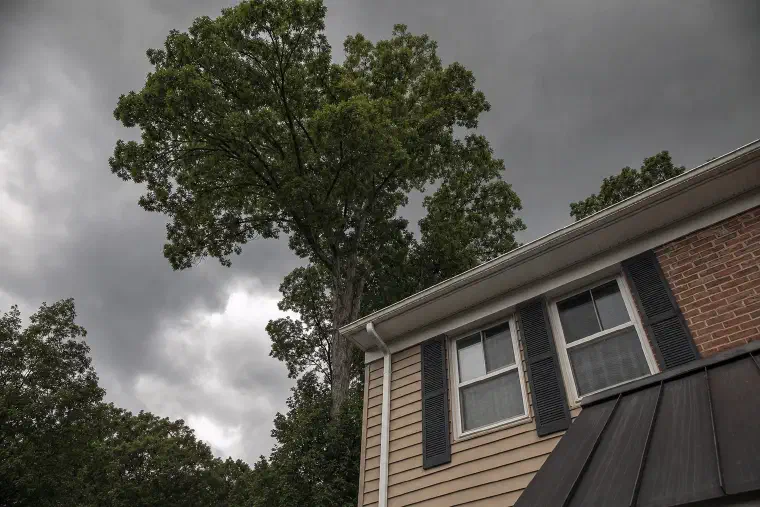
So a metal roof is not a magnet. A tall oak beside the house matters more than anything on the roof, and the roof material never comes into it.
What does decide where lightning strikes?
Lightning favors tall, pointed objects that stand apart from everything else around them. The Forest Service describes it as often striking the same place again and again, especially a tall, pointy, isolated object (opens in a new tab).
For a house, that comes down to a short list:
| What it is | Why it matters |
|---|---|
| Height | The tallest thing around gets the first shot, whether that is a tree, a pole or a chimney |
| A pointed shape | Chimneys, steep gables and antennas stick up and end in a point |
| Standing alone | A house on a big open lot has nothing taller beside it |
A house on open high ground, with a clear view of the sky, is more likely to be the tallest thing in range than one tucked in among taller trees.
If it is not the metal, why do people believe it?
Because metal conducts electricity, and that gets mixed up with attracting it. The National Weather Service puts the difference plainly: metal does not attract lightning (opens in a new tab), but it provides a path for the lightning to follow.
That one sentence explains the whole myth. Metal is good at carrying a current. It is not good at pulling one toward it. People hear “conducts” and read “attracts”, and the idea sticks.
Keep in mind that a metal roof is not a lightning protection system. We are not going to tell you it makes you safe in a storm, because no roof does.
What happens inside the house when lightning hits?
Most of the danger inside comes from the wiring and plumbing, because lightning can follow them. The National Weather Service says that once in a structure, lightning can travel through the electrical, phone, plumbing, and radio and television systems (opens in a new tab).
That is why the advice during a storm has nothing to do with your roof. The same page tells you to avoid plumbing, so no showers or dishes, and to stay away from corded phones and electrical equipment. A cell phone or a cordless phone is fine.
The roof, in short, is not where the risk lives. The wires and pipes inside the house are.
Does a metal roof need a lightning rod?
A metal roof does not need one because it is metal, and a shingle roof does not need one because it is shingle. Whether to have a lightning protection system is a separate question, and it depends on how exposed the house is and how much a strike would cost you.
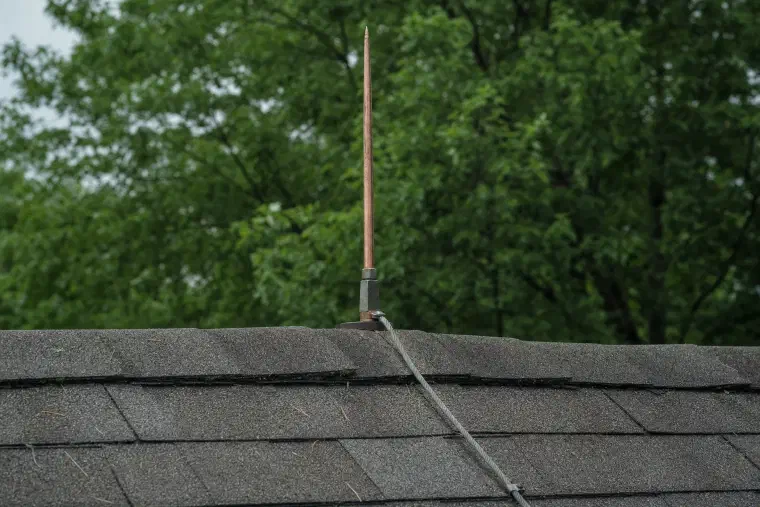
It helps to know what a system does. This Old House explains that it doesn’t attract lightning (opens in a new tab) but gives a strike a safe route if the house is hit. A rod on the roof takes the strike, a cable carries it down, and ground rods let it drain into the soil.
Two things are worth knowing before you spend money:
- This Old House says professional installation is strongly recommended, and it suggests looking for certified lightning protection installers.
- The ground matters. University of Florida researchers found that in sandy soil, more than 80 percent of the current (opens in a new tab) went into a home’s electrical system when it should have drained into the ground. Their advice included surge protectors at the meter and in the home.
What should you do after a storm with a big strike nearby?
Check the house from the ground first, then have the roof looked at if you see anything odd. Look for scorch marks, split or missing pieces, or damaged flashing around the chimney and vents, and check the attic and ceilings for new stains.
A strike near your house can also cause damage you cannot see from the yard, and a roof of any kind can hide it. Our free roof inspection includes a walk on the roof and a written report with photos, so you will know what is there. If a storm did real damage, our storm and wind damage repair covers that work.
Do not climb up to look yourself. Wet metal is slick, and a roof after a storm is a bad place to guess.
Common questions
Is a metal roof dangerous in a thunderstorm?
No, not because of the roof. The National Weather Service says the metal makes no difference to where lightning strikes, and the usual indoor risks are the wiring and plumbing. Stay away from those during the storm and the roof overhead is the least of your worries.
Will lightning hit my house more often if I switch to metal?
No. Height, shape and isolation decide that, and a new roof changes none of them. If your lot is open and your house is the tallest thing on it, that is true with shingles and just as true with metal.
Is a metal roof safer than shingles in a lightning storm?
We cannot say that from the sources we trust, so we will not. What we can say is that the roof material does not change the odds of a strike. For how a metal roof does in fire, wind and hail, read how safe metal roofs are.
Do I need a surge protector with a metal roof?
That is up to your electrical system, not your roof. A strike near the house can send a surge through the wiring, and the University of Florida team recommended surge protectors at the meter and inside the home. An electrician can tell you what suits yours.
What to do next
If you are weighing a metal roof, lightning should not be what decides it. Our metal roofing installation page explains what we do, what it involves, and where metal makes sense. If a storm hit your roof and you are not sure of the damage, ask for the free inspection and we will look it over.


