

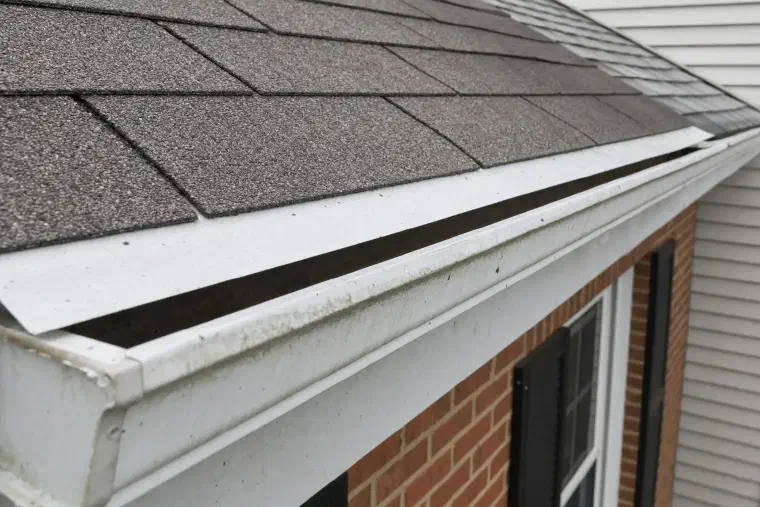
A drip edge and a gutter apron are both thin strips of bent metal at the bottom edge of your roof, and they do almost the same job. The difference is reach: a gutter apron is the bigger piece, and it extends out over the back of the gutter so water can’t slip in behind it. Plenty of houses have one or the other, and some have neither.
The short version
- Drip edge is the strip that runs along every edge of the roof. A gutter apron is a larger cousin used at the eave, where a gutter hangs.
- The apron goes under the shingles and over the back edge of the gutter.
- Both exist to keep water off the fascia board and the wood behind it.
- Without either, water can wick back behind the gutter and rot the eave.
- Many roofs only need one of the two, and a roofer can tell you which yours has.
What is a gutter apron?
A gutter apron is a piece of flashing that bridges the gap between the roof edge and the gutter. This Old House says it is installed underneath the shingles (opens in a new tab) and over the gutter’s back edge, and that it creates a barrier to stop water getting behind the gutter and into the roof system.
Flashing, if the word is new, is thin metal that sends water where you want it to go. The apron is flashing for one narrow spot: the few inches where the roof stops and the gutter starts. That gap is small, and water finds it every time.
What is the difference between drip edge and a gutter apron?
The difference is size and shape. This Old House describes a gutter apron as similar to a Type C drip edge but larger, with a wider angle (opens in a new tab), overhanging farther into the gutters. A basic drip edge is a short L. An apron is a longer L with a long, angled lower leg.
The drip edge also has a wider job. It is installed along the edges of a roof and redirects water away from the eaves (opens in a new tab) and into the gutters, and it goes on the rakes (the sloped sides) too. An apron only makes sense at the eave, because that is the only place a gutter hangs.
| Drip edge | Gutter apron | |
|---|---|---|
| Where it goes | Eaves and rakes, all the way around | Eaves only, behind the gutter |
| Shape | Short L or T, with a small bent lip | Longer, wider angle, reaches into the gutter |
| Main job | Shed water off the roof edge and away from the wood | Close the gap between the roof edge and the gutter |
| Needs a gutter | No | Yes |
Names get used loosely out there. Some roofers call any eave metal a drip edge, and some call a wide drip edge an apron. What matters is where the metal sits and where the water goes.
Do you need both a drip edge and a gutter apron?
Usually you need one piece of metal that does the job at the eave, and that piece can be either. A drip edge with a lip that clears the gutter does it on many houses. An apron earns its place when the gutter sits low or far out, and the roof edge can’t reach it.
The ARMA says drip edges should have an outward bent flange (opens in a new tab) at the lowest edge, which directs water away from the wood below. That lip is what sheds water into the gutter. If the lip lands short of the gutter, you get a gap, and water can run behind it.
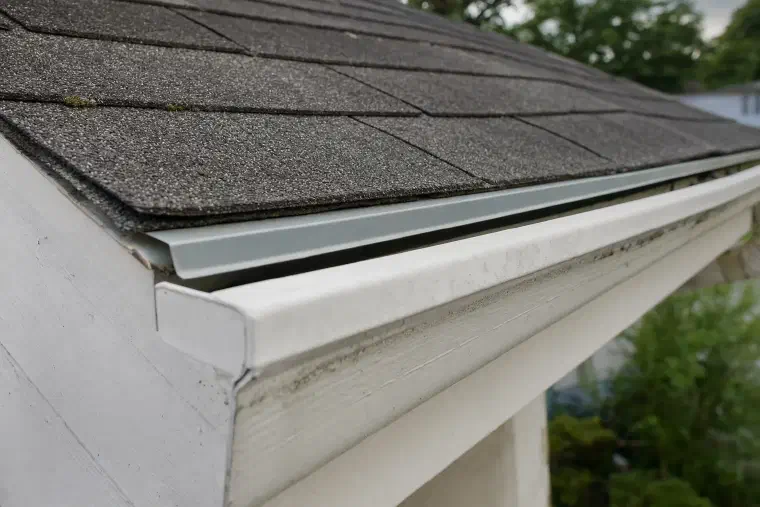
At the rakes, only drip edge will do, since no gutter is there. So a roof with an apron at the eaves still carries plain drip edge up the sides.
What happens when water gets behind the gutter?
It soaks the wood, and you can’t see it happen. Without a drip edge, This Old House says rainwater can drip behind the gutters (opens in a new tab) and run down the fascia into the soffit boards. A drip edge set too close to the fascia has a similar effect: water can get drawn back to wet the fascia board (opens in a new tab).
We see this a lot on houses with no gutter apron. Water wicks behind the gutter and rots the fascia first. Then it rots the rafter tails, and then the first few inches of decking. It turns into a real structural repair at the eave, and it is invisible from both the attic and the ground. Our article on why a fascia board rots walks through that chain.
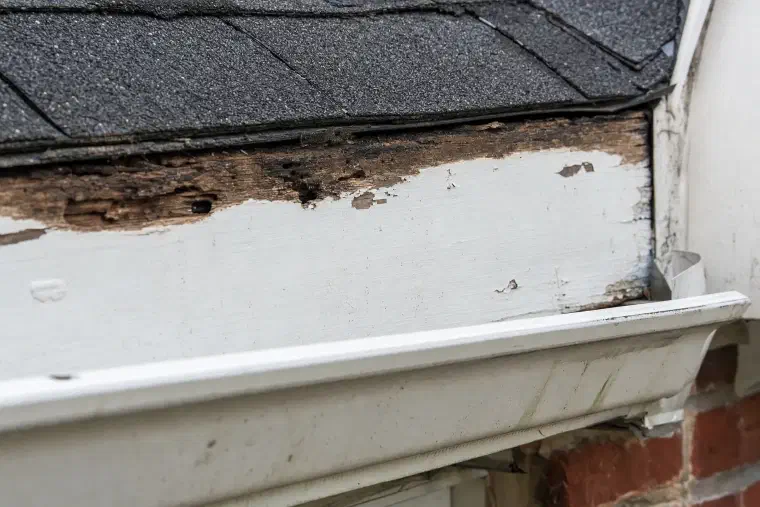
Overflow does the same thing from the other side. A clogged gutter can send water seeping behind the fascia (opens in a new tab), which is why clean gutters matter even with good metal at the edge.
How can you tell if your roof has one?
Look at the eave from the ground, then from a ladder if you’re comfortable on one. Metal that tucks under the bottom shingle and disappears behind the gutter is likely an apron. A thin lip showing above the gutter, with a visible gap before the gutter starts, is more likely a drip edge.
Warning signs are the same either way. This Old House lists water stains on the fascia or soffit as a sign that water isn’t being directed into the gutters (opens in a new tab). Peeling paint along the top of the fascia is another. If you see those, have it looked at before the wood goes soft.
Common questions
Can you add a gutter apron to an existing roof?
Often, yes. The apron slides under the first course of shingles, so a roofer can lift the bottom row, slip it in and re-seal the shingles. On an older roof with brittle shingles, lifting them can crack them, so it is worth checking before you plan on it.
Does a gutter apron replace drip edge?
At the eaves it can do the same job, but the rakes still need drip edge. Think of the apron as the eave version for houses where the gutter needs the extra reach.
Who fixes water damage behind a gutter?
A gutter repair covers resealing, re-pitching and fascia work. If the fascia is already rotted, expect that wood to be priced separately, since nobody knows its condition until the gutter comes off.
What to do next
If your gutter has pulled away, the fascia is stained, or you can see a gap between the roof edge and the gutter, have the eave looked at. Our gutter repair page covers what we fix at the gutter line, and a free roof inspection includes a look at the edges and the gutters. For the basics of the strip along the roof edge, read what drip edge is.


