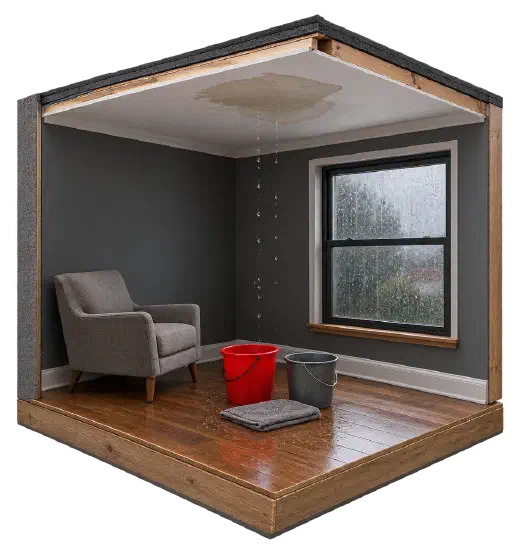
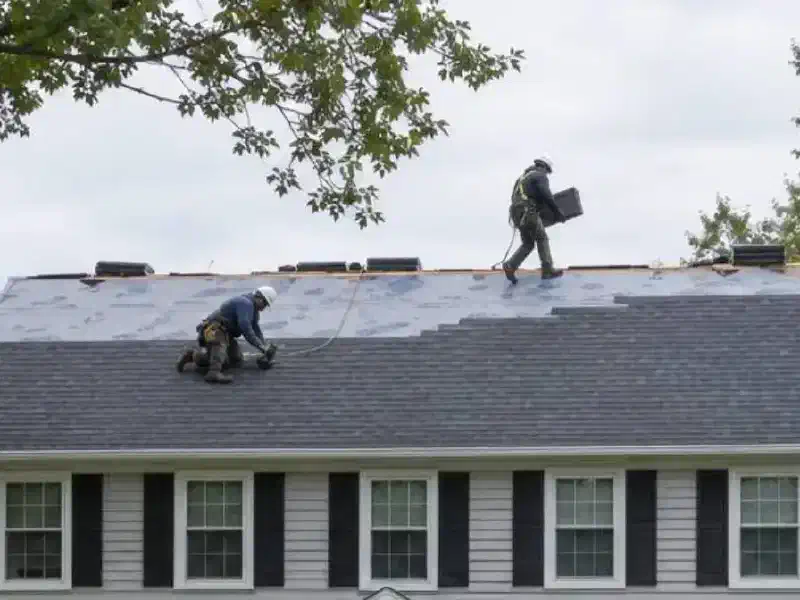
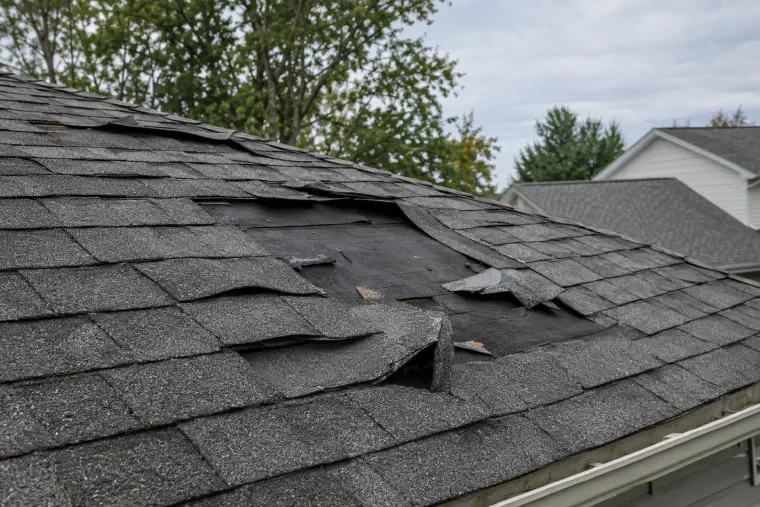
The five most common roofing problems are flashing failures, cracked or missing shingles, clogged gutters, poor attic ventilation, and leaks around chimneys, skylights, and vents. Together they cause the vast majority of roof leaks, and any one of them can shorten a Maryland asphalt shingle roof’s realistic 18- to 25-year lifespan if it goes unnoticed long enough.
TL;DR
- Flashing fails because it lives at the roof’s most vulnerable joints, and shortcuts like relying on caulk instead of proper metal integration turn it into a scheduled leak.
- Shingles crack, curl, or blow off from age, sun, bad nailing, and tree abrasion, the same shingle can last 25 years or 9 depending on where the nail landed.
- Clogged gutters trap water against the roof edge, where it can rot fascia, rafter tails, and decking long before you see a stain inside.
- An unvented attic quietly cooks shingles from underneath, traps moisture that rots decking, and can cut a roof’s life nearly in half.
- Water sneaks in around penetrations when pipe boot rubber cracks, chimney flashing is caulked instead of counterflashed, or skylight seals age out.
Why does flashing fail so often?
Flashing fails because it seals the roof’s most vulnerable joints, and those joints move, corrode, or were never installed correctly in the first place. Flashing is the metal that bridges the gaps where the roof meets a wall, chimney, skylight, or valley. When it works, water stays out. When it doesn’t, the leak can show up ten feet from the actual problem.
We see the same shortcuts over and over: step flashing reused from the old roof, chimney L-flashing caulked to brick instead of counterflashing set into a cut reglet, missing kickout flashing where a roof plane terminates against a wall. Any detail that depends on sealant to keep water out has a finite lifespan, usually five to ten years. Caulk is a consumable, not a permanent waterproofing strategy.
Visible warning signs include rusted metal, lifted or separated flashing pieces, dried-out caulk beads, and water stains on the ceiling near a chimney or wall. A roof flashing repair that catches these early is far cheaper than waiting for the decking to rot. A chimney reflash typically runs $800 to $2,200, while step flashing repair lands between $700 and $1,900. Those numbers climb fast once the wood underneath is involved.
What makes shingles crack, curl, or go missing?
Shingles crack, curl, or blow off because of age, sun, bad installation, or physical damage from branches and foot traffic. Asphalt shingles lose their volatile oils over time, becoming brittle. Sun bakes the surface. But the fastest way to ruin a shingle is putting the nail in the wrong place.
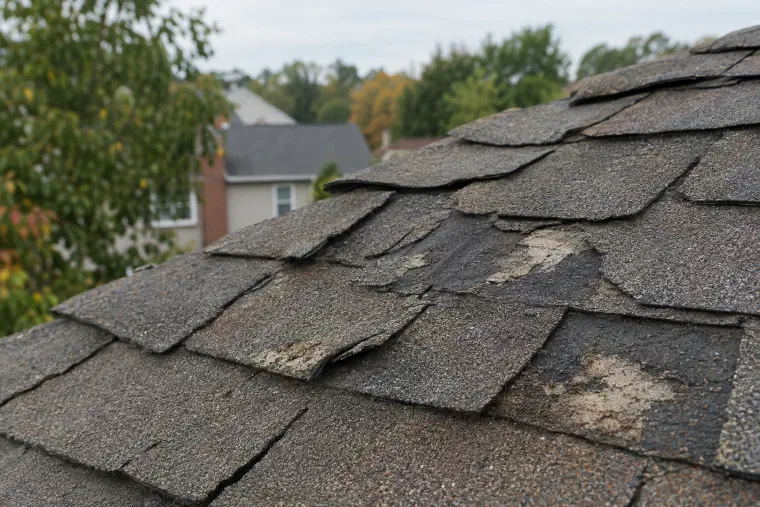
We’ve seen the same GAF shingle last 25 years or 9, depending entirely on where the nail went. Nails driven above the nail line don’t penetrate the course beneath, so the shingle is held by its sealant strip alone. It looks perfect until a 50-mph gust peels it in courses. High-nailing, too few nails, and overdriven fasteners are undetectable from the ground. Add tree branches that sweep the surface and strip granules, or foot traffic that cracks the mat on a hot day, and you have shingles that fail years early.
Replacing one to three shingles usually costs $300 to $650. A larger wind-lifted shingle repair runs $600 to $1,700. If the damage is widespread and the roof is over 15 years old, a roof repair in Ellicott City might still be the right call, but it’s worth getting an honest assessment before chasing individual shingles across the whole slope.
How do clogged gutters lead to roof trouble?
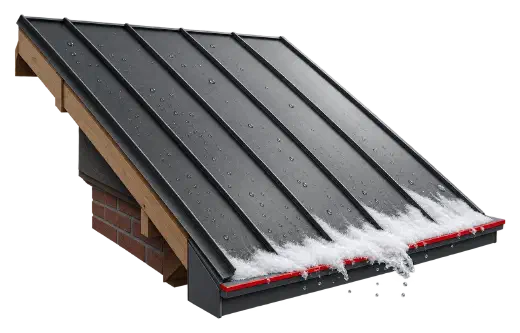
Clogged gutters hold water against the roof edge, where it can seep under shingles, rot fascia and rafter tails, and provide a base for ice dams. Gutters are easy to forget until they overflow in a storm. By then, the water has usually been sitting long enough to do real damage.
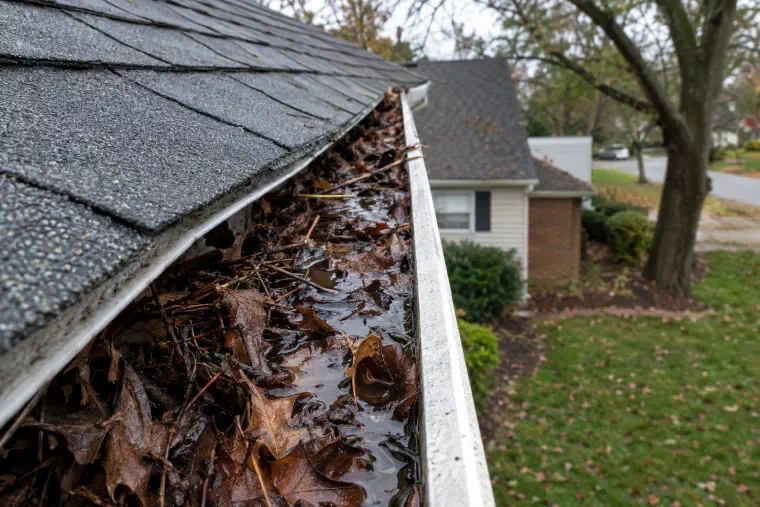
Standing water in a full gutter, or water wicking behind a gutter with no apron, rots the fascia first, then the rafter tails, then the first few inches of decking. That structural repair at the eave is completely invisible from both the ground and the attic. A full gutter also gives an ice dam something to build on in winter, backing water up under shingles above the ice-and-water shield line.
The RCABC Roof Maintenance Guide recommends seasonal cleaning to catch debris before it packs down. If your gutters overflow, pull away from the house, or stain the siding, the problem has already started. Regular gutter cleaning keeps water moving where it belongs. When the gutters themselves are sagging or leaking at the seams, gutter repair addresses the hardware before the eave takes the hit.
Why is attic ventilation a roof’s silent enemy?
Poor attic ventilation silently cooks shingles from underneath, traps moisture that rots decking, and can cut a roof’s lifespan nearly in half. It’s the most underrated cause of premature roof failure we see, because it doesn’t feel like damage and leaves no obvious stain on the ceiling.
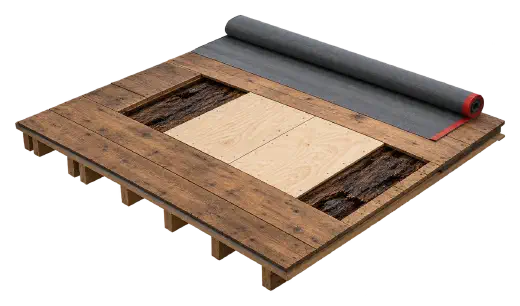
An unvented attic in summer raises shingle surface temperatures far beyond their rating, accelerating granule loss and curling. In winter, warm humid air leaking into the attic condenses on the cold underside of the decking. The wood absorbs and dries through dozens of cycles, then delaminates. Frost on the underside of the sheathing on a cold morning is a telltale sign that moisture is trapped. The NRCA emphasizes balanced intake and exhaust ventilation to keep the attic temperature close to the outside air.
Common mistakes include ridge vents installed without opening the soffits, mixed exhaust types that short-circuit airflow, and bath fans or dryer vents terminating in the attic. Fixing it often means adding intake vents and clearing insulation from the soffit bays. Attic venting in Ellicott City is a separate service from roof replacement, and it’s one of the few investments that can actually extend the life of the shingles you already have.
What happens when water sneaks in around chimneys, skylights, and vents?
Water gets in around chimneys, skylights, and vents when the flashing or seal that bridges the roof and the penetration fails, often because of age, poor installation, or the wrong material. These are the most leak-prone spots on any roof, and the failures follow a predictable pattern.
Chimney leaks are rarely the bricks. They’re almost always the metal flashing where the chimney meets the roof. We find chimney L-flashing caulked to brick instead of counterflashing set into a cut reglet on a regular basis. That caulk dries, cracks, and lets water behind the flashing within a few years. A proper chimney flashing repair runs $800 to $2,200.
Skylight leaks can be the flashing or the seal around the glass. Sometimes it’s not a leak at all but condensation from warm indoor air hitting cold glass. A skylight repair that reflashes the unit costs $900 to $2,000, and it’s often the right fix during a reroof. Pipe boots with cheap rubber collars crack in three to five years; replacing one costs $350 to $750. The UW extension guide on leaky roofs notes that flashing defects are among the most common leak sources, and they rarely fix themselves.
How do you know when it’s time for a new roof instead of a repair?
You’re likely looking at a new roof when repairs become frequent, shingles are curling or missing across large areas, the roof is nearing 20 to 25 years old, decking is rotting, or repair costs approach a quarter of what a full replacement would cost. That last one is a rough rule of thumb: if fixing the problems piecemeal starts to rival 25% of a new roof’s price, the math usually favors replacement.
Five signs that point toward replacement:
- Shingles are curling, cupping, or losing granules to the point that the mat is visible.
- You’re chasing leaks in multiple spots, especially after every windstorm.
- The roof is over 20 years old and has never had a thorough inspection.
- Decking feels soft underfoot or shows water staining in the attic.
- Flashing is rusted through or missing in multiple locations.
Asphalt shingle roofs in Maryland realistically last 18 to 25 years, not the 50 you might see on a warranty label. That number refers to manufacturing defects, not field lifespan. A free inspection removes the guesswork. If the roof still has good years left, we’ll say so. If it’s time for a roof installation in Ellicott City, a full replacement typically runs $6.00 to $9.00 per square foot, and the price depends far more on the size, pitch, and complexity of the roof than on the shingle brand.
What questions should you ask a roofing contractor before hiring?
Before you sign, ask about licensing, insurance, workmanship warranty, how they handle unexpected decking rot, whether they pull permits, and what the contract actually includes. The answers reveal more about the company than any sales pitch.
We recommend starting with these:
- Are you licensed and insured in Maryland? Ask for the number and verify it. Unlicensed work can void your homeowner’s insurance.
- What does your workmanship warranty cover, and for how long? The manufacturer’s warranty covers shingle defects. The contractor’s warranty covers installation mistakes. The second one matters more.
- How do you handle decking replacement if you find rot? Expect a per-sheet price ($70 to $150 installed) and a clear process for notifying you before proceeding.
- Do you pull permits, and are they included in the price? Permits are required in Howard County. We pass them through at cost.
- What’s actually in the contract? It should list every line item: tear-off, underlayment, flashing, ventilation, cleanup, and exclusions. Vague language hides costs.
We’ve built our business around answering those questions directly. Homeowners in this area often struggle to find contractors who communicate clearly and show up when they say they will. That’s why we answer the phone 24/7 and give honest assessments, even when the answer is “you don’t need a new roof yet.” You can read more about how we work or get in touch for a free quote.
Common questions
What is the 25 rule in roofing?
The 25 rule is a rough guideline that says when the cost of repairing a roof approaches 25% of the cost of a full replacement, replacement usually makes more financial sense. It’s not a hard formula, because condition, age, and the spread of damage matter just as much as the dollar figure. A free inspection gives you the real numbers to make that call.
Does homeowners insurance cover roof repairs?
It depends on your policy and the cause of the damage. Sudden, accidental events like a tree falling or wind tearing off shingles are often covered. Gradual wear, neglect, or maintenance issues are not. You’ll need to read your policy or speak with your agent, and never let a contractor promise coverage before the adjuster has seen the roof.
How often should I have my roof inspected?
Every one to two years, and after any major storm with wind over 50 mph or hail. An inspection catches small problems before they become leaks, and it’s the easiest way to track how your roof is aging. Our inspections are free, so there’s no reason to skip one if you’re unsure about the roof’s condition.
Can I repair my roof myself?
You can replace a shingle or clear a gutter if you’re comfortable on a ladder and the roof is walkable. Anything involving flashing, leak diagnosis, or structural decking is best left to someone who does it every day. The risk of missing the real leak or creating a bigger one usually outweighs the money saved.
What’s the difference between a roof inspection and a roof certification?
An inspection is a visual condition assessment with photos and a report, meant to tell you what shape the roof is in and what it needs. A certification is a formal document, often required by lenders or insurers, that states the roof meets certain standards and estimates its remaining life. Certifications are a paid service and go beyond a standard inspection.