
Stopping a roof leak in heavy rain starts with safe indoor containment (kill power to wet fixtures, catch water, relieve ceiling bulges), then temporary control like tarping, and finally a permanent repair. Most heavy‑rain leaks trace to flashing failures, cracked vent boots, or clogged gutters, and a professional repair typically costs $350 to $2,200 depending on the issue.
TL;DR
- First, keep safe: switch off electricity to any wet ceiling fixtures and catch water with buckets.
- Relieve bulging drywall by poking a small hole at the lowest point so water drains in a controlled spot.
- Heavy‑rain leaks usually come from flashing, vent boots, valleys, or clogged gutters, not “the whole roof.”
- Tarping or attic diversion buys time; real fixes involve shingles, flashing, or gutter work.
- If you are in Howard County, Roofing NextGen Ellicott City handles both emergency tarping and permanent repairs through our emergency roof repair and roof repair services.
What should I do the moment water starts coming through the ceiling?
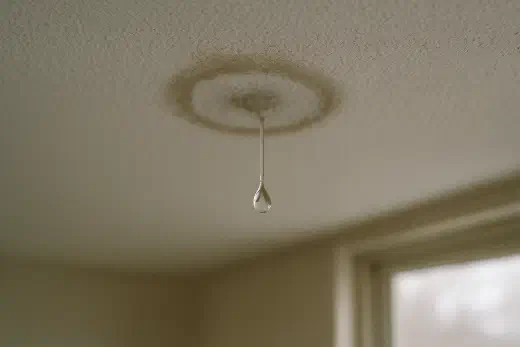
The first step when a roof leaks in heavy rain is to stay safe, then contain the water inside your home. Everything else can wait a few minutes.
Here is a calm, ordered way to deal with the leak in the first hour:
Check for electrical risk. If water is coming through or near a light fixture, fan, or outlet, switch off that circuit at the breaker panel. Mixing leaks and live wiring is a bad combo, even if it “looks fine.”
Catch the water. Put buckets, trash cans, or storage totes directly under the drip. Lay towels or plastic sheeting on the floor to keep water off hardwood or carpet. Guides on emergency leak response recommend simple containment first because it limits spreading damage while you figure out the source, especially in the attic.roof leak guide
Relieve ceiling bulges. If drywall is sagging or forming a big bubble, carefully poke a small hole at the lowest point with a screwdriver and let water drain into a bucket. Building experts note this controlled drain reduces the risk of a sudden ceiling collapse and lets the drywall dry instead of staying saturated.emergency response guide
Protect nearby belongings. Move furniture, electronics, rugs, and anything sentimental out of the leak path. Plastic tarps or trash bags over remaining furniture will take the hit instead of the upholstery.
Once the inside is under control, you can think about tracing the leak and planning a repair. During an active storm, staying off the roof is the rule; most safety resources advise waiting for dry conditions before anyone climbs up.roof leaks heavy rain
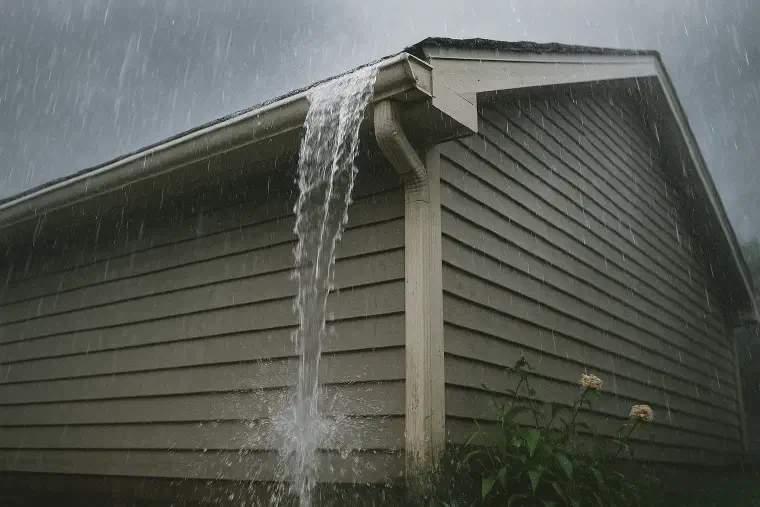
Where is the water actually getting in when it only leaks in heavy rain?
In heavy rain, most leaks come from specific weak spots, not from “everywhere.” The main culprits are flashing, vent boots, valleys, skylights, and clogged gutters.
Authoritative guides on roof leaks in storms highlight the same cluster of causes:
Flashing failures. Flashing is the metal around chimneys, walls, roof valleys, and vent pipes. When it rusts, pulls loose, or the sealant dries out, heavy rain finds that gap and uses it as a doorway. Heavy‑rain articles consistently list flashing problems as the top reason roofs leak in storms.roof leaks causes
Cracked plumbing vent boots. The rubber or neoprene collar around a vent pipe tends to crack after a decade or so of sun exposure. A light drizzle may slip past, but hard rain pours through and runs down the pipe into the attic. Pipe boots with cheap rubber collars can crack in as little as 3 to 5 years.
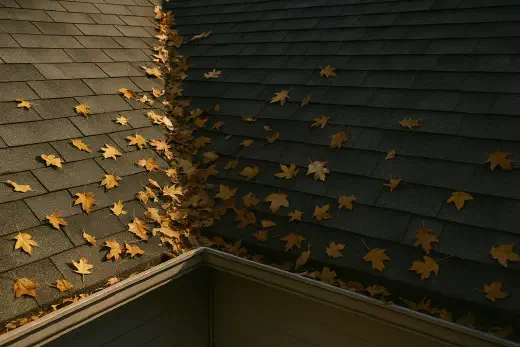
Clogged gutters and valleys. When gutters fill with debris, water backs up under the shingles at the eaves instead of flowing away. Valley areas that handle a high volume of water do the same thing when clogged: the backed‑up water rises over flashing and edges and gets into the deck.
Wind‑lifted or unsealed shingles. Older shingles with broken adhesive strips or high‑nailed courses can lift in wind. Heavy rain driven sideways slides under those lifted edges and into nail holes. Industry guides note that these leaks often show up “only in hard rain” when wind direction lines up with the weak spot.roof leaks heavy rain
Skylight perimeters and seals. Failed skylight flashing kits or cracked perimeter seals will leak heavily when rain volume and wind increase.
Masonry chimneys. In long storms, porous brick and cracked crowns can absorb water and then weep into the attic even when the shingles and flashing appear fine.roof leaks heavy rain
To locate the source during or after a storm, go into the attic with a flashlight if it is safe. Follow wet trails on the underside of the roof deck and along rafters up toward the highest wet point; that usually sits near the real entry point. The stain in your living room might be ten feet away from where the water actually entered. Roof leaks love misdirection.
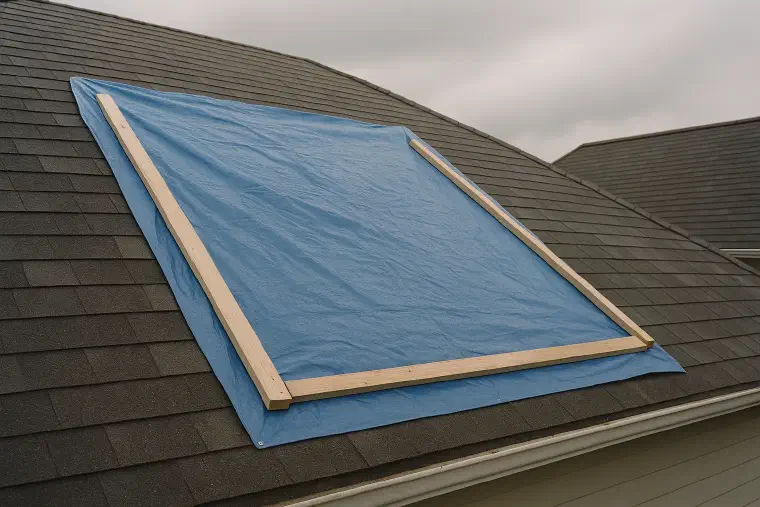
Can I stop the leak myself until a roofer gets here?
You can often slow or divert a roof leak with temporary measures, but they are band‑aids, not cures. The main options are attic diversion and exterior tarping when conditions are safe.
Common temporary steps recommended by repair guides include:temporary leak fixemergency leak solutionstemporary leak fix
Attic diversion. In the attic, place buckets directly under active drips from the deck. You can staple or nail a strip of plastic sheeting or a trash bag above the drip, angled into a bucket, so the water runs along the plastic instead of across the deck. This keeps water off insulation and framing while you wait.
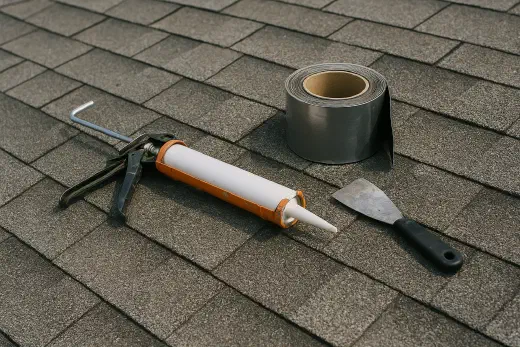
Interior sealant (with caution). Some emergency guides mention applying roofing caulk or hydraulic cement on exposed areas around pipe collars or skylight frames inside the attic to slow seepage. The catch: sealant on wet, dirty surfaces has a short life. It might buy you a storm, not a season.
Exterior tarp. Once the storm passes and the roof is safe to walk, a large, heavy‑duty tarp that extends several feet beyond the suspected damaged area can shed water off that section until repairs are made. Anchor the tarp with boards and weights rather than driving a bunch of nails through your shingles unless that area will be replaced anyway.
Stay realistic about DIY limits. Temporary fixes can stabilize things. They cannot correct high‑nailed shingles, rotted decking, or failed flashing. They also carry risk if you are not comfortable on ladders or steep slopes.
Roofing NextGen Ellicott City handles both emergency tarping (typically $350 to $900, which may be credited toward the repair) and permanent fixes through our emergency roof repair and roof repair services, so you are not stuck babysitting buckets for weeks.
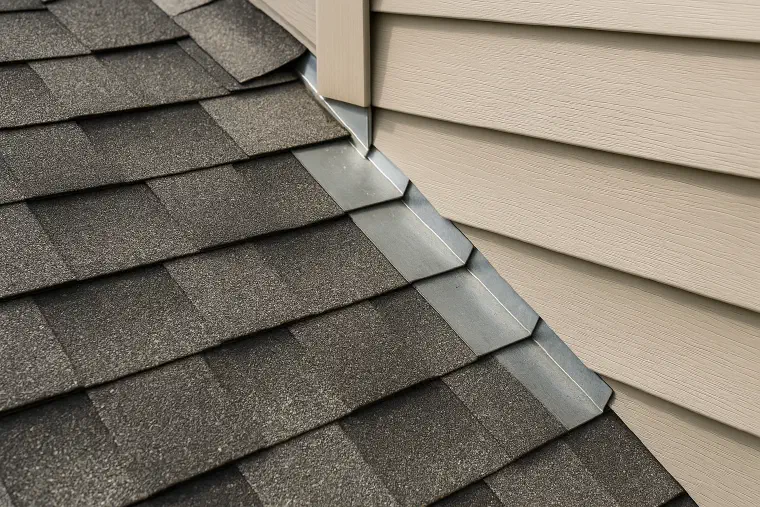
What permanent repairs actually fix a heavy‑rain leak?
Permanent fixes focus on eliminating the entry point: replacing damaged materials, re‑doing bad details, and sometimes correcting deeper issues like ventilation or gutter layout.
The usual permanent repairs look like this:roof leaks heavy rain
| Leak type | Typical cause | Common permanent fix |
|---|---|---|
| Shingle leak | Cracked, missing, lifted shingles | Replace damaged shingles, fix nailing or seals |
| Flashing leak | Loose, rusted, poorly sealed flashing | Remove and reinstall new flashing, re‑integrate with shingles |
| Valley leak | Worn valley metal, debris buildup | Clean, repair or replace valley lining, new underlayment |
| Pipe boot leak | Cracked rubber collar | Replace boot with new unit, sometimes with longer‑lasting material |
| Skylight leak | Failed seals or flashing kit | Reflash skylight; if old, replace unit entirely |
| Gutter overflow | Clogs or undersized gutters | Clean, re‑pitch, or upgrade gutters and downspouts |
Most modern guides emphasize that flashing repairs and component replacement are more durable than simply smearing more caulk over the problem.roof leaks causes Caulk has a limited life, especially in our freeze‑thaw climate; it is better seen as a gasket around a well‑built detail than a standalone water barrier.
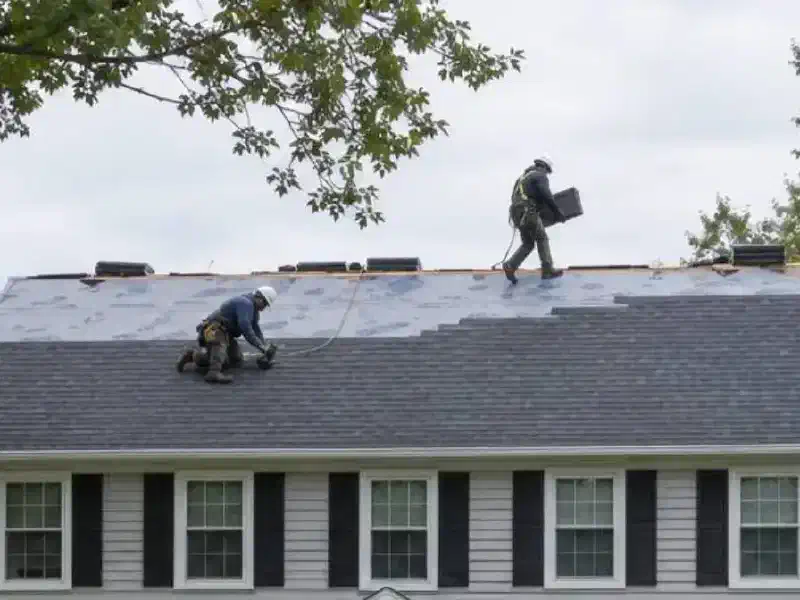
Roofing NextGen Ellicott City’s roof repair service focuses on those targeted repairs: shingle replacement, flashing work, pipe boot swaps, valley repairs, and partial‑slope work when the problem area is too large for a simple patch.
Does a leak in a downpour mean I need a whole new roof?
A leak that shows up only in heavy rain does not automatically mean you need a new roof. It does mean the roof has at least one serious vulnerability that needs attention.
Most sources frame heavy‑rain leaks as a stress test: the storm exposes weak spots that were already there.roof leaks heavy rainroof leaks after heavy rain You are more likely to need repairs if:
- The roof is under about 15 to 18 years old.
- The leak traces to a single area like a pipe boot, skylight, valley, or chimney flashing.
- Shingles elsewhere are still flexible, with intact granules and no widespread curling.
You are more likely to be looking at replacement if:
- Leaks are showing up in multiple locations.
- Shingles are brittle, cracked, or losing granules across large areas.
- Attic inspection shows widespread soft spots in the deck, not just a local patch.
For context, a typical asphalt shingle roof replacement in Ellicott City (average 3,580 sq ft) runs about $25,200, with a range of $22,500 to $29,500. Roofing NextGen Ellicott City offers both roof installation for roofs that are truly at the end of their life and roof repair when a focused fix will buy you more years. The goal is to match the scope to the actual condition, not the drama of one storm.
How can I keep my roof from leaking the next time it pours?
The best way to prevent leaks in the next big storm is to eliminate the usual failure points before they fail.
Preventive steps that current guides recommend include:roof leaks heavy rainroof leaks causes
Keep gutters and downspouts clear. Debris‑packed gutters are a top reason water backs up under shingles at the eaves. Cleaning them at least twice a year, or adding properly sized seamless gutters and guards, reduces that risk.
Have flashing and vent boots inspected. A free roof inspection can catch rusted valley metal, loose chimney counterflashing, missing kickout flashing, and cracked vent boots before they become entry points.
Trim overhanging branches. Branches that sweep the roof strip granules and drop debris in valleys, which speeds wear and clogs drainage.
Address attic ventilation and moisture. Poor ventilation cooks shingles from underneath and drives condensation, which can mimic a leak. Balancing intake and exhaust vents and fixing bath fans that dump into the attic are long‑term leak prevention, not just comfort tweaks.
Schedule checkups after major storms. Even if everything looks fine from the driveway, a post‑storm inspection can catch lifted shingles, small flashing shifts, or hail bruising in time to repair them cheaply.
For homeowners in Ellicott City and the surrounding towns, Roofing NextGen Ellicott City can handle those preventive checks through free inspections and targeted repairs so the next round of heavy rain is a non‑event, not a ceiling stain.
Frequently asked questions
How long can I wait before fixing a heavy‑rain roof leak?
You should not wait long. A leak that appears only in heavy rain is still an opening in your roof system. Left alone, that opening gets bigger, and damage to decking and insulation keeps spreading, even in more ordinary storms. Most repairs take only a few hours on site, and the overall timeline from call to completion is usually 1 to 2 weeks.
Can a roof leak in heavy rain cause mold?
Yes, persistent moisture from a roof leak creates ideal conditions for mold growth in attic insulation, drywall, and framing. Mold can begin developing within 24 to 48 hours of water exposure. Fixing the leak and drying out the affected area quickly are the best ways to prevent a mold problem from taking hold.
Do I need a permit for a roof repair in Howard County?
Most minor roof repairs (like replacing a few shingles, a pipe boot, or resealing flashing) do not require a permit. Structural changes, partial slope replacements that involve decking, or any work that alters the roof’s load path may trigger a permit. If we discover framing problems during a repair, we will let you know if a permit and an engineer’s letter are needed.
What if the leak is coming from a skylight?
A dripping skylight usually means the flashing kit or perimeter seal has failed, not necessarily the glass itself. The fix often involves reflashing the skylight, which re‑integrates it with the roof’s water barrier. If the skylight is old or the frame is damaged, replacing the entire unit may be the smarter long‑term choice. Roofing NextGen Ellicott City provides skylight repair and can help you decide between repair and replacement.
Can I use a sealant to permanently fix the leak?
Sealant alone is not a permanent fix. Caulk and roofing sealants degrade under sun and weather, especially in freeze‑thaw cycles, and typically last 5 to 10 years at most. A durable repair integrates mechanical flashing details so water is directed away, with sealant acting only as a secondary gasket. Relying on sealant as the primary barrier is a scheduled leak.