

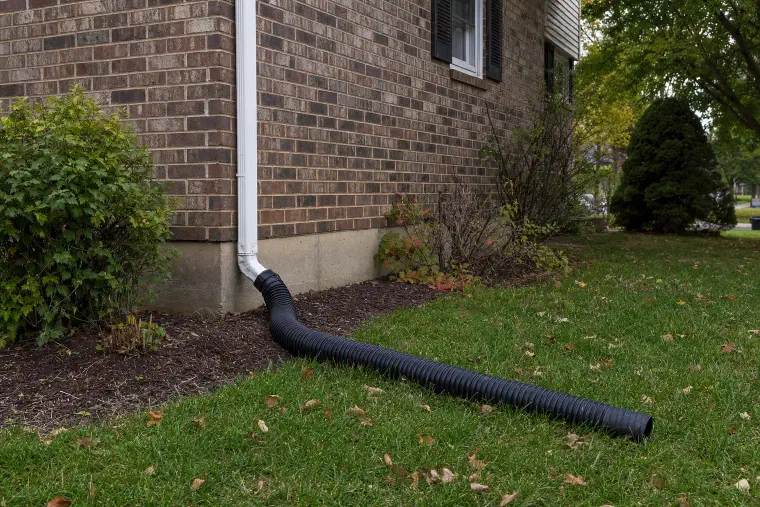
A downspout extension should carry roof water at least 4 feet from the house, and farther is better. Many sources say 5 feet, and 10 feet is the number to aim for if you have a basement or the ground is flat. The point is to drop the water where it can soak in away from your foundation.
The short version
- The floor is 4 feet past the wall. A short stub at the bottom of the downspout does not count.
- Aim for 5 feet or more, and for 10 feet if water has ever shown up in your basement.
- The ground under the extension has to slope away from the house, or the water walks right back.
- Check where the water ends up. A driveway, a neighbor’s yard or an icy walk is a bad place for it.
- A downspout that overflows has a gutter problem, and a longer extension will not fix that.
How far should a downspout extension go?
At least 4 feet beyond the wall, and 5 feet or more is better. Extensions should discharge water at least 4 feet beyond the wall (opens in a new tab), according to the University of Minnesota Extension. A stormwater guide hosted by the EPA says to discharge the water at least five feet from foundations (opens in a new tab) to keep it from leaking into the house.
Those are floors, not goals. This Old House puts the bar for a buried line higher, at least 10 feet away from your home’s foundation (opens in a new tab).
What does a downspout do without an extension?
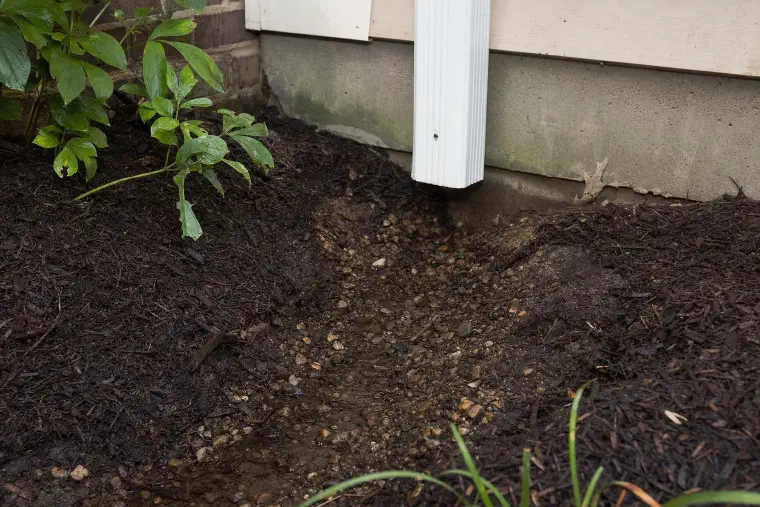
It dumps a whole roof’s worth of water in one spot beside your foundation. The same University of Minnesota guide says a downspout without an extender or splash block is worse than no downspout at all (opens in a new tab), because it puts all that water in a single place near the wall.
You can usually see it from outside. Look for a bare, washed-out patch under the outlet, mulch pushed aside, or a stain on the foundation just below the downspout. Those marks mean the water is landing too close.
When is 4 feet not enough?
Four feet is a minimum for a yard that already drains well. Longer is the better call when:
- you have a basement or a crawl space
- the ground is flat and has nowhere to send the water
- the soil around the house stays soggy for days after rain
- the downspout sits on a long side of the house where lots of roof drains to one corner
A federal guide on foundation drains and downspouts (opens in a new tab) says to connect downspouts to piping that carries water to a sloping final grade farther than 5 feet from the foundation, or to an underground catchment farther than 10 feet away. It adds that the catchment should not be connected to the foundation drain.
Which kind of extension fits which yard?
It depends on how much room you have and how much you want to see of it. Here is how the usual options compare:
| Setup | How far to take the water | Best for |
|---|---|---|
| Extension lying on the ground | At least 4 feet, 5 or more is better | A yard that slopes away from the house |
| Buried pipe that ends on sloping ground | Past 5 feet from the foundation | Keeping the lawn clear for mowing |
| Buried pipe to an underground catchment | Past 10 feet from the foundation | Flat yards, and homes with a basement |
A flexible extension is the cheapest fix and a good first step. Its downside is that people trip on it and mowers chew it up, which is why plenty of homeowners bury the line later.
Does the slope of the ground matter?
Yes, as much as the length. An extension that ends on level or tilted-in ground just hands the water back to the foundation. The soil around the house should slope away from the wall (opens in a new tab) at a minimum of 1 inch per foot for at least 6 feet.
This Old House says the same thing a different way: make sure the extension and the ground around it slope away from the house (opens in a new tab). Walk out after a hard rain and watch where the water goes. If it pools near the wall, the fix may be soil, not pipe.
Where should the water not go?
Keep it off places where it causes a second problem. A few to avoid:
- A walkway or the driveway. In winter it freezes into a sheet of ice. This Old House warns against sending water onto surfaces where it can freeze and create hazards (opens in a new tab).
- Your neighbor’s lot. The same page says to make sure your drainage solutions don’t create problems for adjacent lots (opens in a new tab).
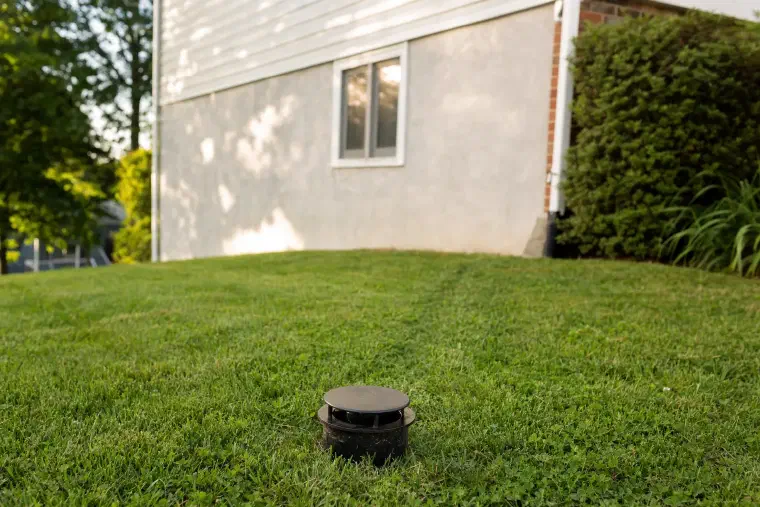
- A dry well set too close. A dry well is a buried pit that lets water soak in slowly. It should sit at least 10 feet from the foundation and 3 feet from any property line (opens in a new tab).
Why does water still pour over my gutter?
That is a gutter problem, not an extension problem. A gutter packed with leaves cannot hand water to the downspout, so it spills over the front edge and lands beside the wall, no matter how long the extension is.
We see this a lot under the big trees around Ellicott City. Standing water in a full gutter also rots the fascia, the board the gutter hangs on, and then the wood behind it. Our piece on fascia boards explains what that looks like. Clearing the gutter comes first, and our gutter cleaning covers the troughs, the downspouts and underground lines.
How many downspouts you have matters too. The University of Minnesota guide suggests one downspout per 50 linear feet (opens in a new tab) of roof eave. A long run with a single downspout will overflow in a storm.
Common questions
Is 6 feet far enough for a downspout extension?
For most homes with a decent slope, yes. It clears the 4 foot and 5 foot floors the sources give. If you have a basement and the ground is flat, 10 feet is the safer number.
Can I just use a splash block?
A splash block is better than a bare outlet, but it only spreads the water for a foot or two. If the ground slopes toward the house, or you have had damp walls, add a real extension.
Do I need to bury the extension?
No. A buried line keeps the yard clear and hides the pipe, and it lets you send water farther. A surface extension that stays connected does the job as well.
Who fixes a downspout that is loose or pulling away?
We do. A downspout that is crushed, loose or no longer connected sends water straight at the wall, and we can fix it as part of a gutter repair. If you are not sure what is wrong, our free roof inspection includes a look at the gutters.
What to do next
Look at your downspouts after the next hard rain and see where the water lands. If it lands within a few feet of the wall, add length first. If the gutters are overflowing or sagging, get them looked at. You can call us any time, or read about our gutter repair and free roof inspection.


