

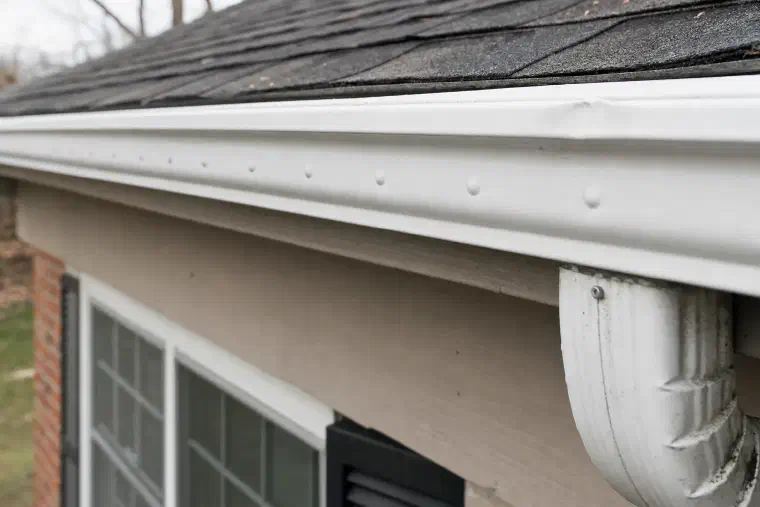
A roof is inspected for hail damage in four steps: a walk around the house for dents in soft metal, a walk on the roof, a hands-on check of each shingle that looks hit, and a count of the hits on every slope. The hands-on part matters most, because hail leaves marks you can often feel before you can see them.
The short version
- The inspector starts on the ground, looking at gutters, vents and the air conditioner for dents.
- On the roof, they press each suspect spot with a thumb to feel for a soft bruise.
- Hits are counted slope by slope, because an insurer’s rules turn on the count.
- A drone photo alone is not enough for hail, since the damage is subtle.
- Our roof inspection is free. If a claim is involved, you may want a second, independent opinion.
What does an inspector check on the ground first?
The inspector first walks the yard and the outside walls, looking for dents in soft metal. Gutters, downspouts, metal roof vents and the air conditioner cabinet dent easily, so they act as a record of the storm. MU Extension notes that dents in metal roof vents can show the size and amount of hail (opens in a new tab).
Size is the first question, because small hail often does nothing. The National Weather Service’s hail size chart (opens in a new tab) puts a quarter at 1 inch across and a golf ball at 1.75 inches, and it marks the sizes from a quarter up as severe. Pea-size stones that bounce off a sound roof are a different story from stones the size of a golf ball.
Photos get taken here, before anyone steps on the roof. Dented gutters and vents are easy to photograph from the ground, and they back up whatever is found on the shingles later.
How do you find a hail hit on a shingle?
A hail hit on an asphalt shingle is a round spot where the granules were knocked off, with a soft bruise underneath that you can feel. The Nebraska Department of Insurance says a hailstone leaves a bruise in the mat (opens in a new tab), the layer under the granules, and fingers can usually detect it in and around the crater.
That is why the inspector presses. A look from a distance finds dark spots. A thumb press tells you whether the spot is a bruise or a scuff.
Fresh hits are also easy to spot by color. MU Extension says new hits look shiny because the asphalt has not weathered yet (opens in a new tab). An old hit from three storms ago will have faded to match the shingle around it, and that matters when someone asks which storm did it.
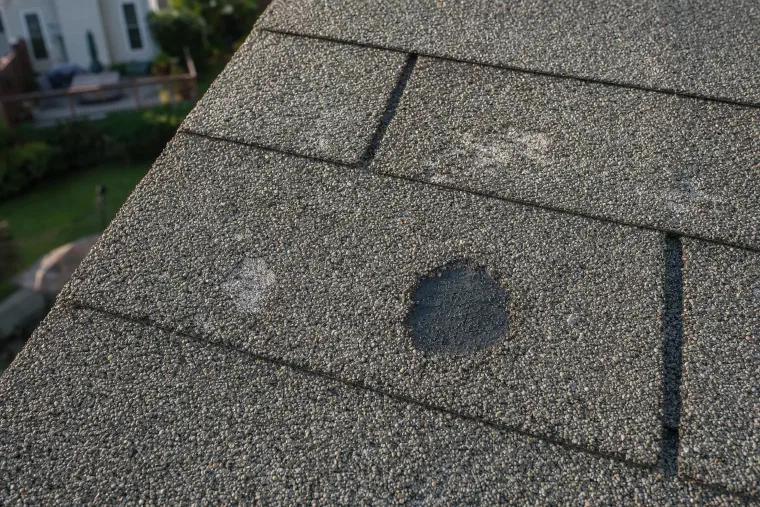
We see this often: hail bruises a shingle that is already brittle from attic heat. So a bruise on an older roof is not only about the storm, and the inspector looks at the attic side as well when it can be reached.
What is a test square?
A test square is a marked-off patch of one roof slope where the inspector counts every hail hit inside it. Counting the whole roof is slow, so the count is taken in a sample. It is done on each slope separately, because hail blown in from one direction hits the windward slope hardest.
What happens with the count is up to the insurance company. MU Extension reports that insurers may use a rule such as 10 verified hits per 100 square feet (opens in a new tab) to decide on a new roof, and its specialist says the question is best answered by an adjuster, since each company can have somewhat different standards. We do not set that number and cannot tell you which one your policy uses.
The inspector often circles each hit with chalk and photographs it, so the count can be checked later by someone else. If you see chalk rings on your roof after a visit, that is why.
Why is a drone not enough?
A drone cannot press a shingle, so it cannot find the bruise. Hail damage is subtle, and it takes a thumb press to find a bruised mat, plus a count in test squares. A drone-only inspection is inadequate for hail.
A drone has a real use. On a roof that is too steep or too fragile to walk, drone imaging typically runs $200 to $450. Our own inspection is a walk on the roof, with shingles lifted and soft spots pressed. We cover the rest of what a visit includes in what a roof inspection includes.
What looks like hail damage but is not?
Several things leave round or bare marks that are not hail. This table covers the usual ones.
| What you see | What it may be | How to tell |
|---|---|---|
| Round spots with granules missing | Hail | Random pattern, sizes vary, soft bruise underneath |
| Small pops or craters with no soft spot | A blister from heat | Nebraska’s insurance department says a blister has no bruise you can feel (opens in a new tab) |
| Marks in a neat line or path | Foot traffic or a ladder | The same source says damage in a pattern was not caused by hail (opens in a new tab) |
| Grit in the gutter, no dark spots | Old shingles shedding granules | Granule loss alone does not prove damage (opens in a new tab) |
| Scuffed granules near vents and the chimney | Techs and cleaners walking the roof | Marks follow the path to the equipment |
Everyone who walks a roof leaves marks. HVAC techs, satellite installers, chimney sweeps and gutter cleaners scuff granules, and on a hot day their footprints crack the mat. An honest inspector rules those out before counting anything as hail.
What does the inspector write down?
A good inspection ends in a written report with photos, not a verbal “looks fine.” Ours is a written condition report with photos, kept separate from any proposal, and it includes a measured square count and the pitch. The visit takes one to two hours on site. The report usually arrives the same day or within 24 to 48 hours.
It also gives a remaining-life estimate with reasons. That helps when the question is not “was there a storm” but “is this roof worth fixing.” Our article on what to do after a storm covers the checks you can do yourself first.
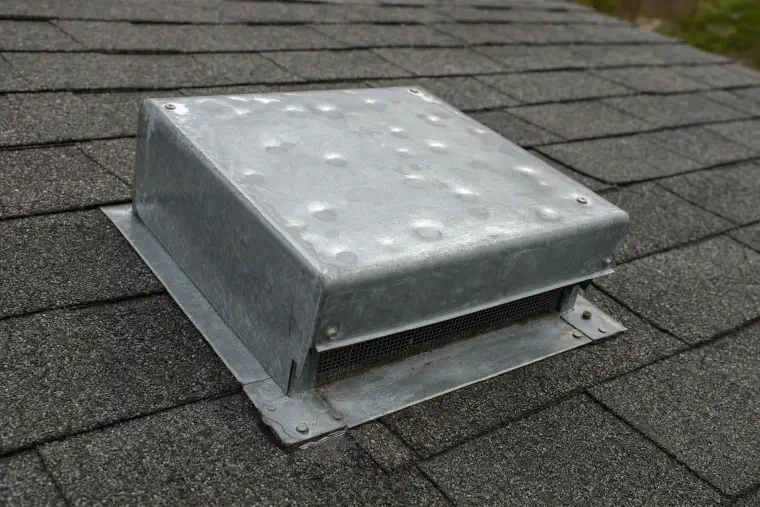
Keep in mind that the report is a snapshot. A wind or hail event the following week can change it, so date your photos.
Who should inspect the roof if you plan a claim?
If a claim is involved, consider an independent inspector in addition to any roofer. A free inspection from a roofing company is also a sales visit, since the inspector is paid when contracts close. That does not make it wrong, but it is not an independent opinion. A standalone independent inspector typically runs $200 to $450.
For hail claims, a Haag-certified inspector is the kind we recommend. MU Extension adds that the best results come when an experienced roofer walks through (opens in a new tab) the inspection with the insurance adjuster and points out the damage. The same page tells homeowners to be wary of out-of-town roofing companies that offer free inspections, which is fair advice about anyone who knocks on your door after a storm.
The policy and the adjuster decide what is covered. We cannot promise what a claim will pay. An adjuster’s review commonly adds four to twelve weeks before any work begins.
How soon can you get a hail inspection?
Scheduling typically takes two to five business days. After a regional storm it can stretch to one to three weeks, because one wind or hail event can turn a three-day backlog into three weeks. If the roof is leaking in the meantime, a tarp is the usual stopgap, and our storm and wind damage roof repair page explains what that involves.
Common questions
Can I check for hail damage myself?
You can check the ground-level signs: dented gutters, vents, siding and the air conditioner. Staying off the roof is the safer choice, since a wet or steep roof is easy to slip on and a careless boot can crack brittle shingles. Take photos from the ground and let an inspector do the pressing.
Does a roof with no dark spots have no hail damage?
Not always. Hail damage on asphalt shingles can be hard to see, and a bruise may show as a soft spot before it shows as a bare one. That is the reason inspectors press and count rather than only look.
How much does a hail inspection cost?
Ours is free, with no obligation to book work. A standalone independent inspector typically runs $200 to $450, and a thermal moisture scan typically runs $400 to $700. We break down these costs in how much a roof inspection costs.
How long after a hailstorm should I get the roof checked?
Soon, while the hits are still fresh and easy to date. New hits look shiny, and they fade with weather. Waiting also gives a small bruise time to turn into a leak at the next hard rain.
What to do next
Photograph the dents you can see from the ground, write down the date of the storm, and book a visit. Our free roof inspection includes a walk on the roof and a written report with photos. The phone is answered 24/7.


