Most gutters last somewhere between 10 and 30 years, and the material decides most of it. Vinyl sits at the short end, aluminum in the middle, and copper at the far end. How well they are kept can add or take away a good many of those years.
The short version
- Vinyl gutters last about 10 to 15 years. Aluminum lasts about 20 to 30.
- Galvanized steel lasts about 15 to 20 years, zinc about 50, and copper about 100.
- Leaky seams, sagging and rust are the usual signs the end is near.
- Cleaning twice a year and fixing small leaks early are what stretch the range.
- Old gutters that fail do damage behind them, so replace them before the fascia rots.
How long do gutters last by material?
It depends on what they are made of. Vinyl lasts 10 to 15 years, aluminum 20 to 30, galvanized steel 15 to 20, zinc 50 and copper 100 (opens in a new tab), according to This Old House. Other guides give slightly different numbers, so read them as a rough guide and not a promise.
| Material | Typical life |
|---|---|
| Vinyl | 10 to 15 years |
| Aluminum | 20 to 30 years |
| Galvanized steel | 15 to 20 years |
| Zinc | About 50 years |
| Copper | About 100 years |
Aluminum is the one we install. If you are choosing between it and plastic, our article on aluminum vs vinyl gutters goes through the trade-offs.
What makes gutters wear out early?
Cold swings, falling debris and neglect. Vinyl is more likely to crack or warp over time, especially in colder climates or areas with large temperature swings (opens in a new tab). Aluminum can dent or wear more easily than heavier metals, particularly in areas with hail or falling debris (opens in a new tab).
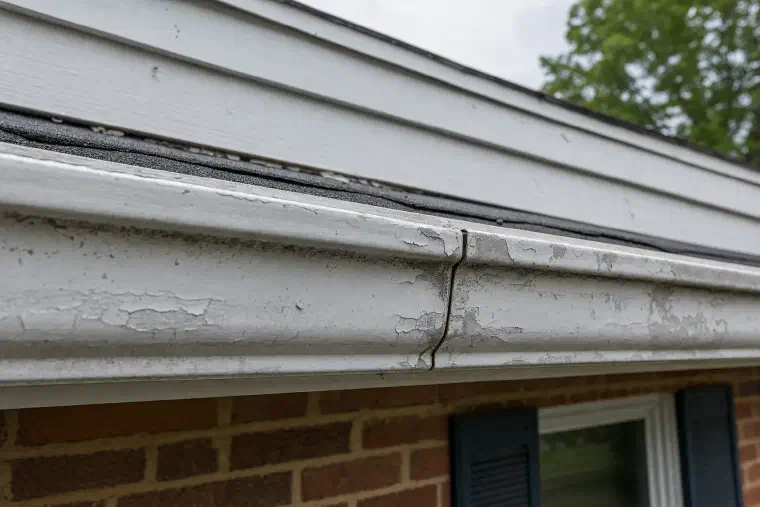
The joints go first. This Old House calls them the weakest points in any gutter system (opens in a new tab), and notes that temperature shifts dry out the caulk, which causes leaks there. Caulk is a consumable. A seam that depends on it has a limited life, so a drip at a seam is often the first real sign of age.
Can you make gutters last longer?
Yes. For aluminum, the same guide says gutters can last up to 30 years if you carefully maintain them (opens in a new tab). Its list of what helps is short and sensible:
- Clean them at least twice a year, and more often if trees overhang the roof.
- Repaint every few years to protect against sun damage.
- Trim back branches so less lands in the trough.
- Fix small leaks, loose fasteners and sagging sections early.
On a lot with big trees, which is most of the lots around here, the cleaning matters more than anything else on the list. Our article on how often to clean your gutters has a schedule.
How do you know gutters are at the end of their life?
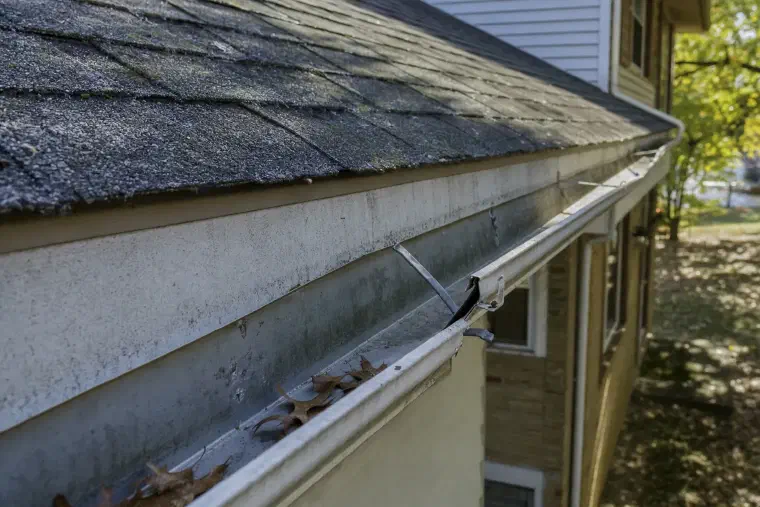
You will usually see it from the ground. The signs worth acting on are:
- Seams that drip even after a dry spell, or a gutter that keeps leaking after you reseal it.
- Sections sagging or pulling away from the roof edge, with bent hangers.
- Cracks in vinyl, or flaking paint and chalky surface on older aluminum.
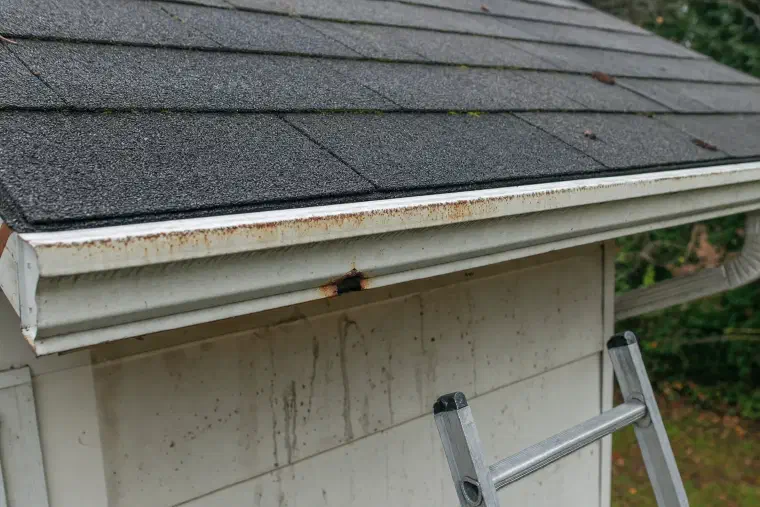
- Rust spots or holes on steel.
- Water spilling over the edge in light rain when the gutter is clear.
- Stains on siding or a trench in the soil under the edge.
One or two of these on a young gutter is a repair. Several along the same run on a gutter past 20 years is usually a replacement. Our gutter repair page covers what can be fixed in place, such as resealing and re-pitching.
What does a failing gutter do to the house?
Water goes where it should not. A full or leaking gutter can cause erosion around your home’s foundation, basement flooding and damage to your roof’s fascia boards (opens in a new tab), according to This Old House.
The fascia is the board the gutter hangs on. In our experience, standing water in a full gutter, or water running down behind one, rots the fascia first, then the rafter tails, then the first few inches of roof decking. From the attic and from the ground, none of it shows. It is a real carpentry repair at the roof edge, and it is the main reason not to run a worn-out gutter for one more winter. Our article on fascia boards and why they rot explains how to check.
Common questions
Do gutters last as long as a roof?
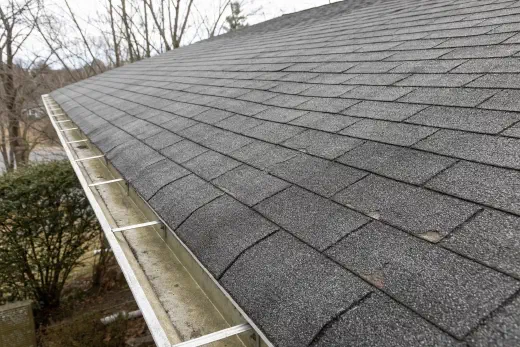
Not usually. A shingle roof in Maryland realistically lasts 18 to 25 years, and an aluminum gutter is in about the same range. That is why gutters are often replaced alongside a new roof. Gutters are not part of a standard roof replacement, so ask for them to be quoted with the job.
Is it worth repairing old gutters?
If the gutter is sound and the problem is a loose hanger or one leaking seam, yes. If the metal is thin, rusted through or the paint is gone along the whole run, a repair buys little time. New aluminum is cut on site to the length of each wall, which leaves fewer joints to fail.
Does a gutter guard make gutters last longer?
It cuts down on cleaning, which helps, but it does not end it. The gutter itself still ages, so it still needs a look each year.
What to do next
If your gutters are past 20 years, leaking at the seams or pulling away from the roof edge, we will look at them for free during a roof inspection. When it is time for new ones, our gutter installation page covers what a new set includes. Call us any time, 24/7.