Most flat roofs last somewhere between 15 and 30 years, and the flat roof lifespan you actually get depends more on the seams, the drainage and the installer than on the material. Rubber (EPDM) tends to last longest, and white membrane (TPO) tends to be the least certain.
The short version
- EPDM, modified bitumen and built-up roofs are usually quoted at 20 to 30 years.
- TPO estimates run lower and vary the most, so ask who put it on.
- Water that sits on the roof for days shortens its life.
- Seams, edges and anything that pokes through the roof fail first.
- A free inspection tells you how much life a roof has left.
What is the average flat roof lifespan?
Plan on 20 to 30 years for a well-built flat roof, and be glad of more. The sources do not agree, and that is worth knowing. This Old House says EPDM often lasts 20 to 30 years or more (opens in a new tab) with proper maintenance, and puts built-up roofing and modified bitumen at the same 20 to 30 years.
Another This Old House guide, quoting InterNACHI figures, is more cautious: EPDM 15 to 25 years (opens in a new tab), TPO 7 to 20 years, modified bitumen 20 years and built-up roofing 30 years. So the honest answer is a range, not a number.
How long does each flat roof material last?
Here are both sets of figures side by side. They come from the two This Old House pages linked above.
| Material | Guide one | Guide two |
|---|---|---|
| EPDM (black rubber) | 20 to 30 years or more, up to 50 | 15 to 25 years |
| TPO (white membrane) | not covered | 7 to 20 years |
| Modified bitumen | 20 to 30 years | 20 years |
| Built-up roofing | 20 to 30 years | 30 years |
Our article on the best material for a flat roof explains how each one is built. For lifespan, the takeaway is simple: no material gets a free pass.
Does standing water shorten the life of a flat roof?
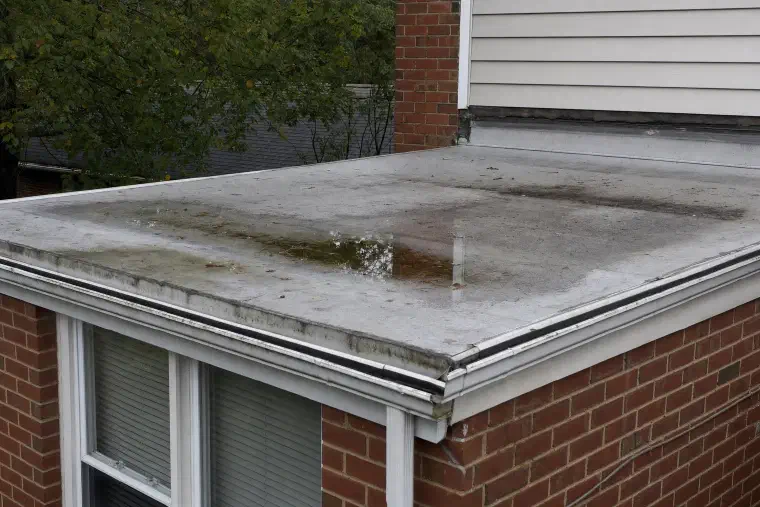
Yes. Ponding means water that sits on the roof instead of running off. The National Roofing Contractors Association says short ponding is acceptable, but water left for more than 48 hours (opens in a new tab) can be detrimental to the roof.
A flat roof has almost no hill, so one clogged drain or one low spot is enough. This Old House makes the same point about flat roofs in general: water sits until it evaporates (opens in a new tab) or finds a way through tiny cracks. If you can see a pool two days after a rain, tell someone.
What makes a flat roof wear out early?
Poor installation, ponding water and neglect. This Old House says poor installation compromises even the best materials (opens in a new tab), and we agree. The installer decides more than the label does, and the work that matters is in the seams, the edges and the flashing (the metal or membrane strips that seal a joint).
Two more things wear a flat roof out:
- Caulk used as the fix. Sealant has a life of about 5 to 10 years, so any detail that depends on it is a scheduled leak.
- Foot traffic. Every technician or installer who walks the roof can scuff or crack it, and a path worn through one spot ages that spot years faster than the rest.
How often should you check a flat roof?
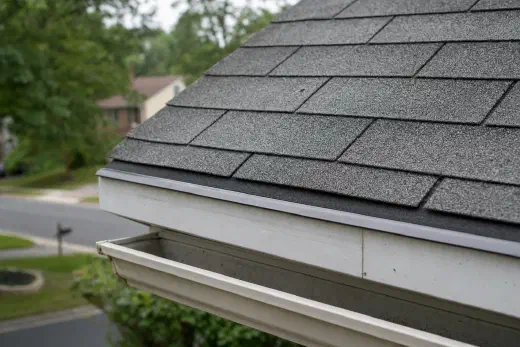
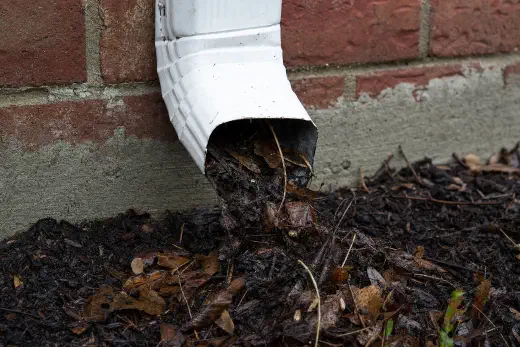
Twice a year is a good habit. This Old House suggests you inspect your flat roof at least twice a year (opens in a new tab), usually spring and fall, and after big weather. Look for water still sitting on it after a storm, and keep drains and scuppers (the openings that let water out through the edge) clear.
You do not have to climb up to do the first part. From a window or a ladder you can often see a pool, a lifted seam or a dark patch. Leave the walking to someone who does it every day.
How can you tell a flat roof is near the end?
Look for repeated leaks, splits along seams, bubbles, and patches on top of patches. One leak is a repair. Three leaks in different places is a roof telling you something. Our article on why a flat roof blisters covers one of those signs.
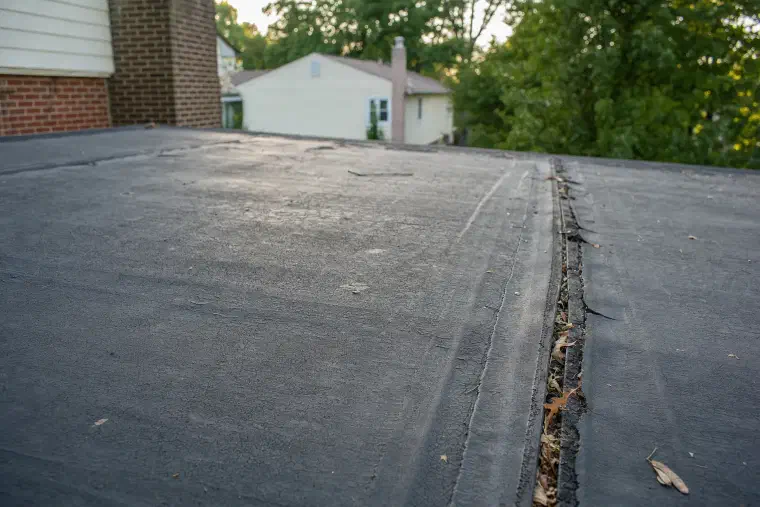
If the membrane is sound and the trouble is one seam, a repair can keep the roof going for years. We would rather repair and save you money than sell a roof you do not need yet. A low-slope membrane repair typically runs $2,500 to $6,000 in our area. That is a typical range, not a quote. When it has failed in several places, we say so, and our flat roof repair page shows where flat roofs leak.
Common questions
Can a flat roof last 50 years?
It is possible but rare. This Old House says EPDM roofs often have the longest lifespan at up to 50 years (opens in a new tab), but “up to” is a ceiling, not a promise. Another guide puts EPDM at 15 to 25 years.
Do shingles or a flat roof last longer?
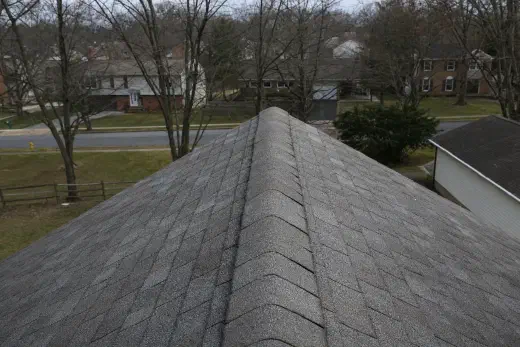
In Maryland, asphalt shingles realistically last 18 to 25 years. A good flat roof can match that, and the better ones can pass it, but a flat roof has less room for error because water sits on it.
Is a manufacturer warranty the same as the roof lifespan?
No. A warranty number covers a defect in the product, not how long the roof will last in the field. The contractor’s workmanship warranty tells you more.
What to do next
If you are not sure how much life your flat roof has left, have someone walk it. Our free roof inspection includes a boots-on-the-roof look and a written report with photos. When a roof is done, our flat roof installation page explains what we put on.