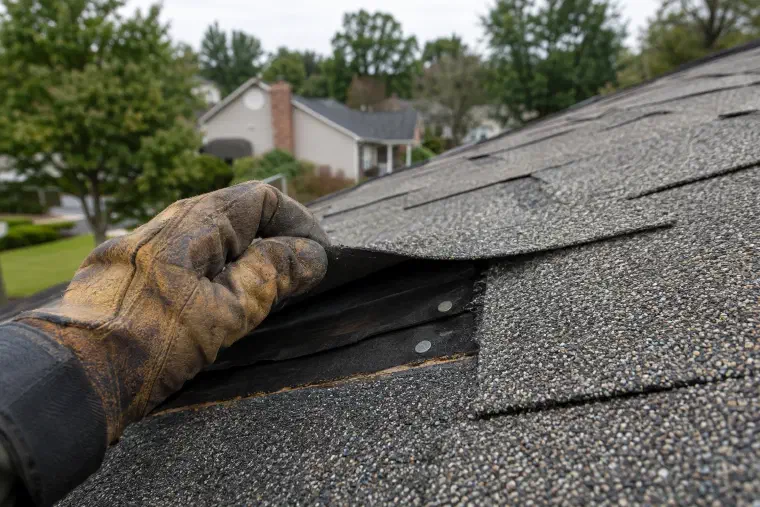
Most roof repairs take between 1 and 4 hours of active work on the roof, but the full project from your first call to completion usually spans 1 to 2 weeks in normal conditions. The actual repair time depends on the type of damage, while the calendar time stretches to include diagnosis, scheduling, and weather.
TL;DR
- Active repair work usually lasts 1 to 4 hours on site.
- Total project window runs 1 to 2 weeks in normal conditions, and 3 to 6 weeks after a regional storm.
- Hidden decking damage, steep roofs, and previous bad repairs are the most common time stretchers.
- The 25% rule can turn a patch job into a slope replacement that takes a full day or more.
- Asking the right questions upfront helps you spot unrealistic timelines.
How long does a typical roof repair take?
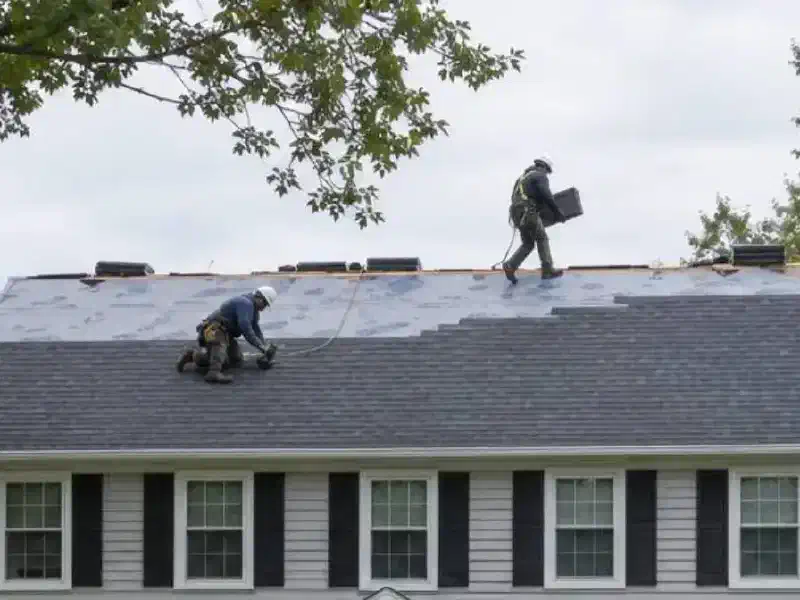
The on-site labor for most roof repairs runs 1 to 4 hours. That covers the time a crew needs to replace a handful of shingles, swap a pipe boot, or resecure a ridge cap. The bigger number is the total calendar time: from your first call to the day the work is done, plan on 1 to 2 weeks in normal conditions. During peak season or after a storm, that window can stretch to 3 to 6 weeks.
Those two numbers measure different things. The active clock is the wrench-turning part. The scheduling clock includes the inspection, the estimate, lining up materials, and waiting for a dry weather window. When someone asks how long a repair takes, they are usually asking about the calendar clock, and that one has more moving parts than a simple shingle swap. If your roof is leaking right now, we can often get a crew out for roof repair in Ellicott City within a few days, but a non-emergency repair during a busy October will wait its turn.
What can make a roof repair take longer?
Hidden decking damage is the most common time stretcher. If the wood under the shingles is soft or rotted, a 1-hour patch turns into a half-day repair that requires cutting out and replacing sheathing, often adding $150 to $500 or more to the job. Older roofs are especially prone to this because shingles can become brittle: lifting one to fix the area underneath can crack it, and suddenly a small repair cascades into a much larger area.
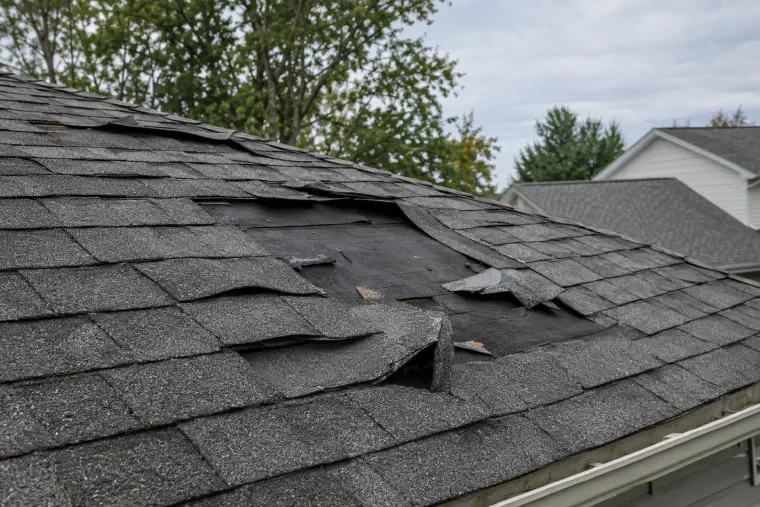
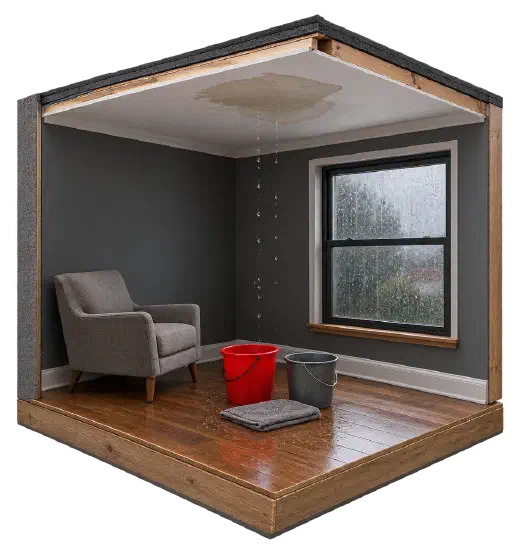
Other factors that push the clock forward: steep pitches that slow the crew down, poor ladder access on wooded lots, the discovery of a previous bad repair (roofing tar that traps moisture and hides rot), and the simple fact that a ceiling stain is almost never the start of a leak. Water has usually been entering for years before it shows up inside, which means the decking underneath may already be compromised. We have pulled back shingles on what looked like a straightforward leak and found a patch of decking that crumbled to the touch. That kind of find adds hours to the labor, and it is not rare. If your roof has had multiple patch jobs over the years, a roof damage repair may be the smarter path than another isolated fix.
The two clocks nobody explains
Every roof repair runs on two separate clocks. The first is the active labor clock: the 1 to 4 hours a crew spends on the roof actually fixing the problem. That clock is predictable. The second clock is the calendar clock, and it covers everything from the moment you pick up the phone to the day the ladder comes down. That one is where most homeowner frustration lives.
The calendar clock includes the inspection visit, writing the estimate, ordering shingles if the color is discontinued, waiting for a dry day, and fitting the repair into the crew’s schedule. In normal conditions, that all adds up to 1 to 2 weeks. After a regional storm, the calendar clock gets blown out. One wind or hail event can turn a 3-day backlog into 3 weeks because every roofer in the county is suddenly booked. We answer the phone 24/7 for emergency roof repair, and even then, the tarp goes up fast but the permanent fix may wait its turn behind a dozen other storm-damaged roofs.
The other hidden drag on the calendar clock is the diagnosis itself. If a leak is hard to trace, we may need to run a hose test or spend time in the attic with a moisture meter, which is a separate paid service that adds a few days to the timeline. The repair clock is honest; it is the scheduling clock that tends to surprise people.
What is the 25% rule for roofing?
The 25% rule is an industry guideline, often used by insurers and adjusters, that says if more than 25% of a single roof slope is damaged, the entire slope should be replaced rather than patched. The reasoning is practical: a slope covered in small repairs starts to look like a quilt, and the more seams you create, the more future leak points you introduce.
When the 25% rule kicks in, the repair timeline jumps. A small patch that would take an hour or two becomes a partial slope replacement that takes a full day or more. The crew has to tear off a larger section, inspect the decking, lay new underlayment, and blend the new shingles into the existing roof. If the damage crosses that threshold, you are essentially looking at a mini roof installation on one side of the house. The rule is not a law, but it is a good-faith standard that most reputable roofers follow, and it is one reason a storm-damage estimate can come back recommending a much bigger job than you expected.
What questions should you ask a roofer before a repair?
The right questions upfront can save you from a timeline that sounds great on the phone and falls apart a week later. Start with these five.
Ask how long the active repair will take, and then ask how long the total project window is likely to be. The first number tells you about the labor; the second tells you about their backlog. Ask whether the crew doing the repair is a dedicated service crew or the same crew that handles full replacements. Repairs often get bumped for larger replacement jobs, so if the company does not have a crew that focuses on service work, your small fix may slide down the schedule. Ask what happens if they find rotted decking: will they call you with a price before proceeding, and how much extra time should you expect? Ask whether the shingle color is still in production, because a discontinued color can add 1 to 3 weeks while they source a match or propose a larger repair. Finally, ask about weather: what is their policy if rain pushes the job, and do they need a minimum temperature for the seal strip to bond? A roofer who answers these questions clearly and without hedging is giving you an honest timeline. For more on what to expect, our common roofing questions page covers the basics.
How to tell if a roofer is lying about repair time
A few red flags are worth knowing. If a roofer promises a same-day fix without ever looking at the roof, that timeline is a guess, not a diagnosis. A real repair time comes from an inspection, not a phone call. If they tell you all repairs take “a few hours” regardless of what the problem is, they are either not thinking about decking rot or they are hoping you will not ask. And if they claim they can start tomorrow during a week when every other roofer in the county is booked solid after a storm, that is worth a raised eyebrow. Either they have no backlog (which is its own question) or they plan to bump your job the moment a bigger one comes along.
A free roof inspection is the only way to get a real timeline. We walk the roof, lift shingles, check the attic, and then give you a number that accounts for what we actually found. Anyone who skips that step and still gives you a firm hour count is telling you what you want to hear, not what the roof is actually going to need.
Roof repair timelines by type of job
The table below gives a realistic picture of how long common repairs take, from the moment a crew arrives to the day you can cross the job off your list. The total project window includes inspection, scheduling, and a normal weather allowance.
| Repair type | On-site labor | Total project window (normal conditions) |
|---|---|---|
| Replace 1 to 3 shingles | 1 to 2 hours | 1 to 2 weeks |
| Pipe boot replacement | 1 to 2 hours | 1 to 2 weeks |
| Ridge cap resecure | 1 to 2 hours | 1 to 2 weeks |
| Valley repair | 2 to 4 hours | 1 to 2 weeks |
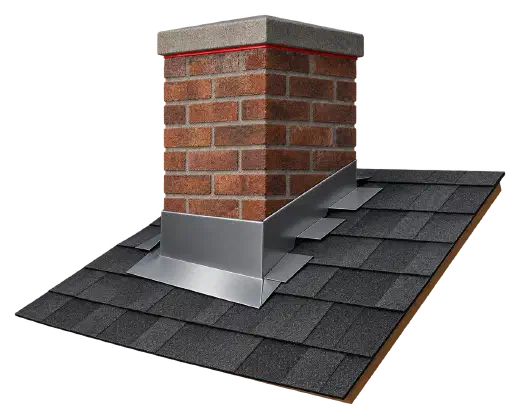
| Chimney reflash | 2 to 4 hours | 1 to 3 weeks |
| Skylight reflash | 2 to 4 hours | 1 to 3 weeks |
| Partial slope replacement | 1 day or more | 2 to 4 weeks |
| Emergency tarping | 1 hour | Same day or next day |
Smaller jobs like a shingle swap or pipe boot tend to land near the bottom of the range. A chimney reflash or valley repair takes longer because the crew has to cut and bend metal on site, and the sealants need time to cure. A partial slope replacement is a different animal altogether: it involves tear-off, decking inspection, new underlayment, and shingle blending, so it eats a full day and often triggers a permit.
Common questions
Do I need to be home while the roof repair is being done?
You do not need to be home for the actual repair work, as long as we have access to the roof and the attic if needed. Many homeowners prefer to be there for the first few minutes to walk through the scope, then leave the crew to it. If we find hidden damage that changes the job, we will call you before proceeding.
Will the repair shingles match my existing roof?
A patch will be visible. Even if the shingle color is still in production, the new shingles will look different from the weathered ones around them. Over time, sun and rain will blend them somewhat, but a perfect match is not realistic. If the color has been discontinued, we may need to source a close alternative or propose a larger repair to make the transition less obvious.
Can a roof repair be done in the rain?
No. Shingles need a dry surface to seal properly, and working on a wet roof is a safety risk for the crew. If rain is in the forecast, we will reschedule. The one exception is emergency tarping: we can secure a tarp over a leaking area in the rain to stop water from entering the house, and then return for the permanent fix when the roof is dry.
How soon after a storm can I get a repair scheduled?
It depends on how many other homes in the area were hit. In a normal week, we can usually schedule an inspection within 2 to 5 business days and complete the repair within 1 to 2 weeks. After a regional storm that damages hundreds of roofs, the backlog can push that out to 3 to 6 weeks. Calling early helps, but the reality is that every roofer in the county is working through the same list.
What happens if the roofer finds more damage than expected?
We stop work and call you with photos and a price for the additional scope. You decide whether to proceed. Common surprises include rotted decking, framing that needs reinforcement, or a previous patch that was done incorrectly and has to be undone first. None of that gets added to the job without your approval.