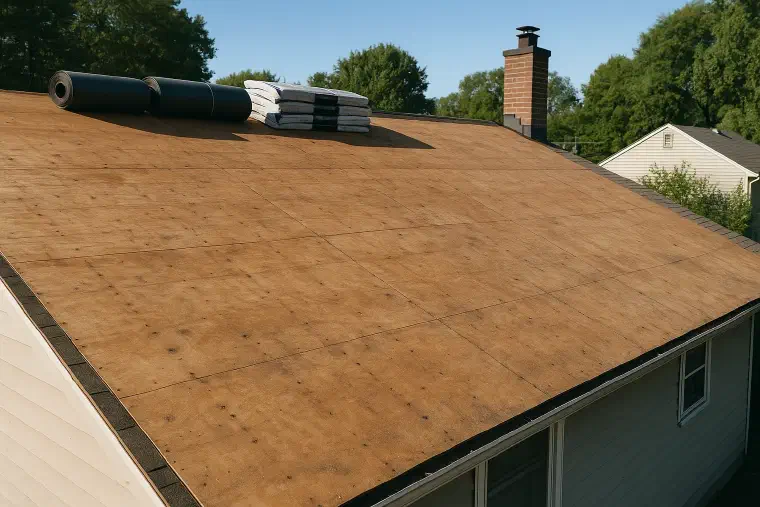
Replacing the roof on a 2,200-square-foot house (roughly 22 squares) usually takes one to two full days of active work. The full project, from signed contract to final inspection, typically runs two to six weeks. That gap isn’t wasted time; it’s filled with permits, material delivery, scheduling, and the kind of weather checks that keep a new roof from becoming a headache on day one.
TL;DR
- For a straightforward asphalt shingle job, crews are on site one to two days.
- The total calendar span from signing to completion is usually two to six weeks.
- Permits, peak-season scheduling, and weather are the biggest reasons for that gap.
- Hidden deck damage or a second layer of old shingles can add hours or a whole extra day.
- Our roof installation in Ellicott City includes a free inspection so you know the real timeline before you sign.
How long does it take to replace a 2,200-square-foot roof?
For a typical 2,200-square-foot asphalt shingle roof, the crew finishes the tear-off and fresh installation in one to two full working days. That timeline assumes a straightforward roof with good access, standard pitch, and no surprises under the old shingles. The bigger project clock, from the handshake until the building inspector signs off, usually covers two to six weeks, according to industry timeline guides that break down residential jobs.
Several things move faster than you’d expect once the dumpster arrives. A 22-square roof sits well inside the range our crews handle in a single day when conditions cooperate. But that’s just the part where boots hit the shingles. Before that day arrives, you’re navigating Howard County permits, material lead times, and the season’s backlog. A mid-sized roof like this is one of the most common jobs we put on, and the rhythm is second nature: prep, strip, inspect, button up, sweep.
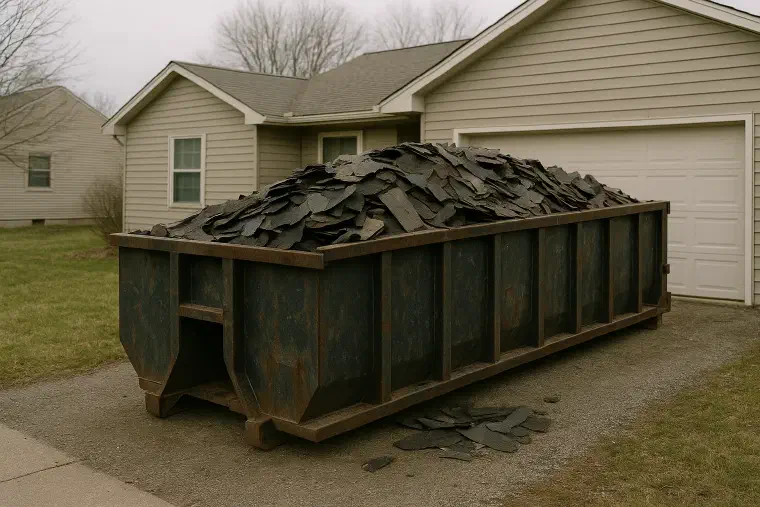
The full timeline from inspection to completion
Most homeowners only see the loudest day. The lead-up and wrap-up are far quieter but just as real. Here’s how a typical roof replacement project unfolds in Ellicott City.
| Phase | Typical duration | What happens |
|---|---|---|
| Free inspection and estimate | 1 to 2 hours on site; same-day or 24-hour report | We walk the roof, measure squares, check attic ventilation, and leave you a written condition report with photos. |
| Decision and contract | A few days to a week (your call) | You review the proposal, ask questions, and sign. No pressure. |
| Permitting | A few days to 2 weeks | Howard County reviews the application. Simple in-kind replacements move faster; anything structural takes longer. |
| Material order and scheduling | 2 to 6 weeks, peak season longer | Shingles, underlayment, flashing, and dumpster get coordinated. Spring and fall are busiest. |
| Active installation | 1 to 2 days | Tear-off, deck inspection, underlayment, ice-and-water shield, shingles, ridge vent, cleanup. |
| Final inspection | 1 to 3 days after installation | County inspector checks the job. We walk the property with you and answer any questions. |
Our free roof inspection is the first slot on that table, and it’s the quickest way to turn “how long?” into a date you can circle. Once the roof is measured and the pitch is noted, the timeline tightens into something reliable.
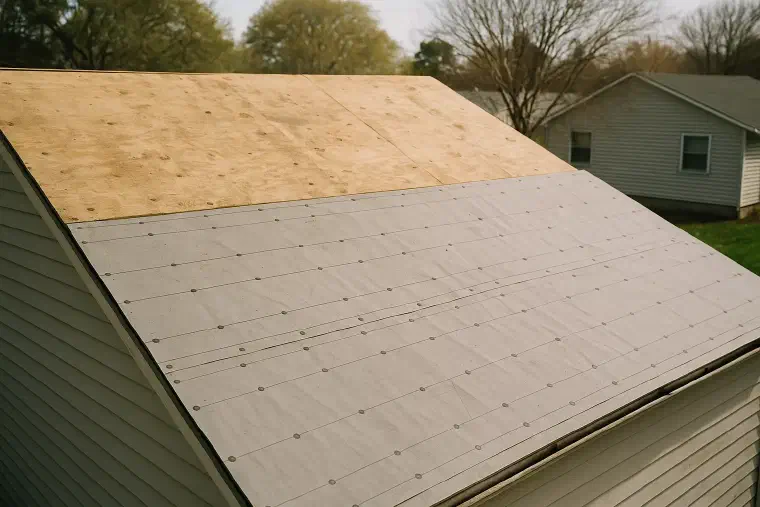
What a typical installation day looks like
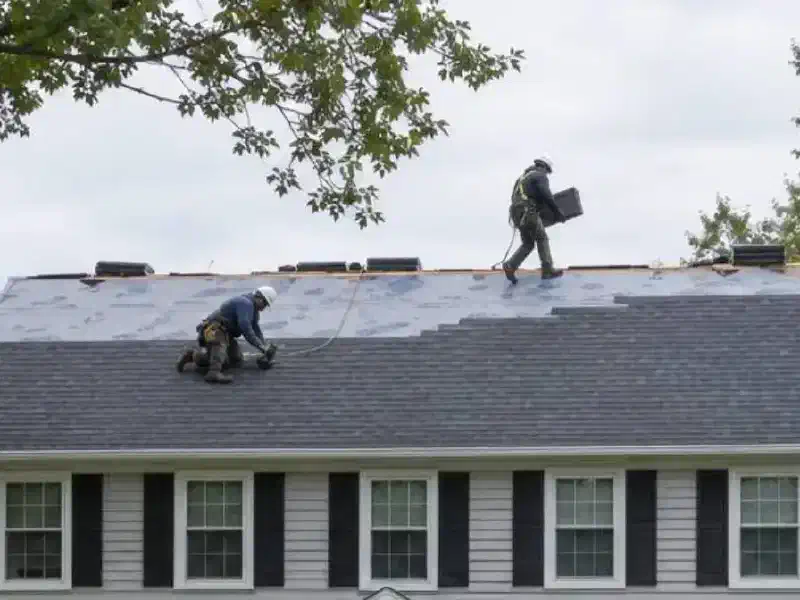
The crew shows up early, usually between 7:00 and 8:00 a.m., and the first twenty minutes are quiet: drop cloths over landscaping, tarps against the foundation, ladder setup, and a safety talk. A 2,200-square-foot house doesn’t need a small army. Six to eight people move fast.
Tear-off starts right after. The old shingles come off in strips, fed down into the dumpster or onto a tarp. Beneath them, you’ll hear the ripping of felt and the thud of staples. Once the deck is bare, the foreman walks every sheet of plywood, looking for soft spots, delamination, or gaps wider than an eighth of an inch. If decking needs replacement, we take care of it right then, typically one or two sheets on a well-maintained roof, occasionally more.
Fresh materials go down in layers. Synthetic underlayment covers the deck. Ice-and-water shield runs along the eaves and in valleys, far enough inside to protect the house from freeze-thaw cycling. New drip edge gets nailed at the perimeter. Then the starter strip, the field shingles, and the ridge. Flashing is never reused; chimneys, walls, and skylights get fresh metal, cut and sealed to last longer than the shingles themselves.
The last hour is the quietest. A new roof installation leaves the site looking better than it started. The crew does a magnetic nail sweep, wheeling a magnet on a stick across the driveway, the lawn, and the flower beds, then pulls the dumpster and tarps. A second walk with you afterward catches anything the first pass missed.
What can make a straightforward 2,200-square-foot roof take longer?
A 2,200-square-foot roof with simple geometry and a standard pitch finishes in one to two days, but four things can stretch that into a longer job: rotted decking found after tear-off, a second layer of old shingles that has to be removed, steep roof sections that slow production by half, and complicated flashing around chimneys or walls. Each of those is a known variable, and a good inspection spots most of them ahead of time.
When we lift the old shingles and find water-damaged plywood, replacing a sheet or two adds a couple of hundred dollars and an hour. If whole sections are punky, we’re into a different kind of morning. Two-layer roofs, shingles laid over shingles, double the tear-off time and hide inter-layer moisture that can change the scope after the dumpster is full. Steep pitches (anything over 8/12) are safe but slow; production cuts nearly in half because every step needs fall protection and careful footing. And a roof with four chimneys, two skylights, and a wall intersection will keep the flashing crew busy far longer than a simple hip roof.
These aren’t surprises we can’t handle. They’re just the things that turn a one-day job into a one-and-a-half or a solid two. The estimate you get after a thorough inspection already accounts for most of them. The few that can’t be seen until the old roof is off, like deck damage, get priced on the spot so you’re never stuck guessing.
How does weather in Ellicott City affect the schedule?
Weather is the single biggest reason a roof replacement gets pushed back in Ellicott City, and the three main culprits are rain in the forecast, cold snaps where the temperature stays below 40°F, and sustained winds high enough to make shingle handling unsafe. The crew won’t tear off a roof when rain is likely, because even a brief shower can soak the uncovered deck and delay the job by days. And shingles need consistent warmth to activate their sealant strip; below 40°F, that bond stays unreliable until spring.
We watch the forecast like it’s a fifth crew member. If rain is predicted, we tarp the exposed areas and wait. If the temperature drops too low, we may push the job to a warmer stretch, or, in a pinch, hand-seal the shingles, though we prefer to let them seal naturally. Wind above about 25 mph makes it dangerous to walk the roof and nearly impossible to handle large sheets of underlayment. A windy day doesn’t always cancel the job, but it stretches the schedule by a few hours while the crew works more deliberately.
Ellicott City’s patchwork of valley lots and wooded ridges means weather can shift faster here than in open country. A morning that starts clear can cloud over by 11 a.m. We’ve learned to stage materials on site a day early so that every clear hour gets used. If a job has to stop for weather, we resume as soon as conditions allow; you’ll know by the end of the day whether we’re coming back tomorrow or waiting until the end of the week. For storm-related damage that pushes a roof past repair, our storm damage repair page walks through what to do next.
What’s the difference between the active workdays and the total calendar time?
Active workdays are the one to two days when crews are on site stripping and shingling; total calendar time is the two to six weeks from the moment you sign a contract until the final inspection is complete. That gap isn’t dead air. It’s filled with permit approval, shingle manufacturing and delivery, crew scheduling, and the deliberate pauses that keep a roof installation watertight.
Think of it like booking a surgery. The operation itself might take a few hours, but there are consultations, lab work, scheduling, and recovery days on either side. A roof works the same way. The county permit office has its own rhythm, typically a few days for a straightforward job, up to two weeks if anything needs clarification. Shingle colors and accessory parts aren’t always sitting on a shelf; some colors run backordered during peak season, and that adds days. Then there’s the crew schedule. In April and May, or September and October, you might be looking at a four-to-eight-week backlog. In December or January, the same crew could be on site within a week.
That’s not a small detail. A roof replacement timeline built around the real calendar, not just the install day, saves you from calling us at 5 p.m. on a Friday wondering where the crew is. By the time the dumpster pulls up, every box is already checked, permits in hand, materials staged, weather clear for two days, so the active work goes fast.
Frequently asked questions
Can a roof be replaced in the winter in Ellicott City?
Yes, and we do it regularly. The main limitation is temperature: asphalt shingles need about 40°F or warmer to activate their sealant strip properly on their own. When the mercury climbs into the mid-40s during a winter afternoon, we can install shingles that will seal as soon as the sun warms them. If the forecast stays stubbornly cold for weeks, we may hand-seal the shingles or wait for a warmer window. Snow and ice on the roof obviously stop work, but dry, cold days with light winds are perfectly fine.
Do I need to be at home during the roof replacement?
You don’t have to be there, but it helps for the first thirty minutes. The foreman likes to walk the property with you at the start, confirm where we’ll place the dumpster and materials, and point out any delicate landscaping that needs a tarp. Once that walkthrough is done, most homeowners head out for the day. The noise is substantial and constant, so staying home with a laptop and headphones isn’t for everyone. We’ll call or text if we find deck damage or anything that changes the scope, and we’ll do a final walkthrough together at the end.
How long does the noise last each day?
The loudest part, tear-off and nail gun work, runs from roughly 8 a.m. until about 2 or 3 p.m., with a break around lunch. After that, it’s mostly hand work: ridge caps, flashing, and cleanup. The hammering and scraping are more noticeable inside than you might expect, especially on a single-story house where the ceiling is close. If you have pets or small children who nap at home, it’s usually easier to relocate them for the day. The crew tries to hammer out the noisiest tasks early and leave the quieter finishing work for later in the afternoon.
What about satellite dishes, solar panels, or gutter guards, should I remove them beforehand?
Please leave them in place and let us know they’re there during the inspection. Our crew removes satellite dishes and antennas before the tear-off, but we do not reinstall them afterward because a re-drilled mount can create a leak later. Solar panels are a different animal and require a separate detach-and-reset by a solar contractor before and after the roofing work; that usually adds a few thousand dollars and several days to the schedule. Gutter guards that clip onto the shingle edge will be pulled and can either be reset or, if they’re tired, replaced. We won’t remove anything without talking to you first.
Do you clean up all the nails and debris at the end?
Yes, and it’s the last thing we do before we leave. Every job includes a magnetic nail sweep of the driveway, walkways, yard, and planting beds. We also walk the perimeter with a second person to spot anything the magnet missed. The dumpster and all debris get hauled away the same day. After a final walk with you, if you find a nail in the grass two days later, call us. We’ll send someone back that same week. It happens occasionally, roofing nails are sneaky, but our goal is a yard you can let your kids and dog back into without a second thought.