

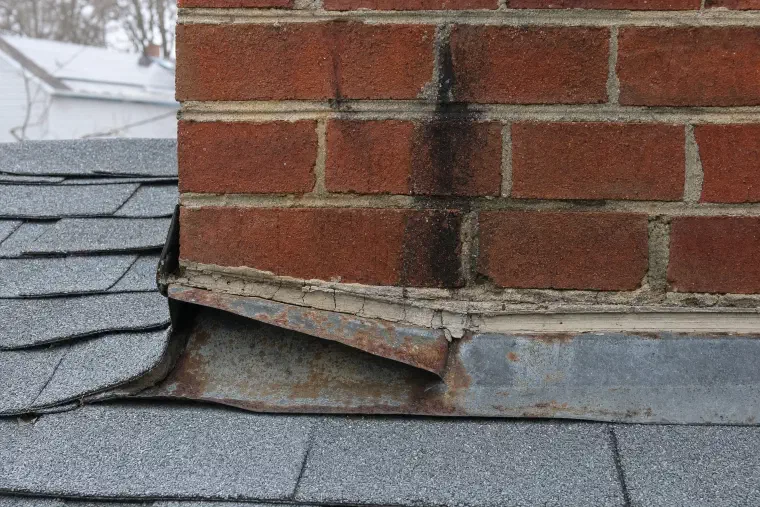
Chimney flashing repair typically runs $800 to $2,200 around Ellicott City. That is for a reflash, where the metal that seals the chimney to the roof is taken off and put back right. A chimney that has to be rebuilt first typically runs $3,500 to $8,000.
The short version
- A chimney reflash typically runs $800 to $2,200, and it is one of the most common repairs we see.
- A chimney rebuild plus a reflash typically runs $3,500 to $8,000.
- Brick and mortar work is separate from the roof repair. It typically runs $800 to $6,000.
- Most of the price is the labor of doing the metal properly, not the metal itself.
- Caulk over old flashing costs less today and tends to cost more later.
What does chimney flashing repair cost?
A chimney reflash typically runs $800 to $2,200. That puts it in the middle band of repairs, where most roof calls land. A small job like replacing one to three shingles typically runs $300 to $650, so a chimney costs more because it takes more work, not because it is exotic.
The minimum service call alone typically runs $350 to $550 with an independent roofer and $550 to $900 with a larger company. Most small repairs land at or near the minimum because getting a crew to your roof is the expensive part, not the parts.
| Job | What it typically runs |
|---|---|
| Chimney reflash | $800 to $2,200 |
| Chimney rebuild plus reflash | $3,500 to $8,000 |
| Chimney masonry that cannot hold new flashing (repointing, a new crown or a rebuild) | $800 to $6,000 |
| Finding the leak with a hose test or moisture meter | $150 to $400 |
| Replacing wet decking under the repair | $150 to $500 or more |
These are typical ranges for our area, not a price list. Your roof sets the real number.
What is chimney flashing, and why does it cost that much?
Flashing is the metal that seals the joint where a chimney meets the roof. This Old House describes it as the metal barrier (opens in a new tab) installed where the chimney meets the roof. Shingles shed water on their own. A brick wall poking through the roof does not, so the metal does that job.
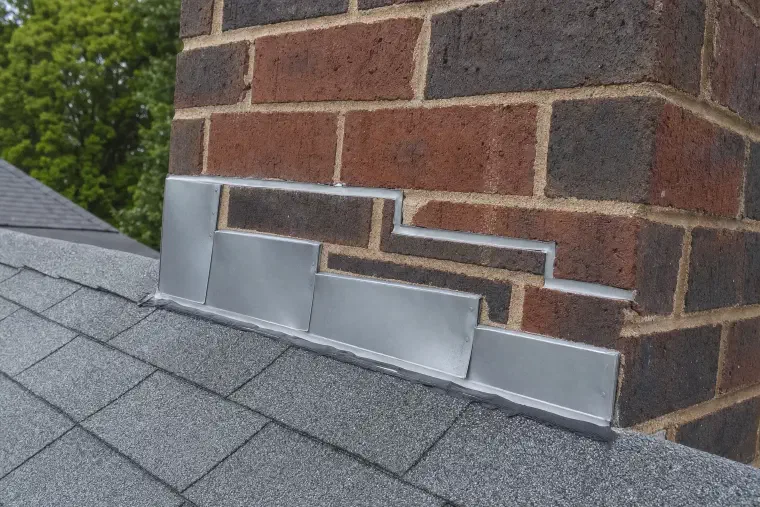
A proper job has two layers. This Old House explains that L-shaped pieces of step flashing (opens in a new tab) are woven into the shingle courses and lapped up the side of the chimney. Then a second layer of metal is set into the mortar joints and folded down over the top of the first.
That second layer is where the time goes. The metal has to be cut into the mortar, set and sealed, on a slope, around all four sides of the chimney. Every side is its own small job.
What makes the price go up or down?
The price moves with how hard the roof is to work on and how much is wrong. These push a chimney job higher:
- a steep pitch, or a roof that is hard to reach with a ladder
- a wooded lot with poor access
- a big chimney, or one in the middle of the roof with more sides to flash
- wet decking found under the old metal
- emergency timing, or a long wait that lets damage spread
- a color match problem if shingles have to be lifted and cannot be reused
And these push it lower: a single-story house, a simple failure, a roof under 12 years old, off-season booking, and bundling more than one repair into one visit.
Is caulk a cheaper fix?
Caulk is cheaper today and usually a scheduled leak. Our view is that any flashing detail that depends on sealant has a life of about 5 to 10 years. This Old House says the same about the corners: caulk can work itself loose (opens in a new tab) over time, and it is not a substitute for properly overlapped flashing.
We see a lot of chimney flashing that was sealed to the brick with caulk and nothing else. It looks fine for a couple of seasons. Then it cracks, and the leak comes back. A previous roofing tar or caulk job also traps moisture and can hide rotted decking, so fixing it often costs more than doing it right the first time.
What else can be on the bill?
The brick is the surprise. Flashing needs sound mortar to be set into. When the mortar is crumbling or the brick is flaking, it has to be repaired first by a masonry sub, and that typically runs $800 to $6,000 on top of the roof work. Masonry work cannot be done below 40°F, so a winter leak can mean waiting for spring.
The metal matters a little too. This Old House notes that copper can last 100 years (opens in a new tab) or longer, while aluminum and galvanized steel have shorter lives in the range of 20 to 40 years. Copper costs more up front. Galvanized steel also wears faster where it touches brick.
Interior repairs, like paint and drywall for a stain, are never part of a roof repair. If the chimney leak has been going a while, plan for those separately. If you are chasing a stain right now, our guide to a leak in the ceiling covers what to do first.
Does a repair come with a warranty?
A repair typically carries a warranty on the repaired area for 30 days to 1 year. There is no warranty on roofs older than 15 to 20 years. It covers that chimney repair, not the rest of the roof, so a new leak two feet away is a new call.
We also cannot promise a leak will stop. Finding where water gets in is a bit of detective work, and it sometimes takes more than one visit. Chimneys are one of the usual suspects, but a cracked crown can leak too. We cover that in what a chimney crown is.
Common questions
Can chimney flashing be repaired, or does it have to be replaced?
Small problems like a loose corner can sometimes be resealed. Flashing that is rusted through, pulled away or was caulked on in place of being set into the mortar is usually replaced. We would rather repair than replace if the metal is sound, because it saves you money.
Why not just reuse the old flashing during a new roof?
Reused flashing is a cheap bid shortcut. New flashing at chimneys, walls and valleys is part of a full replacement unless it is specified as reuse, and new metal is what gives the work a long life.
Can I fix chimney flashing myself?
It is a roof job on a slope, with metal cut into brick. We would leave it to a roofer. If you want to help, look at the chimney from the ground with binoculars and write down what you see.
How do I know the chimney is the leak?
A stain that sits near the chimney is a good sign, but ceiling stains can travel. Water often runs along rafters before it drips. A free inspection with a look at the attic is the cheapest way to find out.
What to do next
If you have a stain near the chimney, get the flashing looked at before another freeze. Our free roof inspection includes the flashing, and there is no obligation to book work. When you know what the chimney needs, our chimney flashing repair page covers how we do it. For other numbers, see what a roof leak repair costs.


