

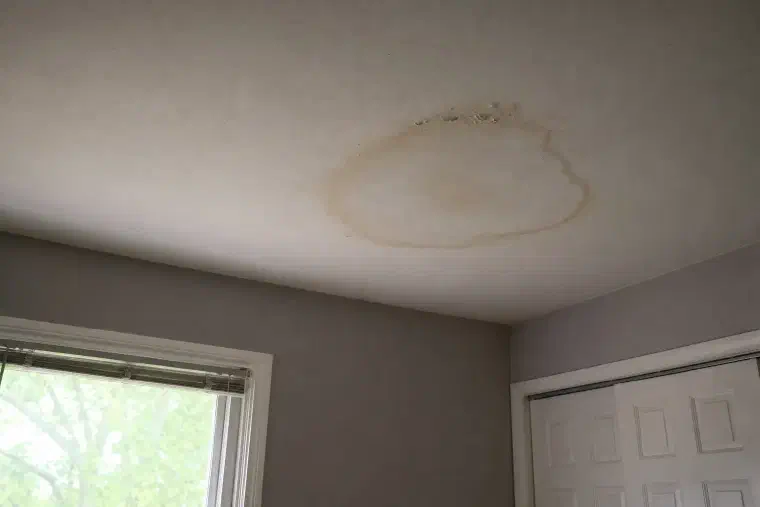
Fixing a roof leak around Ellicott City usually costs between $350 and $2,200, and most calls land near the low end. A cracked pipe boot or a few bad shingles is a small job. A leak that has soaked the wood under the shingles, or one that comes from a chimney, can cost a good deal more.
The short version
- A small leak fix (a pipe boot, a few shingles, a sealant reseal) typically runs $300 to $850.
- Most leak calls fall in the middle: a single leak diagnosis and repair typically runs $500 to $1,600.
- Chimney, step flashing and skylight leaks typically run $700 to $2,200.
- Wet wood under the roof is the usual reason a price jumps.
- A ceiling stain is repaired separately. Drywall and paint are never part of a roof repair.
What does a roof leak repair typically cost?
A roof leak repair typically costs $350 to $550 for the smallest call with an independent roofer, and $550 to $900 with a larger company. Most small repairs land at or near that minimum, because the price is mostly the trip, the ladder and the setup, not the parts.
Here is what the common leak fixes typically run in this area:
| What is leaking | Typical cost |
|---|---|
| Replace 1 to 3 shingles | $300 to $650 |
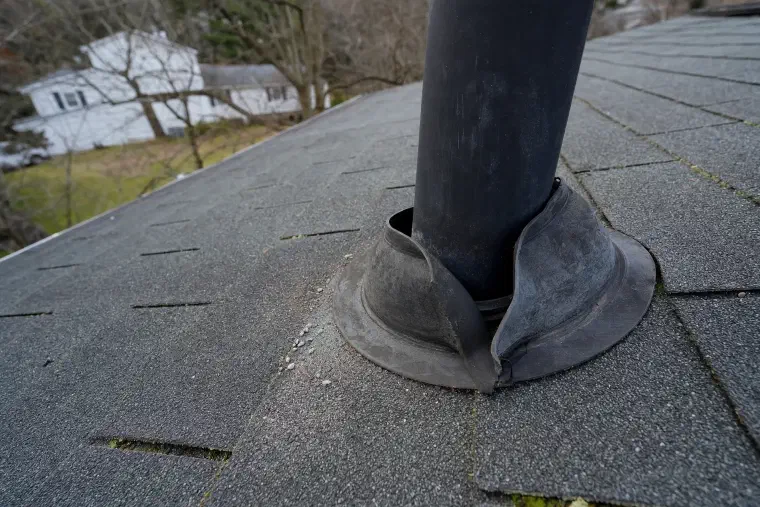
| Pipe boot | $350 to $750 |
| Small sealant reseal | $400 to $850 |
| Single leak, found and fixed | $500 to $1,600 |
| Valley | $700 to $1,800 |
| Step flashing along a wall | $700 to $1,900 |
| Chimney reflash | $800 to $2,200 |
| Skylight reflash | $900 to $2,000 |
| Wet decking section plus new shingles | $1,500 to $5,000 |
| Chimney rebuild plus reflash | $3,500 to $8,000 |
These are typical ranges for the area, not a price list, and your roof will land somewhere inside or outside them. For the same table across every kind of repair, see what a roof repair averages.
Why does one leak cost $350 and another $2,000?
The price follows the part that failed and how hard it is to reach. A pipe boot is a rubber collar around a vent pipe. It is small, it sits in the open, and swapping it takes under an hour. A chimney is the opposite: metal has to be cut into the brick and sealed, and the roof around it has to be opened up.
Three things push a price up:
- Steep or tall roofs. Anything steeper than 8/12 slows a crew down, and a house with no good ladder access takes longer to work on.
- A leak that is hard to find. Several failures at once, or a path that is hard to trace, means more time.
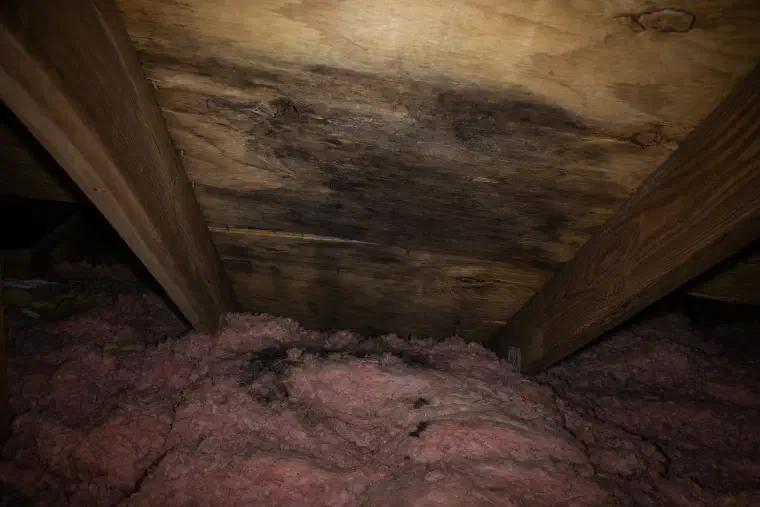
- Wet wood. If the plywood under the shingles has soaked through, it has to come out. That adds $150 to $500 or more to the repair.
What pulls a price down is the opposite: one story, one clear failure, shingles that still match, and a roof under 12 years old.
Where do roof leaks usually start?
Roof leaks usually start at flashing, vents and the places where one roof surface meets another, not in the middle of a shingle slope. Flashing is the thin metal that steers water away at chimneys, walls and valleys. This Old House says flashing can crack, corrode, or come loose (opens in a new tab) with age, which gives water an easy way in.
We see the same pattern on our own calls. Flashing is where roofs actually leak, and the rubber collars on cheap pipe boots tend to crack in 3 to 5 years. A pipe boot can be one of the causes (opens in a new tab) of a leak at a vent pipe, along with the flashing around it.
Caulk is the other usual suspect. Any flashing detail that depends on sealant to keep water out has a life of about 5 to 10 years. We call it a scheduled leak, because it will fail on a date nobody wrote down.
Why is finding the leak part of the price?
Finding the leak is part of the price because the stain on your ceiling is rarely under the hole. This Old House puts it plainly: the leak likely originates higher up (opens in a new tab), so you follow the signs of water uphill. Water runs down a rafter or along the deck before it drops onto your ceiling.
That is why a repair call starts with looking, not fixing. A visual check and a look in the attic are part of a repair call. Tracing a hard leak with a hose test or a moisture meter is a separate paid service, typically $150 to $400, and sometimes credited toward the repair.
Here is the annoying part: finding the leak is a matter of odds, not certainty. A repair does not come with a promise that the leak will stop. Some leaks take a second visit, and a return trip is usually billed unless the same repair failed.
What can make a small leak repair cost more?
Wet decking is the biggest surprise. Decking is the plywood sheets the shingles are nailed to. A ceiling stain is the last stage of a leak, not the first, so by the time you see it, water may have been getting in for a while, and the wood and insulation have been taking it.
Other things that stretch a bill:
- An old patch. Roofing tar or caulk smeared over a failed spot does not bond, traps water and often hides rotted wood. Fixing it means replacing every shingle it touched.
- Brittle shingles. On an older roof, shingles crack when you lift them. A small fix can grow into a much bigger area.
- Shingles that no longer exist. A color match that has been discontinued can force a larger repair, and adds one to three weeks to find shingles.
- Something in the way. Solar panels over the leak have to be taken off and put back first, which typically runs $1,500 to $3,000 on top.
- A leak that is not the roof. Attic condensation, a window or siding can all leave a stain that looks like a roof leak.
Is an emergency tarp extra?
An emergency tarp is usually billed separately, typically $350 to $900, and it may or may not be credited toward the repair. Ask before the crew starts. A tarp does not fix a leak. It keeps water out until the real repair can be done, which in a storm week can be a while.
Tarping is also a job to leave to a roofer. This Old House warns that any roof work carries a fall risk, and that walking on a damaged roof may compound damage (opens in a new tab) or hurt your insurance claim. If water is coming in tonight, our phone is answered 24/7.
Does insurance pay to fix a roof leak?
Insurance sometimes pays, but only for the right cause. This Old House says homeowners insurance will typically cover roof leak repair (opens in a new tab) if it is the result of an unexpected event such as a storm, and may not if age or lack of maintenance is to blame. Your policy and the adjuster decide, not us, and we can’t tell you what a claim will pay.
Two practical points. A leak from an old roof wearing out is rarely a storm claim. And if the repair costs about the same as your deductible, a claim may not be worth filing. Read your policy or call your insurer before you start the work, not after.
When is a repair not worth paying for?
A repair stops being worth it when the roof around the leak is worn out. Asphalt shingles in Maryland realistically last 18 to 25 years. Past 15 to 20 years, most repair warranties do not apply at all, and a standard one on a repair is typically 30 days to 1 year, covering only the spot that was fixed. A new leak two feet away is a new call.
We would rather fix a roof than sell you a new one, and we say so when a repair is enough. If you have paid for the same spot three times, or leaks are showing up in several places, it is worth looking at repair versus replacement before paying for a fourth patch. Waiting costs money too: a leak left alone tends to turn a small fix into a wet-wood job.
Common questions
Is a roof leak repair ever free?
A roof inspection is free from us, but the repair is not. Our free roof inspection includes a walk on the roof, photos and a written report, with no obligation to book work. It gives you a price for your roof instead of a range.
Does the repair price include fixing the ceiling?
No. Drywall, paint and insulation inside the house are never part of a roof repair. Budget for them separately, and wait until the roof is dry and fixed before you repaint, or the stain comes back.
Can I fix a roof leak myself for less?
You can seal a small gap, but locating the real entry point is harder than it looks, and a roof is a bad place to learn. Caulk over the wrong spot only hides the leak while the wood underneath stays wet. If you are not comfortable on a ladder, call a roofer.
How long does a roof leak repair take?
The work itself usually takes 1 to 4 hours on site. From the first call to the finished repair is typically 1 to 2 weeks, and 3 to 6 weeks in peak season or after a big storm.
What to do next
If you have a stain, a drip or a damp attic, start by having someone look at it. Our roof repair team can find where the water is getting in and tell you what the fix involves.


