

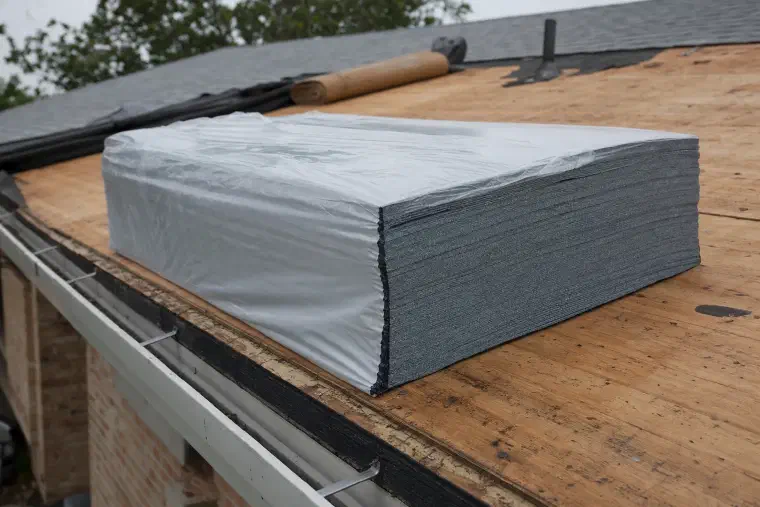
A sound asphalt shingle roof can take wind of roughly 60 mph for the cheapest shingles and more for better ones, but the number on the package is a lab result, not a promise. How the shingles were nailed and whether their seal still holds matter more than the label.
The short version
- Shingles are graded by a lab class, such as Class F or Class H, and not by the wind that hits your street.
- Basic three-tab shingles are typically rated to about 60 mph (opens in a new tab). Thicker architectural shingles handle more.
- Wind damage is often caused by poor installation or a weak seal (opens in a new tab), not by the shingle itself.
- Nails placed too high, and years of smaller gusts, can leave a roof ready to peel at a wind speed it should have survived.
What do shingle wind ratings actually mean?
A wind rating is a lab grade that says how well a shingle held up in a test. Two test methods are used. In the older one, a fan blows air across a deck of shingles, and the highest wind speed achieved without any shingle portion lifting (opens in a new tab) sets the class. Class F is the top grade there. The newer one measures the pull needed to lift a shingle, and Class H is the top grade.
You may see a wind speed printed next to the class. Keep in mind that those speeds are not directly a result of the test standard (opens in a new tab). They describe the class. They do not measure your roof in your yard.
The tests also run on new shingles. The Asphalt Roofing Manufacturers Association notes both are lab tests on shingles as manufactured (opens in a new tab), so they do not copy a roof that has baked in the sun for 15 years.
Which shingles handle the most wind?
Thicker, layered shingles take more wind than thin ones. Consumer Reports says three-tab shingles are typically rated to withstand winds up to 60 mph (opens in a new tab), and that architectural shingles can withstand stronger winds. Our article on three-tab versus architectural shingles covers the other differences.
| Question | What to look for |
|---|---|
| Shingle type | Architectural beats three-tab for wind |
| Lab class | Class F (fan test) or Class H (uplift test) |
| Nails per shingle | Six is the high-wind pattern |
| Fasteners | Nails only, never staples |
| Age of the seal | Stuck down, not dusty or curled |
FEMA recommends (opens in a new tab) Class F shingles under the fan test or Class H under the uplift test to reduce wind damage, installed with six nails.
Does the nailing matter more than the shingle?
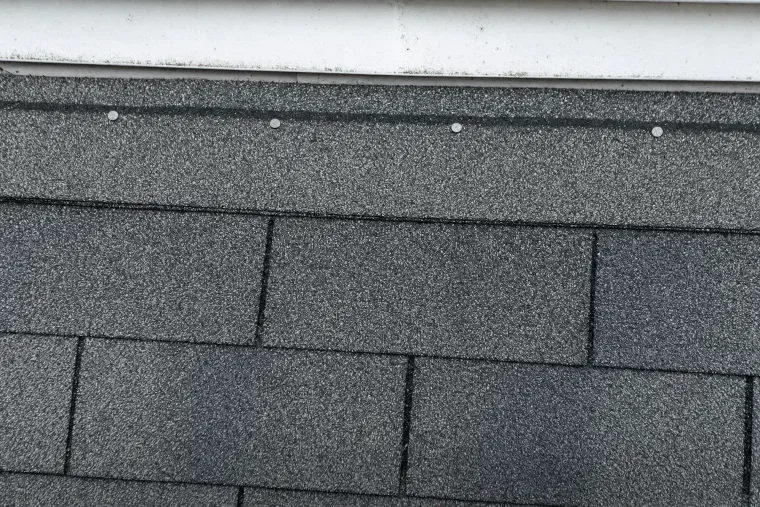
Yes, and it is the part nobody can see from the ground. A shingle has a marked nailing zone. The Department of Energy’s building science guide says to properly locate nails within the nailing zone (opens in a new tab). It also calls for six nails per shingle and says do not use staples (opens in a new tab).
When nails sit above that zone, they miss the shingle underneath. The shingle is then held by its sealant strip alone. We see this constantly: the roof looks perfect until a 50 mph gust peels it off in courses. The same shingle can last 25 years or 9, depending on where the nail went.
Why does the seal matter so much?
The seal is the glue that keeps each shingle’s edge down. IBHS wind testing found that seal strength is the most important factor (opens in a new tab) in how self-sealing shingles perform in high wind. The strip is a temperature-activated, self-sealing adhesive (opens in a new tab) put on at the factory, so it needs warmth to bond. That is why a roof put on in cold weather can end up with seals that never activated.
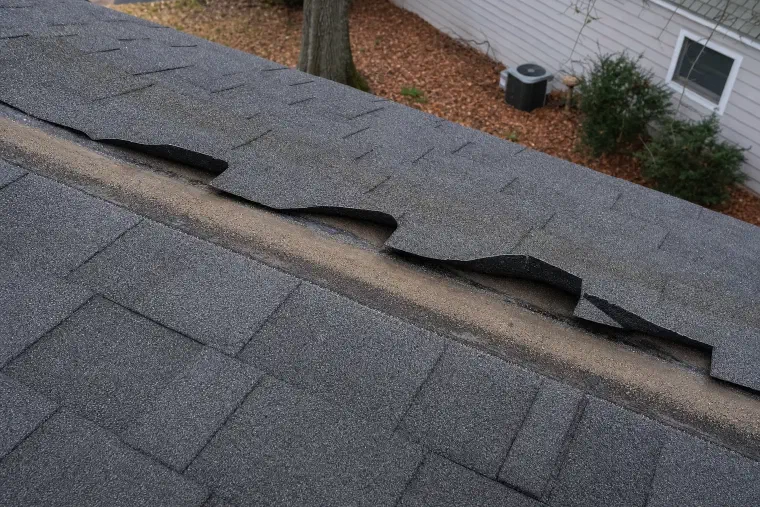
Once a seal lets go, wind can get under the tab and lift it. A lifted tab creases, and a creased tab does not lie flat again.
Can smaller winds hurt a roof?
They can, and this is the version people miss. Repeated gusts around 40 mph can slowly break the seal bonds over several years, until the shingles are effectively unsealed. No single storm did it. Then one ordinary windy night does what the rating said it should not.
That is why storms tend to reveal defects rather than create damage on a sound roof. Wind finds the high-nailed course, and it finds the tired seal.
How do you know if your shingles are still holding?
You cannot tell much from the ground. After a windy night, look for shingles in the yard, tabs that look raised or creased, and bare patches on the slope. Our guide to what wind damage looks like shows each sign.
Checking the nailing means lifting shingles, which is what a walking inspection does. Our free roof inspection includes a walk on the roof, lifting shingles to check the nailing, and a written report with photos. Keep in mind that a free inspection is also a sales visit. For a fully independent view, a paid independent inspector is the way to get one.
Common questions
Can a roof survive a 60 mph wind?
A roof in good shape often can, but it depends on the shingle and the work under it. Basic three-tab shingles are rated around that figure, so they are at their limit. Architectural shingles have more room. A well-sealed, properly nailed roof does far better than one with high nails.
Does a higher wind rating mean my roof is safe?
No. The rating describes a new shingle in a lab. It says nothing about nail placement, the age of the seal or how many windy years the roof has been through. A Class H shingle nailed too high can still peel.
Is wind damage a repair or a replacement?
Usually a repair, if the damage is a few lifted or missing shingles and the rest of the roof is sound. Our article on repairing instead of replacing covers how to decide. Wind-lifted shingles typically run $600 to $1,700 to fix in our area.
What to do next
If a windy night left you wondering about your roof, we can look. Our storm and wind damage roof repair service starts with a free inspection, and the phone is answered 24/7.


