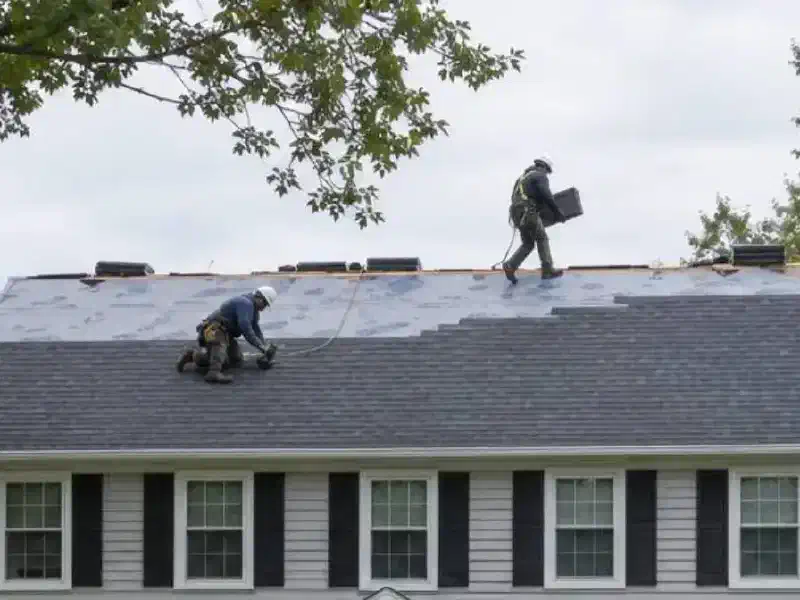
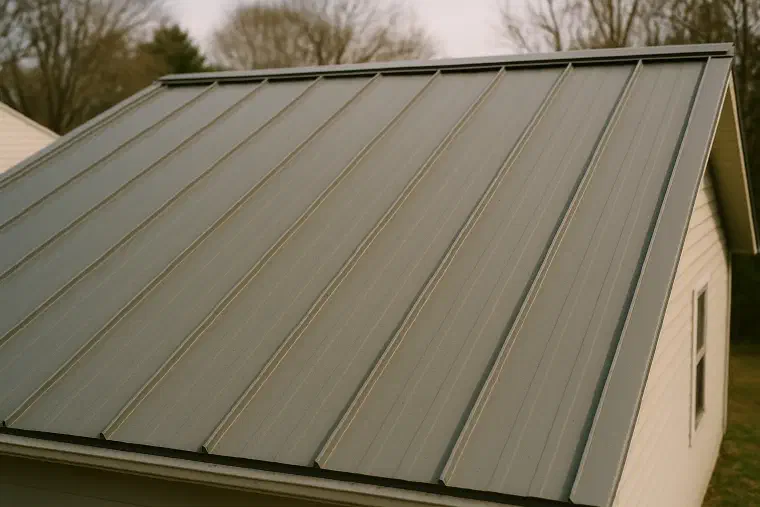
Metal roofs are one of the safest roofing choices you can make. They carry a Class A fire rating, the highest available, and are noncombustible. Properly installed metal panels withstand wind speeds above 140 mph, resist hail that shatters asphalt, and do not attract lightning. Insurance companies often discount metal roofs because they lower storm-claim frequency by up to 35 percent.
TL;DR
- Metal roofs hold a Class A fire rating under UL 790 / ASTM E108 and are noncombustible in a wildfire or lightning strike.
- Interlocking panels and code-mandated fastening let metal roofs handle winds over 140 mph when installed correctly.
- Hail usually causes cosmetic dents, not leaks; a Class 4 impact rating means the roof remains structurally sound.
- The biggest safety factor is the installation crew, shortcuts like high-nailing or reused flashing can turn a safe system into a wind and leak risk.
- Many insurers offer discounts for impact-resistant metal roofs because they reduce hail and wind claims.
What fire safety rating does a metal roof carry?
A metal roof carries a Class A fire rating, which means it provides the highest level of fire resistance recognized by UL 790 and ASTM E108 testing. The panels themselves are noncombustible and will not ignite from flying embers, a stray spark, or a lightning strike.
This rating matters because it measures how a roof covering responds to flame spread and penetration. In a Class A test, the roof assembly stops flame from climbing the surface and prevents fire from breaking through into the attic. That makes a metal roof a powerful defense in wildfire-prone areas and anywhere embers drift onto rooftops, which is more common in Maryland than most homeowners realize.
For a roof assembly to earn a Class A designation, every component must work together: the metal panels, the underlayment, and even the decking. Our metal roofing installation always starts with a system that meets those fire standards as a complete assembly, not just as a stack of listed parts.
How do metal roofs perform in high winds?
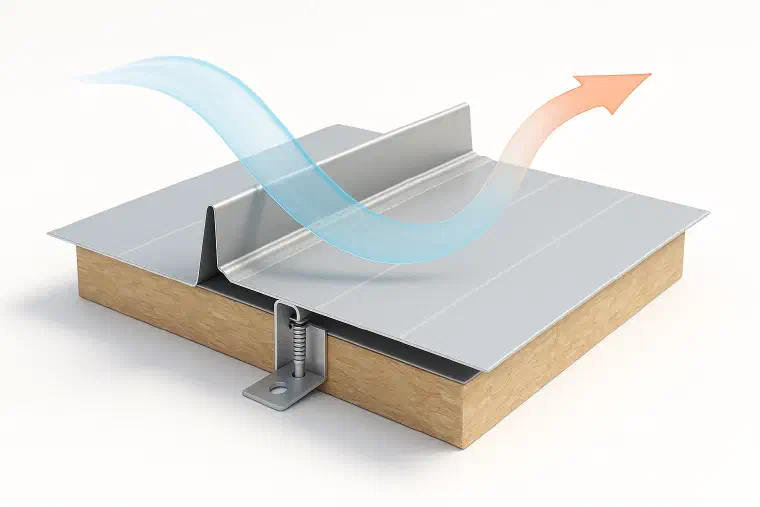
A properly installed metal roof can handle wind gusts above 140 mph, which is stronger than most hurricanes that reach the Mid-Atlantic. The key is interlocking panels and code-required fastening that resist uplift across the whole roof plane.
Manufacturers and the International Residential Code both require metal roofing to pass wind-driven tests like ASTM D3161, UL 580, or FM 4474. These tests simulate sustained suction and gusts that try to peel panels off. A metal roof that passes those tests, and is fastened to the manufacturer’s instructions, stays on when asphalt shingles start lifting. The FEMA International Residential Code provisions specifically list those test methods for metal shingles and panels, underscoring that code already expects wind resistance far beyond what a typical thunderstorm delivers.
The industry-backed Building America Solution Center notes that metal roofs qualify for IBHS Fortified Home standards, which explicitly reward wind-resilient roof design. When we install metal roofs, we anchor them with fasteners at the prescribed intervals and pay close attention to edge metal and flashing, the places wind first gets a grip. You can read more about how we install metal roofs and why the little details prevent the big failures.
Can a metal roof withstand hail damage?
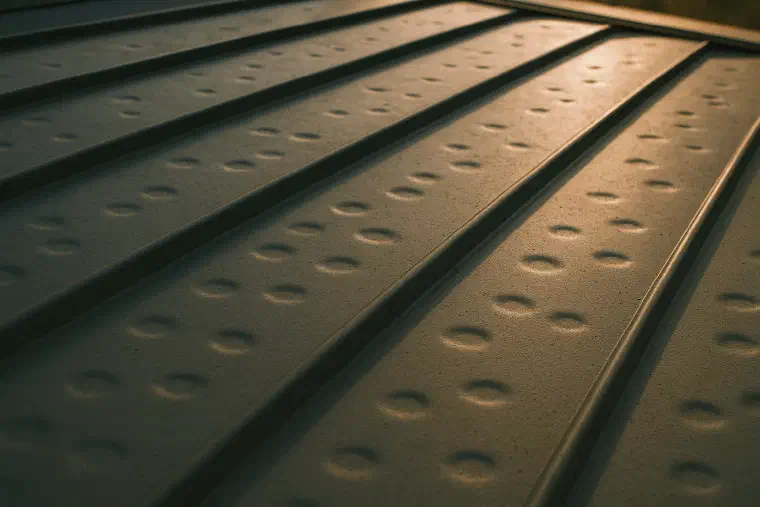
Metal roofs resist hail impacts far better than common perception suggests, and the damage that does occur is usually cosmetic, not structural. The Insurance Institute for Business & Home Safety confirms hail on metal panel roofs typically causes dents that do not compromise the roof’s ability to keep water out.
The same IBHS guidance points out that metal roofing is noncombustible, so even if a hailstone severely bruises the coating, the panel underneath remains solid and fire-safe. Many metal roof systems carry a Class 4 impact rating, the highest for hail resistance. After a heavy storm, we still recommend a free roof inspection to make sure no hidden damage crept in, but the odds of a leak from hail on a metal roof are low compared to cracked asphalt or fractured tile.
What role does proper installation play in metal roof safety?
A metal roof is only as safe as the hands that put it on. Most failures we see, wind-lifted panels, leaks, noisy racks, trace back to installation shortcuts, not the metal itself.
We have seen panels peel in a 50 mph gust because nails were placed above the nail line, a defect that hides perfectly from the ground. Fasteners that miss the structural framing, reused step flashing, or skipped underlayment each create a future leak point. A metal roof is a system: the clips, fasteners, flashing, and ventilation must all work together. When they do, you get a roof that stays put in a storm and breathes well enough to prevent condensation and rot. When they don’t, a brand-new metal roof can become a bigger liability than the old one it replaced.
Our approach to metal roofing done right treats every penetration as a potential leak and every fastener as a structural connection. If a previous crew left you with a metal roof that acts nervous in a breeze, we can often fix installation mistakes without tearing everything off.
How do insurance companies view metal roofs?
Insurance companies tend to like metal roofs, and many offer measurable discounts for them. Because metal panels achieve a Class 4 impact rating and resist wind uplift, insurers see fewer claims for hail damage and wind-blown shingles. In some hail-prone regions, documented discounts reach up to 35 percent, a number that appears in industry guidance on commercial and residential metal roofing.
The noncombustible nature of metal also counts for fire-prone areas, which can further reduce premiums. Discounts vary by carrier and location, but the conversation is usually straightforward: a metal roof that passes impact and wind tests is a risk-reduction feature, and insurers price accordingly.
What is the biggest problem with metal roofs?
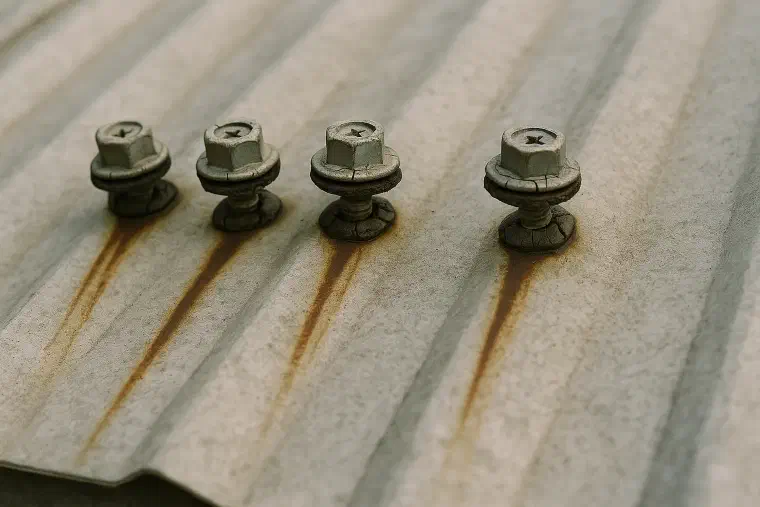
The biggest problem with metal roofs is almost always an installation error, not a material flaw. The most common complaints are noise, oil canning, loose fasteners from thermal movement, and leaks at flashings, all of which are preventable with the right methods.
We get calls about noisy metal roofs where the installer skipped the solid underlayment or fastened panels directly to purlins in an unheated shop building. The roof itself wasn’t the problem; the shortcuts were. A correctly detailed metal roof over solid sheathing with a high-quality underlayment is no louder in rain than an asphalt roof.
| Complaint | Root cause | How a proper installation avoids it |
|---|---|---|
| Loud rain noise | No solid sheathing or underlayment | Sheath the deck and install a premium synthetic underlayment |
| Oil canning (visible waviness) | Thin panels, improper fastening, or skipping thermal expansion room | Use thicker-gauge panels and allowance for movement |
| Loose fasteners over time | Thermal expansion/contraction cycles not accounted for | Use sliding clips and fasteners designed for metal roofing |
| Leaks at flashings | Reused or poorly sealed flashing, caulk dependence | Install new step, chimney, and kickout flashing with mechanical water shedding |
Addressing these issues from the start is the difference between a properly installed metal roof and a long-term regret.
Does a metal roof increase the risk of lightning strikes?
No, a metal roof does not attract lightning; it is actually safer in a strike because it is noncombustible and can conduct electricity. Lightning is drawn to the highest point in an area regardless of the roofing material. When it hits a metal roof, the metal disperses the charge without igniting, unlike wood shingles or even asphalt that can catch fire. The UL fire rating system (UL 790/ASTM E108) confirms metal roof coverings do not contribute fuel to a fire started by a lightning strike or any other ignition source.
Is a metal roof a good long-term investment for your home?
A metal roof pays you back in years, not months, but the math is easy to like once you look at the full picture. Asphalt shingles in Maryland typically last 20 to 25 years before you need a second full replacement. A standing seam metal roof often goes 50 to 70 years with nothing more than occasional inspection and maybe a cleaning. That means one metal roof could outlast two or even three asphalt roofs, drastically cutting the total cost of roof ownership over a lifetime.
The energy side also tilts the numbers. Metal roofs reflect a significant portion of solar radiation, keeping attic temperatures lower in summer and taking some load off your air conditioner. The Department of Energy’s Building America Solution Center highlights cool-roof coatings and natural metal reflectance as part of an efficiency strategy that works in hot, mixed-humid climates like ours. When you combine the energy savings, the insurance discounts, and the avoided replacement costs, a metal roof often becomes the cheaper option when measured from the day you install it to the day you sell the house.
The upfront cost is higher, roughly two to two and a half times the price of architectural asphalt shingles, so the decision usually comes down to how long you plan to stay. If this is your forever home, a metal roof spends decades earning its keep. If you’re not sure yet, a free roof inspection can help you gauge how much life your current roof has left and whether it makes sense to stretch it or switch to metal now.
For homeowners who know they want to explore metal roofing, we walk through the numbers with real measurements from your roof, not averages from a brochure. That way the investment case rests on your house, your energy bills, and how long you actually expect to live there.
Why don’t more homeowners choose metal roofs?
Most homeowners skip metal roofs because of the upfront cost, noise misconceptions, and a lingering image of a shiny farm building. A standing seam metal roof costs about two to two and a half times what an architectural asphalt roof costs, and that price difference alone stops a lot of conversations cold.
The noise concern, while real in the wrong installation, gets blown out of proportion. A metal roof over solid sheathing with a good underlayment is quiet enough that you stop noticing it after the first storm. The look also turns out to be far more varied than people expect; modern metal roofing comes in dozens of profiles and colors that blend nicely with traditional neighborhoods.
Finding a crew that specializes in metal roofing is the other hurdle. Many small roofing companies install almost exclusively asphalt and lack the experience to detail a leak-free metal system. When you combine cost, misconceptions, and a thin contractor pool, it’s no surprise metal stays a niche. Our approach is to give you an honest comparison of metal roofing options against what your house actually needs, so you can decide based on facts instead of old rumors.
Frequently asked questions
Can you walk on a metal roof without damaging it?
Yes, but you need to know where and how to step. Walk on the flat areas of the panels near the fasteners and ribs, not on the standing seams or raised corrugations, and wear soft-soled shoes. With proper technique, occasional foot traffic leaves no permanent marks. Repeated heavy traffic or clumsy foot placement can dent the panels, so we recommend calling a professional whenever the work goes beyond a quick look.
Do metal roofs need lightning rods?
No, a metal roof does not need a lightning rod because it does not attract lightning any more than any other roofing material. Lightning protection systems are designed to direct current safely into the ground, and they work on any type of roof cover. If your home lacks a lightning protection system, a metal roof remains safe because it won’t ignite in a strike, unlike combustible materials.
How long does a metal roof really last?
A standing seam metal roof properly installed can last 50 to 70 years, and sometimes longer with basic maintenance. Thicker-gauge panels and high-quality coatings extend that range. Stone-coated steel and exposed-fastener panels tend to have shorter service lives, typically 30 to 50 years, largely because the fastener gaskets need replacing midlife. The roof’s longevity depends far more on installation and attachment than on the brand stamped on the metal.
Are metal roofs noisy when it rains?
A metal roof installed over solid roof sheathing with a proper underlayment is no noisier than an asphalt shingle roof. The hollow, drum-like sound people associate with metal roofs comes from panels attached directly to purlins or battens with an open attic beneath, like on a barn. In a finished home with attic insulation and a sheathed deck, the difference in rain sound is negligible for most people.
Can a metal roof be installed over existing shingles?
It is possible, but we almost always recommend a full tear-off instead. Installing metal over old shingles hides the decking condition and can trap moisture, shorten the new roof’s life, and complicate future repairs. Our metal roof installations include tearing off the existing roof so we can inspect the sheathing, replace any rotted wood, and fasten the new panels directly to sound structure. That approach removes the guesswork and gives the roof its full design life.