To clean a skylight, start on the inside: wipe the glass with a soft cloth and a mild, ammonia-free cleaner, then dry it so it doesn’t streak. The outside is harder. It sits on a slope, it is often out of reach, and the safest way to do it is from the ground with a pole or by hiring a pro.
The short version
- Do the inside first. It is easy, and it shows you what is left on the outside.
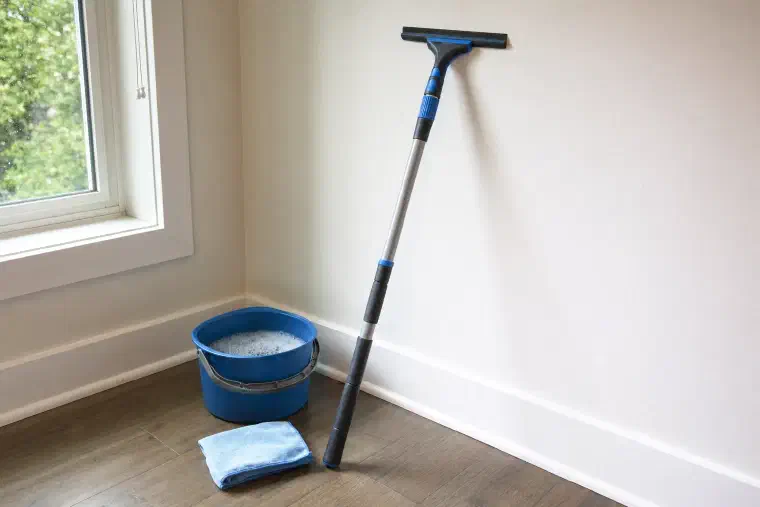
- Use a soft cloth, a squeegee and an ammonia-free cleaner. Skip scrapers and rough pads.
- Clean on a cloudy day or when the glass is in shade, so the cleaner doesn’t dry into streaks.
- Don’t walk on the roof to reach it. A skylight is a hole in the roof, and glass or plastic can give way.
- While you clean, look for cracks, damaged seals, stains and fog between the panes.
How do you clean the inside of a skylight?
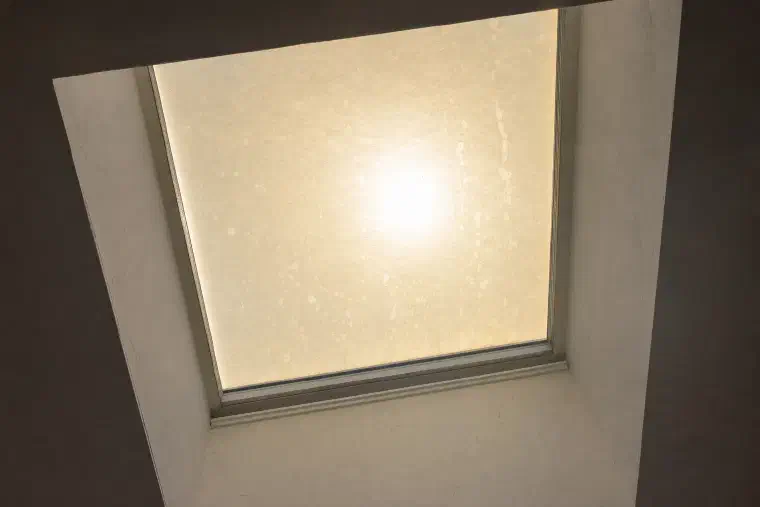
Dust it, wash it, then dry it. Brush or vacuum the frame and the ledge first so you don’t turn dust into mud. Then wipe the glass with a soft, lint-free cloth and a mild cleaner, and dry it with a squeegee or a second cloth.
Consumer Reports says ammonia-based formulas (opens in a new tab) can cause streaks or film on windows, so reach for an ammonia-free one. Plain dish soap in warm water works too, as long as you rinse the cloth often and dry the glass after.
Work from the top of the glass down. If the ceiling is high, a telescoping pole will take a cloth, sponge or squeegee head, so you can stay on the floor or on a short stepladder. Keep your feet on something steady.
Should you clean a skylight on a sunny day?
No. Pick a cloudy day, or a time when the glass is in shade. Consumer Reports says direct sun will cause streaking (opens in a new tab), because the cleaner dries before you can wipe it off.
A skylight gets more sun than any other window in the house, so this matters more here. Early morning is usually the better bet.
Is it safe to clean the outside of a skylight?
Only from the ground or from a ladder at the eave, and often not even then. Consumer Reports warns that skylights, which are angled upward, may be hard to access (opens in a new tab) even with an extended pole. Its advice is to err on the side of safety and call a professional window cleaner.
The bigger danger is stepping onto the roof to reach it. OSHA, the federal workplace safety agency, says a skylight should be regarded as a hatchway (opens in a new tab), an opening in the roof through which a person may fall. Leaves, snow or a bit of dirt can hide how much of it is glass.
That is why we say the same thing to every homeowner: don’t stand on or lean against a skylight, and don’t climb a wet or steep roof to wash one. Dirty glass is annoying. A fall is not.
What should you use, and what should you skip?
Soft tools and mild cleaners, nothing that scratches. Glass and plastic domes both mark easily, and a scratch doesn’t wipe away.
| Use | Skip |
|---|---|
| Soft cloth or sponge | Scrapers, razor blades, steel wool |
| Ammonia-free glass cleaner or mild dish soap | Harsh chemicals and strong solvents |
| Squeegee or lint-free cloth to dry | Letting it air dry in the sun |
| Telescoping pole from the ground | Climbing onto the roof |
Check the label or manual that came with your skylight, too. Makers set their own rules for what is safe on their coatings and domes, and some glass has a special layer on it. If you don’t have the manual, the brand is often printed on a sticker on the frame.
We would also keep a pressure washer away from a skylight. Hard water blasted at the edges is the last thing a seal or the flashing around it needs, and a leak is a lot more work than a dirty pane. This is our advice, not a rule from the makers, so follow your manual if it says different.
What should you look for while you clean?
Cracks, leaks, damaged seals and fog. This Old House says that when you clean your skylight, you should look for cracks, leaks, damaged seals, and condensation buildup (opens in a new tab) that could lead to water damage. Cleaning is the one time you look closely at the whole thing.
Here is what each sign usually means:
- Brown stains on the ceiling or frame. Water is getting in, often at the flashing. Our article on how to fix a skylight leak covers it.
- Beads of water on the room side of the glass. Usually moisture in the air. See condensation on a skylight.
- A milky haze you can’t wipe off. Look at it from both sides. If the haze stays after you clean, it is probably between the panes, which means the seal has failed.
- Cracked or loose caulk and rusty metal on the outside edge. That points to the flashing. Our piece on skylight flashing explains what it is.
What about the roof around the skylight?
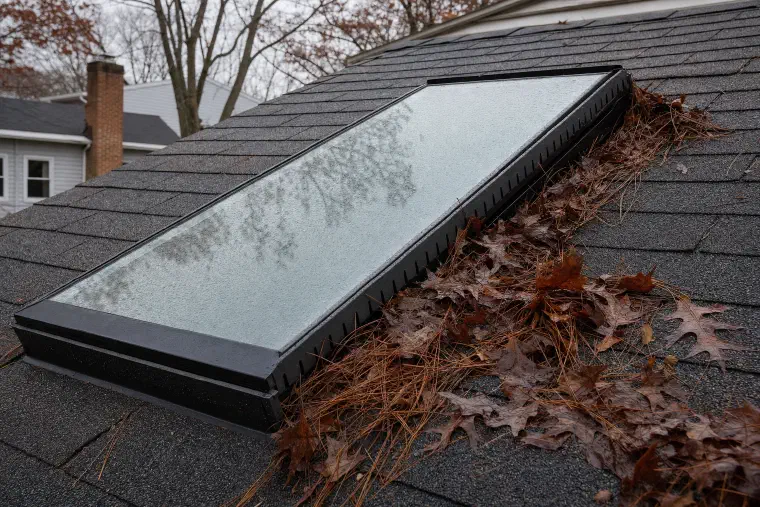
Keep it clear. Leaves and debris that pile up on the uphill side of a skylight can dam water against it, which is common under the tall trees around Ellicott City. Pooled water finds the weak spot in the seal sooner or later.
If you can see the skylight from a window or from the ground, check it after a windy week. A ladder at the eave, with someone holding it, is as far up as most homeowners should go.
Common questions
How often should you clean a skylight?
This Old House says to clean the glass periodically, as you would other windows (opens in a new tab). Twice a year is a handy habit: once in spring after the pollen, once in fall after the leaves.
Can rain clean a skylight?
It helps a little, but it also leaves spots and streaks behind. A skylight with a shallow slope holds dirt and dust longer than a window, so rain alone rarely does the job.
Can a dirty skylight cause a leak?
Dirt on the glass won’t. Debris packed against the frame or the flashing can, because it holds water against the seals. That is the part to keep clear.
What if I find a problem while cleaning?
Take a photo and have it looked at before the next rain. A reflash typically runs $900 to $2,000, and replacing a skylight typically runs $1,200 to $3,000. These are area ranges, not a quote. Our skylight replacement cost article shows what moves the number.
What to do next
If you spot stains, cracked seals or fog between the panes, our skylight repair page explains what we check. Skylight repair includes reflashing, glass unit replacement and condensation diagnosis. Our free roof inspection is a good way to get the whole roof looked at. Call us any time, day or night.