To file a roof insurance claim after hail or wind, photograph the damage, stop more water getting in, and call your insurer or agent as soon as you know you want to file. Then meet the adjuster, the insurer’s inspector, with your photos in hand. Your policy and the adjuster decide what gets paid, and we can’t promise a result.
The short version
- Take photos and video before anything gets moved or fixed.
- Cover the roof if water can get in, and keep every receipt.
- Check your deductible first. A small repair can cost less than it.
- Call your insurer, ask the questions below, and write down your claim number.
- Don’t sign off on permanent repairs until you’ve talked to your insurer.
What should you do first after a hail or wind storm?
Make sure everyone is safe, then take photos and video of the damage. The Maryland Insurance Administration’s claims guide says to take photos or videos (opens in a new tab) of the damaged areas and jot down notes about anything significant.
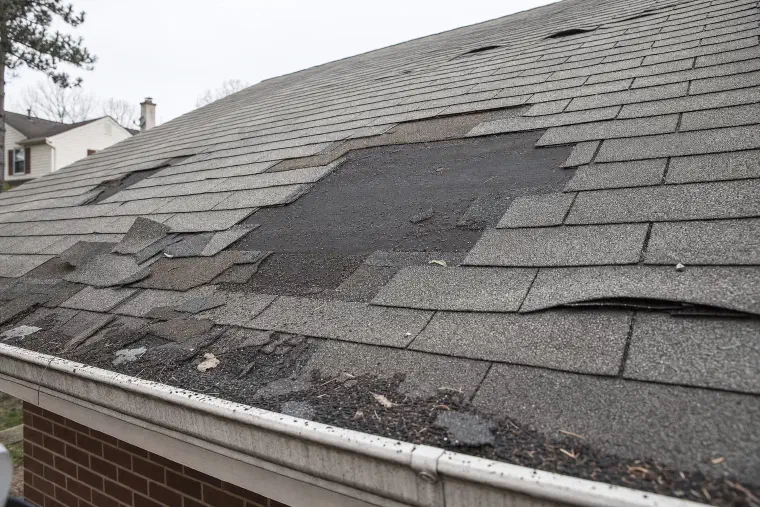
Stay off the roof. Photograph from the ground, from a window, or from a ladder at the eave if you’re steady on one. Look for shingles missing or lifted, dents in gutters and vents, and granules, the gritty top layer, washed down into the gutter.
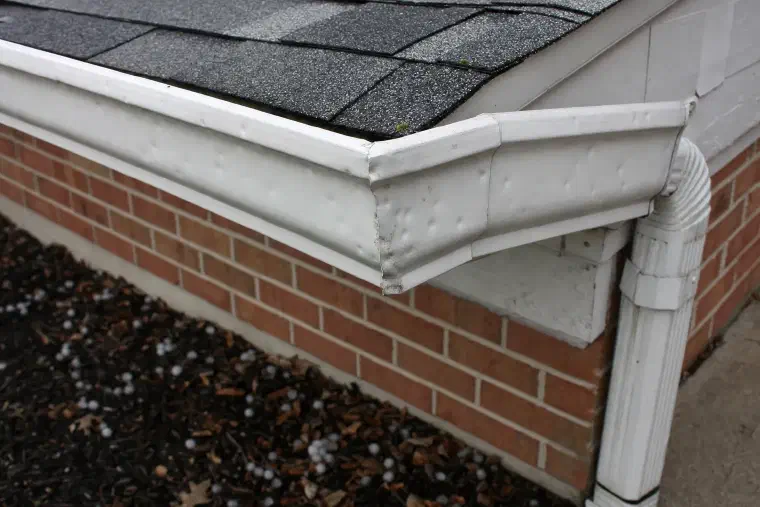
Take pictures of the whole house too, not only the worst spots. A shot of each side shows the adjuster what the storm did and what was already there.
Should you file a claim at all?
Sometimes not. The Maryland guide says to find out what your deductible is before you report, and that if only a few shingles were damaged you may be better off paying for the repairs yourself (opens in a new tab). It also warns that you might not see all the damage, so a look from a contractor can help.
Here’s how the numbers tend to work out.
| What happened | What to weigh |
|---|---|
| A few shingles lifted or gone | Replacing one to three typically runs $300 to $650, which may be under your deductible |
| Hail or wind across a whole slope | Likely more than the deductible, so a claim is worth looking at |
| Water already coming in | Cover it now, keep the receipts, and call your insurer |
Many policies carry a separate deductible for wind and hail. The same guide tells you to ask whether there are separate deductibles (opens in a new tab) for hail or wind and what they are. Look at the declarations page of your policy before you call. For what hail and wind are usually paid on, read does insurance cover hail damage.
How do you stop more damage without hurting the claim?
Make temporary repairs, not permanent ones. The Maryland guide says to try to prevent further damage by covering roofs (opens in a new tab) with plywood, tarp or other waterproof material, and to keep all receipts for emergency repairs so you can hand them to your insurer.
It also says not to make permanent repairs before talking with your insurer, because the insurer may not pay for repairs it didn’t authorize. That’s the line to remember. A tarp now is fine. A full new slope before anyone has looked at the old one is where claims get messy.
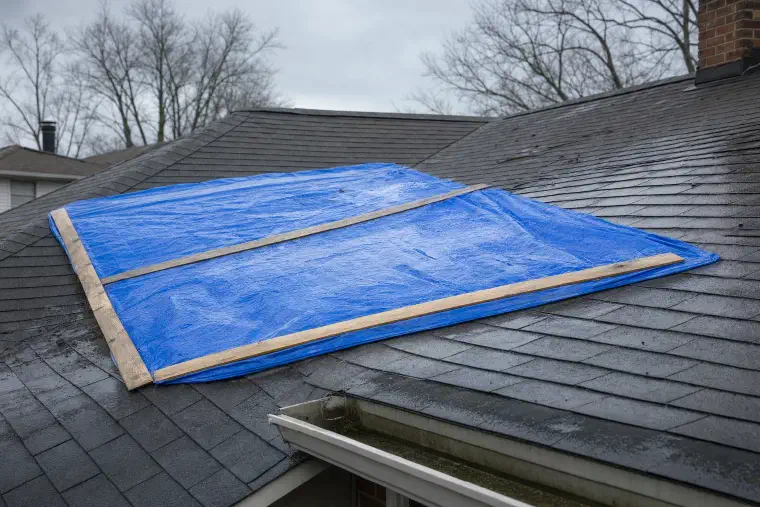
Emergency tarping typically runs $350 to $900, and it’s often billed separately from the repair. Our guide on how to tarp a leaking roof covers the safe way to do it yourself and when to call someone.
What do you say when you call your insurer?
Keep it short. Maryland’s guide says the easiest way to report a claim is to call your insurer or insurance producer, which is the agent or broker. You’ll need to briefly explain what happened and describe the type and extent (opens in a new tab) of the damage, and it helps to have your policy number. Tell them you have photos and video.
The same guide lists what to ask while you have someone on the line:
- the name and phone number of everyone you talk to
- your claim or reference number
- how long you have to file
- whether you need estimates before you file
- when an adjuster will call
- what other information they need
Write the answers down as you go. Most of the arguments we hear about later start with something that was said on a phone call and never written anywhere.
What happens when the adjuster comes?
The adjuster visits, takes photographs and measurements, and works out the cost of the repair. The Maryland guide says it’s generally a good idea to be there when the adjuster comes (opens in a new tab), so you can point out damage and hand over your photos, lists and any contractor bids.
If you don’t hear from an adjuster, don’t sit and wait. The guide says a reasonable wait could be 3 to 5 days for a minor claim, but longer after a big storm in your area, so call your insurer and make sure they have the right number for you.
Hail is the hard one to see. University of Missouri Extension says an experienced roofer walking the inspection with the adjuster can point out damage (opens in a new tab) that might be missed. Our free roof inspection includes a walk on the roof and a written report with photos. A free inspection is a sales visit, though, so if you think you’re heading for a dispute, a paid independent inspector is the more neutral choice. We go through that in should you get an independent roof inspection.
How long does a roof claim take?
Longer than the repair itself. An insurance claim typically adds 4 to 12 weeks before work begins. A big storm slows the roofers too: one wind or hail event can turn a 3-day backlog into 3 weeks, and a post-storm inspection can take 1 to 3 weeks to schedule.
Written bids can help while you wait. The Maryland guide says you aren’t required to have them, but bids that spell out the materials, prices and labor (opens in a new tab) line by line can help.
What if you disagree with the adjuster?
Differences in estimates are common, and there are ways to settle them without going to court. The Maryland guide names two, appraisal and arbitration, for when you disagree with the claim amount (opens in a new tab). Read your policy for which one it uses.
If you think the company hasn’t lived up to your policy, the Maryland Insurance Administration takes calls at 410-468-2000 or 800-492-6116 (opens in a new tab). A knock on the door is worth a second thought too. The MIA warns about unsolicited offers to inspect a roof to generate a claim, and says some contractors misrepresent wear and tear as storm damage.
Common questions
Do you need a contractor’s estimate before you file?
Not always. Ask your insurer when you call. The Maryland guide lists “if you need estimates to make repairs or rebuild before you can file a claim” as a question to ask, because it differs by company.
Should you sign an assignment of benefits for a roofer?
Read it slowly first. The Maryland guide says an assignment of benefits hands some or all of your rights under the policy to a third party, often a contractor, and that you may lose control of the settlement, including the right to be paid (opens in a new tab). Check your policy and call your insurer before you sign anything like it.
Do you have to be home for the inspection?
You don’t have to, but it’s a good idea. You know where the leaks showed up, and you can hand over your photos in person.
Can you replace the roof before the adjuster looks?
Don’t. Temporary fixes are fine. Permanent ones before your insurer has seen the damage are the ones that may not be paid.
What to do next
If a storm just went through and you aren’t sure what’s up there, a look at the roof is a good place to start. Our storm and wind damage roof repair service begins with checking what’s really on the roof. The phone is answered 24/7, and your insurer and policy decide what gets paid.