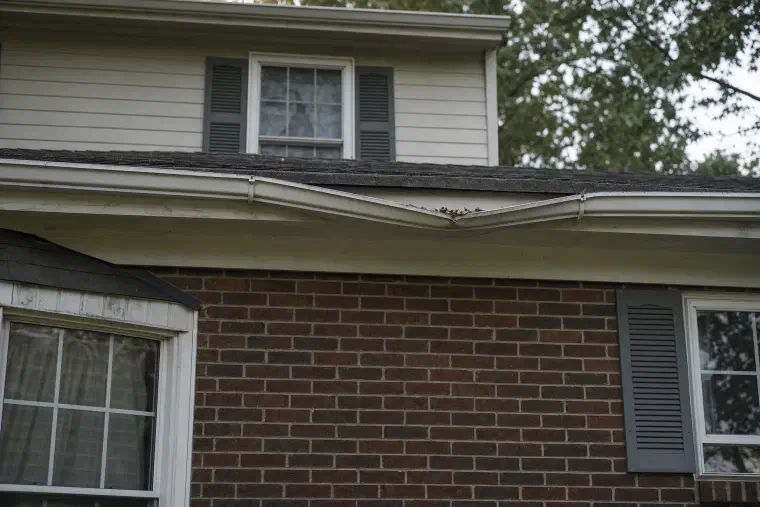
To fix sagging gutters, find out why they sag, then fix that first. Most gutters sag because the hangers (the brackets that hold the gutter up) have pulled loose, the wood behind them has gone soft, or the gutter is full of wet leaves. Reset the gutter, add solid fastening, and check that it still slopes toward the downspout.
The short version
- Gutters sag from weight, loose hangers or rotted wood behind them. Pushing a gutter back up without finding out which is a patch that fails.
- Empty the gutter first. A full one is heavy and hides the problem.
- Press on the board behind the gutter. If it is soft, that board comes first.
- Reset the slope so water runs to the downspout, then fasten into solid wood.
- If the wood is rotted or the gutter is high up, call someone.
Why do gutters sag?
Weight is the usual reason. Most gutters sag because trapped water and debris are weighing them down (opens in a new tab), according to This Old House. A run full of wet leaves and standing water pulls on every hanger at once.
Three things tend to be behind it:
- Hangers or spikes that have worked loose over the years
- Wood behind the gutter that has gone soft, so nothing holds the screws
- A gutter that has sat full of leaves, snow or ice for a long time
The annoying part is that these feed each other. A full gutter holds water against the wood, the wood rots, and the hangers lose their grip.
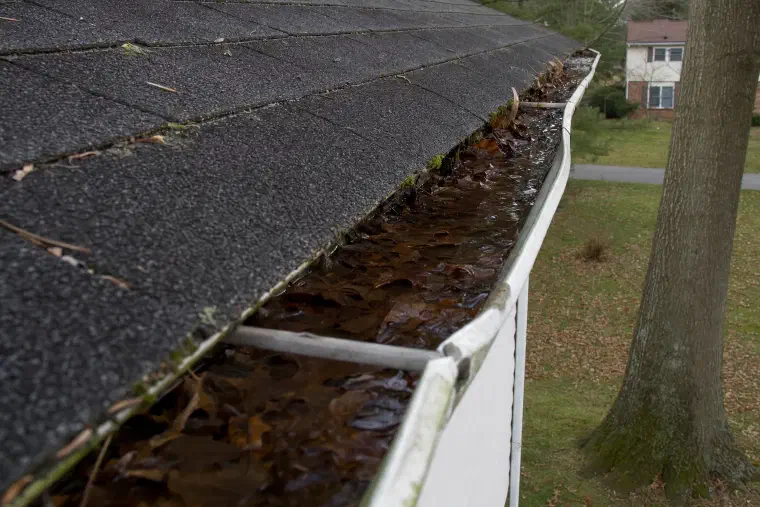
What should you check before you touch the gutter?
Check the board behind it. That board is the fascia, the strip of trim along the roof edge that the gutter is fastened to. Press on it with a screwdriver or your thumb, especially near the low spot.
This Old House says to check the fascia for rot and replace any damaged portions (opens in a new tab) before reattaching the gutter. We see the same thing: water that sits in a full gutter, or seeps behind one, rots the fascia first, then the ends of the rafters, then the first few inches of roof decking. From the ground and from the attic, you can’t see any of it.
A new screw in soft wood holds about as well as the old one did. If the board gives under your finger, fixing the hangers is the wrong first job. For more on what rot looks like, read what a fascia board is and why it rots.
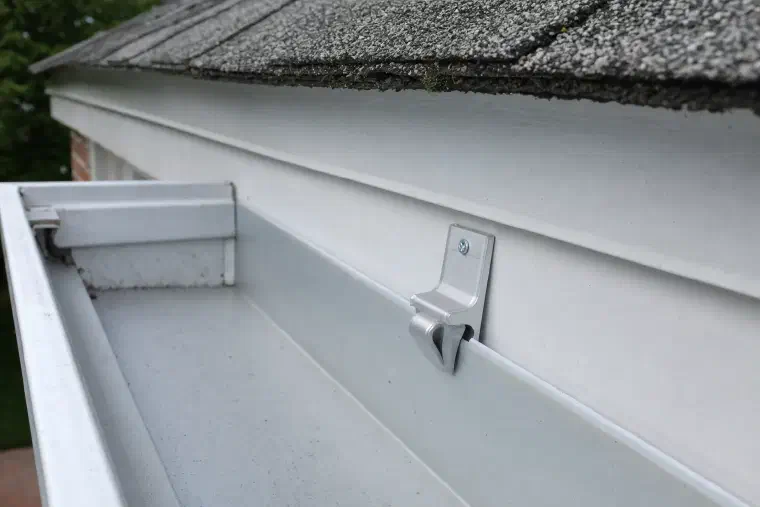
How do you fix a sagging gutter step by step?
Work from a sturdy ladder on level ground, with someone holding it if you can. Then go in this order:
- Clear the gutter. Scoop out the leaves and flush it with a hose. You can’t judge the sag with a gutter full of mush. Our guide on how often to clean gutters covers the schedule.
- Find the loose spots. Look for hangers bent out, spikes backing out of the board, and gaps where the gutter has pulled away from the wood.
- Replace bent or damaged hangers. This Old House says to replace any damaged or bent hangers (opens in a new tab) rather than bend them back.
- Move the fastening, don’t reuse the hole. An old spike hole is stretched out and won’t grip. This Old House advises drilling a new pilot hole about an inch from the old one when reinserting a spike.
- Reset the slope. Lift the low section until water runs toward the downspout, and hold it there while you fasten it.
- Add a hanger or two in the stretch that sagged, so no single bracket carries the load.
- Run water through it. A bucket of water poured at the high end should travel to the downspout without pooling.
Take your time on the last two steps. They decide whether the repair lasts through the next storm.
How much slope should a gutter have?
Gutters should slope toward the downspouts, and at least 1/4 inch every 10 feet (opens in a new tab) is the figure This Old House gives. That is a small tilt, which is why a gutter that has dropped an inch or two in the middle holds water.
Standing water is the sign. If water sits in the gutter for hours after the rain stops, the slope is off somewhere. Water that sits also wears out the sealant at the joints faster, so a sag often turns into a leak at the next seam.
When is a sagging gutter not worth fixing?
When the gutter itself is worn out, or the wood behind it is. A gutter that is rusted through, leaking along most of its length, or too small for the roof costs more to repair piece by piece than to replace. We will say so if that is what we find, and we will give you a free quote for new gutters so you can compare.
Rotted fascia is a repair that comes before the gutter goes back up. That is carpentry, and a gutter fastened into soft wood pulls out again. A rotted board can also mean the roof edge behind it is wet, which is why we like to look at the whole eave and not only the gutter.
Should you do it yourself or call a pro?
Many homeowners can reset a hanger or two. This Old House suggests you hire a professional if you are uncomfortable with ladders or have a particularly high roof (opens in a new tab).
Call someone if:
- the fascia is soft or crumbling
- the gutter is on a second story or over a hard surface
- the same section keeps sagging after you fix it
- the sag runs along most of the house
Our gutter repair work covers refastening gutters, replacing rotted boards behind them and resetting the slope. A free roof inspection also looks at the gutters and the roof edge, so you will know what is going on up there before you decide.
Common questions
Can you fix a sagging gutter without replacing it?
Often, yes. If the gutter itself is sound, new hangers, a reset slope and a sound board behind it will do the job. Replacing is the better call when the metal is rusted through or leaking along most of its length.
Will a clean gutter stop it sagging?
A clean gutter takes the weight off, but it won’t fix hangers that have pulled out or wood that has gone soft. Clean it first so you can see what is wrong. Keeping it clear afterward helps the repair last. The Pacific Northwest National Laboratory also says to make sure the gutters are clean as winter approaches (opens in a new tab) so they can drain.
Do ice and snow make gutters sag?
They can, because they add weight to a gutter that is already carrying leaves and water. A full gutter also gives an ice dam something to build on. Our article on ice dams in gutters explains why.
Is it a problem if my gutter only sags a little?
A small dip still holds water, and standing water is what rots the wood and wears out the seams. Fixing a small sag is cheap compared with fixing the fascia later.
What to do next
If your gutters are pulling away, dipping or holding water, the page above shows what we do and gives you a way to get a free quote. You can also call us any time, day or night, and tell us what you are seeing.