

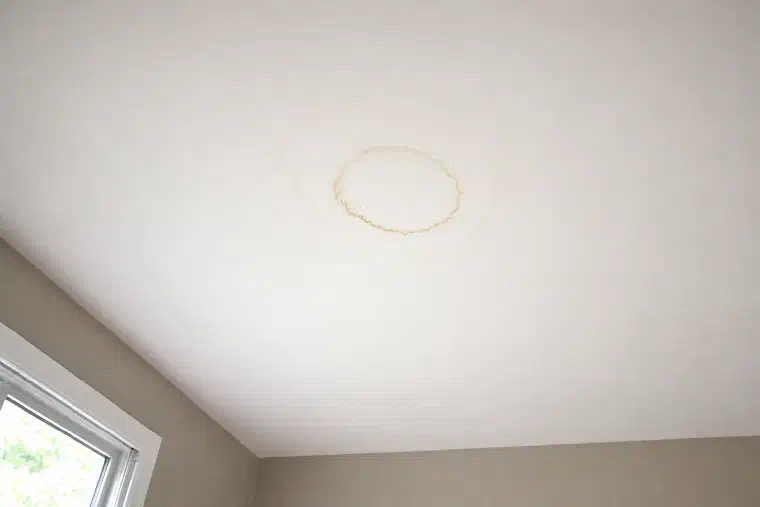
To get rid of ceiling water stains, fix the leak first, let the ceiling dry all the way, then cover the stain with a stain-blocking primer and paint over it. Skip any step and the brown ring comes back through the paint, usually within a few weeks.
The short version
- Paint never fixes a stain. If the roof is still leaking, the stain returns.
- Wet drywall and insulation need to dry within 24 to 48 hours, or mold can start.
- Ordinary wall paint is not enough. Use an oil-based or shellac-based stain-blocking primer first.
- A sagging, soft or moldy ceiling section should be cut out, not painted.
- Ceiling repairs and paint are never part of a roof repair, so plan for them as a separate job.
Why does a ceiling stain keep coming back through the paint?
Because the thing that made it is still there. A stain is a mix of dirt, minerals and tannins that water carried out of the roof wood and insulation and left behind in the drywall paper. Ordinary paint is thin and water-based, so those colors bleed up through it.
There are two usual reasons it returns. The roof is still leaking, so fresh water keeps feeding the spot. Or the ceiling was never fully dry, so the stain keeps moving. This Old House makes the same point in its guide to stains on drywall: you have to address the cause (opens in a new tab) before treating the stain.
Is the leak really fixed?
Check this before you buy a single can of primer. A ceiling stain is usually the last stage of a leak, so water has often been getting in for a long while before it showed. Equally, no new ring after one rain does not prove the roof is sound.
The usual culprits are worn flashing (the metal that seals joints), a cracked pipe boot or lifted shingles. Not every stain comes from the roof, though. A bathroom fan venting into the attic or a plumbing line can leave the same ring. Our guide to fixing a roof leak walks through finding the source, and if the stain is still wet or growing, start with what to do about a leak in the ceiling.
How long does the ceiling need to dry?
Plan on 24 to 48 hours for the first dry-out, and longer before you paint. The EPA says it is important to dry water-damaged areas (opens in a new tab) within 24 to 48 hours to prevent mold growth. Open windows, point a fan at the spot and run a dehumidifier if you own one.
Surface dry is not the same as dry. Press the stain with your palm. If it feels cool or soft, wait. Soaked insulation above the drywall holds water against it for weeks, which is why a roof repair and a look in the attic should come before any painting. Roofers can lift that up for you during a free roof inspection, with attic access when it is safe.
Which primer actually blocks a water stain?
An oil-based or shellac-based one. Primer is the step that does the real work, and it is where most do-it-yourself fixes fail. Brandt Domas, quoted by This Old House, says to use oil-based primers to hide waterborne stains (opens in a new tab) such as rust, and that shellac-based primers block every kind but cost more.
Here is how the options compare for a ceiling:
| Product | Good for | Watch out for |
|---|---|---|
| Ordinary wall paint | Nothing here | Stain bleeds through, often in days |
| Latex stain-blocking primer | Crayon and grease marks | Not the pick for water stains |
| Oil-based stain-blocking primer | Most ceiling water stains | Strong fumes, open the windows |
| Shellac-based primer | Dark rings and any smell left behind | Costs more, needs good airflow |
The same guide says to let the primer dry (opens in a new tab) completely before you paint as normal. Roll it a little past the edge of the ring, since the stain spreads under the paint if you stop right at its border.
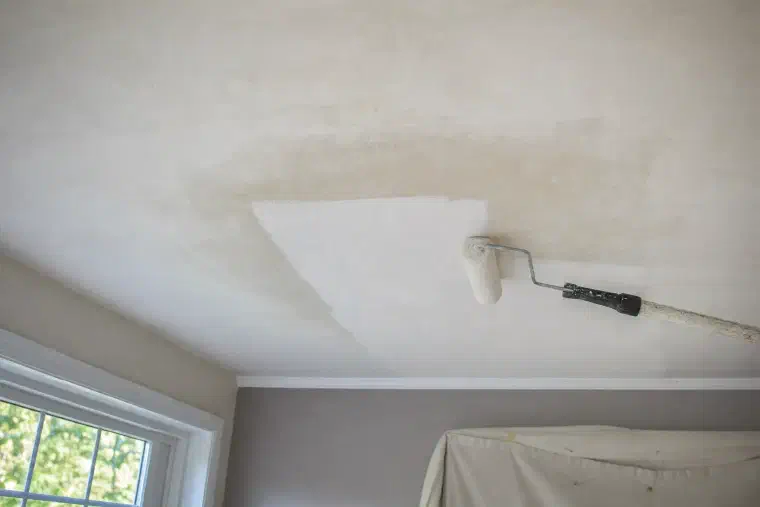
How do you paint a ceiling so the patch does not show?
Prime the spot, then paint the whole ceiling, wall to wall. A patch of fresh paint on an old ceiling shows as a lighter square, even in matching color, because old paint fades and picks up dust. Painting to the nearest corner or edge hides the join.
Use flat ceiling paint and a roller on an extension pole, and overlap each pass so you keep a wet edge. One thing to keep in mind: a stain that bleeds through after the first coat of paint means the primer did not seal it. Let it dry, add another coat of primer, then repaint.
When should you cut the ceiling out instead?
When the drywall is sagging, soft, crumbling or moldy, painting is the wrong fix. Wet drywall loses its strength and a bulge can drop without much warning. Mold is a second reason: the EPA notes that porous materials such as ceiling tiles (opens in a new tab) may have to be thrown away if they become moldy, and it treats a moldy area of about 10 square feet as the limit for a do-it-yourself cleanup.
Wet insulation above the spot usually has to come out too. Our piece on mold from a leaking roof covers what to look for. If the ceiling has been wet more than a couple of days or smells musty, have someone look in the attic before you cut or paint anything.
What does it cost to get rid of the stain?
Two separate jobs, and only one of them is ours. The roof fix is typical roofing work. A single leak diagnosis and repair usually runs $500 to $1,600, and tracing a leak that will not show itself with a hose test or moisture meter typically costs $150 to $400. These are area ranges, not a quote.
Drywall, paint and insulation inside the house are never part of a roof repair. That surprises people. Plan for a painter or a handyman after the roof is done, and keep your photos in case your insurance policy applies, because your policy and the adjuster decide that, not us.
Common questions
Can I just use bleach on a ceiling water stain?
Cleaning the surface does not stop a stain from coming back, so prime either way. If the spot is mold, the EPA recommends scrubbing hard surfaces with detergent and water, but drywall is porous and a moldy ceiling is better cut out than scrubbed. Prime with a stain-blocking primer once it is dry.
Can I paint over a water stain with two coats of regular paint?
You can, and you will probably be painting again soon. Water-based paint lets the brown color rise through it. One coat of oil-based or shellac-based primer first usually does what three coats of paint will not.
How do I know the stain is old and not a new leak?
Mark the edge of the ring in pencil and write the date beside it. After the next hard rain, check whether the ring has grown or the spot feels damp. A ring that stays the same size and feels dry is an old one. A ring that grows is a leak that is still active.
What to do next
If the stain is back, or it is your first one, find the entry point before you paint. Our roof repair crew traces the leak and fixes it in place, usually in one to four hours on the roof. Once the roof is dry and fixed, the ceiling is an easy weekend job.


