To get rid of moss on a roof, soften it, take it off gently, and rinse the roof with low pressure water. Never use a pressure washer. Then deal with the shade that grew it, or the moss comes back. Here is how that works, and where a ladder and a stiff brush are the wrong idea.
The short version
- Moss holds water against your roof and can lift the edges of shingles, so it is worth removing.
- A pressure washer strips the granules off shingles and shortens the life of the roof. Skip it.
- A 50:50 mix of bleach and water, left on for 15 to 20 minutes and rinsed with low pressure, is the method the shingle makers’ association recommends.
- Moss grows where it is shady and damp, so trimming branches matters as much as cleaning.
- If shingles are already curled or loose, they need repair, not just cleaning.
Why is moss bad for a roof?
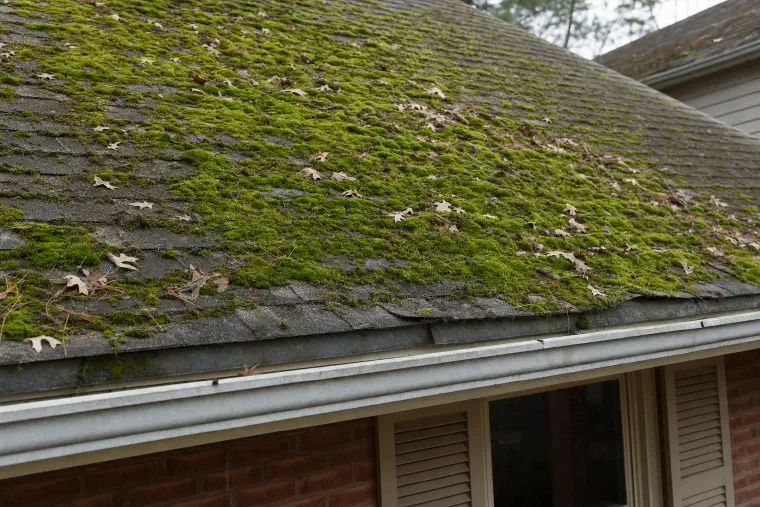
Moss keeps the roof wet, and wet shingles wear out faster. The Asphalt Roofing Manufacturers Association says moss can lift or curl the leading edges (opens in a new tab) of shingles, which raises the risk of them blowing off in a wind. Oregon State University adds that moss growth slows or stops water running off (opens in a new tab) the roof and can add to shingle damage.
Dark streaks are a different thing. Those are usually algae, and they mostly spoil the look. Moss is the green, fuzzy one that sits on top of the shingles like a small lawn.
Here is what we see on wooded lots around Ellicott City. Heavy tree cover keeps the roof damp, the damp grows moss, and the moss lifts shingle edges. That is one of the most common roof problems for houses under big trees.
Where does moss grow on a roof?
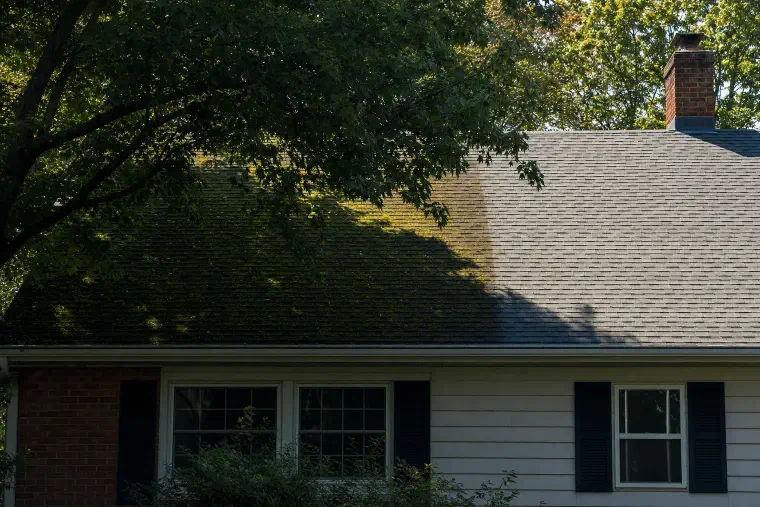
It grows where the roof stays shady and wet. Moss tends to grow on north facing slopes (opens in a new tab) that get less direct sun and stay damp longer than south facing ones. Overhanging branches make it worse, because they add shade and drop leaves that hold water and feed the moss.
So look at the side of the roof that faces away from the sun, and at any spot under a limb. If one slope is green and the other is clean, you have your answer about what is growing it.
How do you remove moss from shingles safely?
Start with the gentlest thing that works. Oregon State says to scrape it off with a dull blade (opens in a new tab) such as a putty knife, then scrub with a stiff bristle brush. Work from the top of the slope down so you are not pushing moss under shingle edges.
For what is left, the shingle makers’ association says the most effective cleaner is a 50:50 mix of liquid chlorine bleach and water (opens in a new tab), sprayed on and left for 15 to 20 minutes. Then rinse it off thoroughly with low pressure water. A garden hose is low pressure. A pressure washer is not.
Two cautions. Bleach is hard on plants and painted surfaces below the roof, so wet them down and keep the runoff off them. And a roof is a poor place to learn. A steep or wet roof, or a second story, is a job for somebody with the gear and the practice.
Can you pressure wash a roof to remove moss?
No. The Asphalt Roofing Manufacturers Association is blunt about it: never use a pressure washer (opens in a new tab) on an asphalt shingle roof, because it causes granule loss and very likely early failure of the roof. Oregon State agrees that pressure washing damages shingles (opens in a new tab).
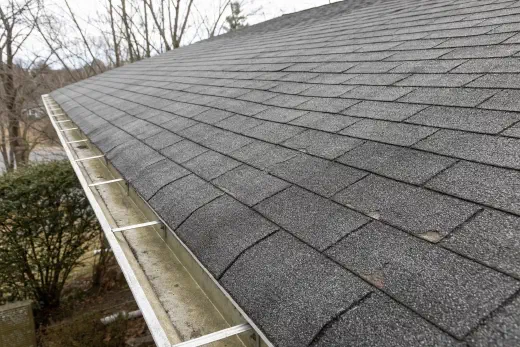
Granules are the gritty surface that shields the shingle from sun. Once they are gone, that part of the roof ages quickly. A roof that looks clean and has lost its granules is worse off than the mossy one you started with.
What about moss killers and zinc strips?
Moss killers work, with a catch. Oregon State lists products made from fatty acid salts, and notes you must still remove the dead moss (opens in a new tab) afterward. Zinc sulfate products exist too, but Oregon State warns they corrode copper (opens in a new tab), so they are out if you have copper gutters or flashing.
Zinc and copper strips along the ridge are popular, and the advice on them is mixed. Oregon State says strips are not effective (opens in a new tab) at getting rid of moss. The shingle association does not recommend adding them to an existing roof, because they need exposed nails that can cause leaks over time (opens in a new tab) or a broken sealant bond. We would not put a nail through a sound roof to try one.
| Method | Good for | Watch out for |
|---|---|---|
| Scrape and soft brush | Light to medium moss | Slow, and you are on the roof |
| Bleach and water, low pressure rinse | What is left after scraping | Plants, paint and runoff below |
| Moss killer | Slowing regrowth | You still have to remove the dead moss |
| Pressure washer | Nothing on a shingle roof | Strips granules |
| Zinc or copper strips | Mixed advice | Nail holes in a roof that was fine |
How do you stop moss coming back?
Let the sun in. Oregon State puts it plainly: let the sun in or it will return (opens in a new tab). The shingle association likewise says trimming back branches so more sunlight reaches the roof, and clearing debris, gives moss a less inviting place to grow (opens in a new tab).
Clean the valleys and the gutters too, since wet leaves in either one hold water against the roof. Our article on gutter guards covers when they are worth it on a tree-covered lot.
When is moss a sign you need a roofer?
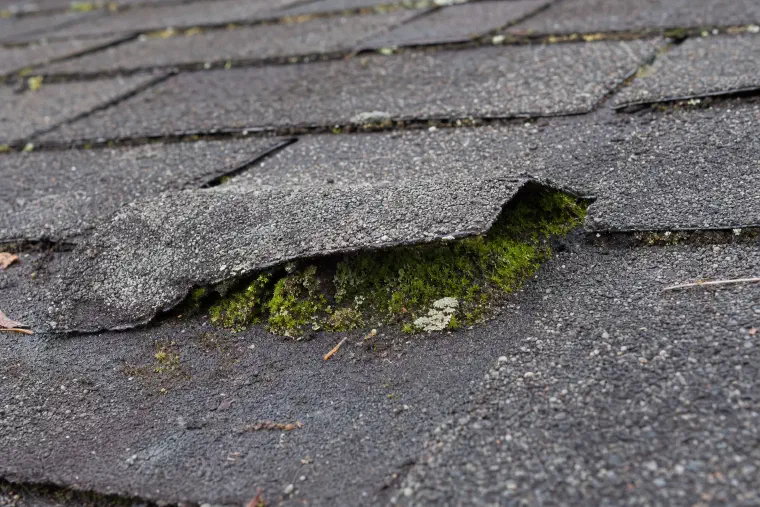
When shingles are already lifted, curled or cracked under it. Cleaning will not lay a curled shingle back down, and a lifted edge is where wind gets in. If you pull moss away and the shingles beneath are bare, brittle or loose, the roof is aging out. Our guide to how long shingles last shows where that line usually falls.
A repair is often small. Replacing one to three shingles typically runs $300 to $650 in this area, though that is a typical range and not a quote. A free roof inspection is the easy way to find out. We walk the roof, lift shingles to check them, and give you a written report with photos, and there is no obligation to book work.
Common questions
Is moss on a roof always a problem?
A little patch is mostly a warning. A thick mat on one slope is a problem, since it keeps the shingles wet and can lift them. Look at the edges under and around it. If they are flat and sound, a gentle cleaning is usually enough.
Will vinegar or dish soap get rid of roof moss?
We would not count on either one. The sources we trust name bleach and water, soap-based moss killers sold for the job, and scraping. Anything else is a guess, and a guess on a roof costs you a ladder trip each time.
When is the best time to clean moss off a roof?
Pick a dry, mild day, because a wet roof is slippery and cleaners need time to sit. We have a longer answer in the best time of year for roof repair.
What to do next
If your roof is green and you are not sure what is under it, have us take a look. Moss that has lifted shingles is a roof repair job, and we would rather fix a few shingles than sell you a whole roof you do not need.