

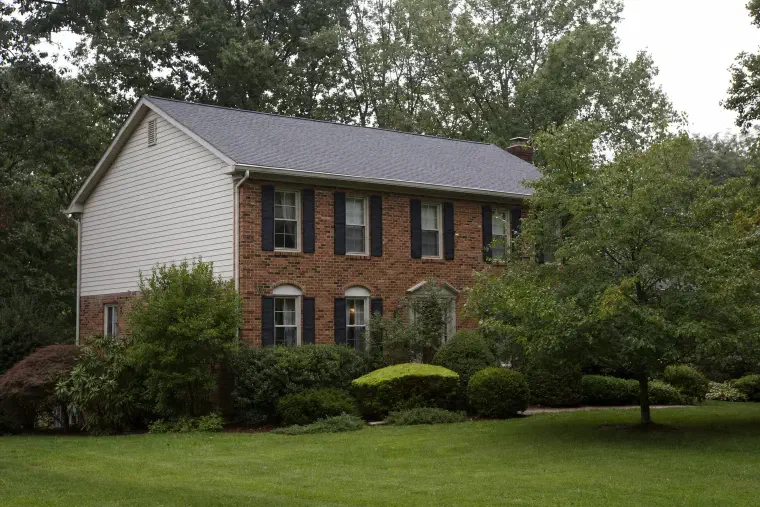
To measure a roof in squares, work out the roof’s area in square feet and divide by 100. One roofing square is 100 square feet, so a 2,000 square foot roof is 20 squares. The part that trips people up is that the roof is bigger than the house underneath it, because a slope has more surface than the floor plan.
The short version
- A square is 100 square feet of roof, and it is how roofers count and price.
- Measure the footprint from the ground, then multiply by a pitch number to get the real roof area.
- Add about 15% on top if you are ordering shingles yourself.
- Every three bundles of shingles cover one square.
- You never need to climb up. Our free inspection report gives the measured square count.
What is a roofing square?
A roofing square is a unit of roof measure that covers 100 square feet, as the Asphalt Roofing Manufacturers Association (opens in a new tab) defines it. Picture a patch of roof 10 feet by 10 feet. That is one square.
Roofers use it because the numbers stay small. “Twenty squares” is easier to say, write and compare than “2,000 square feet.” It is also the unit on most bids, so knowing it lets you line two bids up side by side.
How do you measure a roof in squares from the ground?
You measure the footprint of the roof from the ground, multiply by the pitch number, then divide by 100. The footprint is the flat area the roof covers when you look down from above, eaves included. Here is the order we would do it in:
- Walk the outside of the house and measure each section of the roof’s footprint with a tape measure. Split an L-shape or a bump-out into rectangles.
- Multiply length by width for each rectangle, then add them up. That is your footprint in square feet.
- Find the pitch (the next section) and look up its multiplier.
- Multiply the footprint by the multiplier. That is the roof area.
- Divide by 100. That is your squares.
A quick example. A simple 40 by 30 foot footprint is 1,200 square feet. At a 6:12 pitch, the multiplier is 1.118, so the roof is about 1,342 square feet, or 13.4 squares.
What is a pitch multiplier, and which one does your roof need?
The pitch multiplier is the number that turns flat footprint area into real roof area. Steeper roofs need more shingles (opens in a new tab), because a steep slope has more surface than the ground it covers. This Old House gives 1.118 for a 6:12 slope and 1.250 for a 9:12 slope.
Pitch is how many inches the roof rises for every 12 inches it runs sideways. A 6:12 roof rises 6 inches for each foot. This Old House shows two ways to find it: from the attic or with a level on the roof (opens in a new tab). The roof method means climbing up, and we would skip that one.
Here is the same 1,200 square foot footprint at two pitches:
| Pitch | Multiplier | Roof area | Squares |
|---|---|---|---|
| 6:12 | 1.118 | about 1,342 sq ft | about 13.4 |
| 9:12 | 1.250 | 1,500 sq ft | 15.0 |
Same house footprint, one and a half squares apart. That gap is the reason a floor plan is a poor stand-in for a roof.
How much extra should you add for waste?
If you are buying shingles yourself, add about 15% on top of your squares. This Old House recommends adding 15% to the number of roofing squares (opens in a new tab) to cover cuts at valleys, vents and the ridge. On our 13.4 square roof, that comes to about 15.4 squares.
Keep in mind that the waste number is for ordering material. It is not part of the roof’s size. When you compare bids, compare the measured squares, not the squares padded for waste.
How many bundles of shingles are in a square?
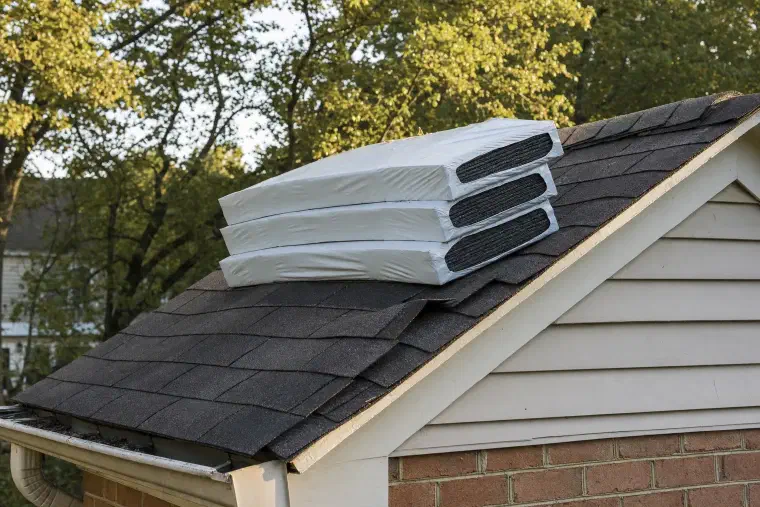
Three bundles of shingles cover one square, because each bundle covers one-third of a square (opens in a new tab). So a 15.4 square order is about 47 bundles. Round up, since nobody wants to stop one bundle short with the roof half open.
Check the wrapper on the brand you pick, and confirm the count with your supplier before you order.
What does a square cost?
Price follows squares, so your count matters more than the shingle color. For a full asphalt shingle roof, typical area ranges around Ellicott City run like this:
| Roof size | Squares | Typical full replacement |
|---|---|---|
| 1,500 sq ft | 15 | $10,500 to $13,500 |
| 2,000 sq ft | 20 | $13,500 to $17,500 |
| 2,500 sq ft | 25 | $16,500 to $21,500 |
| 3,000 sq ft | 30 | $19,500 to $25,500 |
| 3,500 sq ft | 35 | $22,500 to $29,500 |
These are typical area ranges, not a quote. Steep pitch, a cut-up roofline, poor access and extra layers of old shingles push a job up. A simple, single-story roof pulls it down. Our roof replacement cost guide walks through what is and is not in those numbers.
Very small jobs break the pattern. Below about 10 squares, the cost of getting a crew and a dumpster to the house takes over, so the smallest jobs typically start around $5,500 to $7,000.
Why shouldn’t you climb up to measure it yourself?
Because a fall is a bigger risk than a wrong number. This Old House points out that professionals have safer and more accurate methods (opens in a new tab) and suggests hiring one for a high or steep roof. A ground measurement gets you close enough to compare bids. It does not need a ladder on the shingles.
Ground measuring has limits. Hidden dormers, a roof that wraps behind a garage, and trees that hide a slope all throw the count off. Treat your number as a check on the bids, not as a replacement for a measured one.
Common questions
How many squares is a 2,000 square foot house?
It depends on the roof, not the house. A 2,000 square foot house with a single story and a 6:12 roof has a footprint of about 2,000 square feet, which works out to roughly 22 squares once pitch is counted. A two-story house of the same size has half the footprint, so a much smaller roof.
Is a roofing square the same as a square foot?
No. A square is 100 square feet, so one square is the same as 100 square feet. If a bid says “25 squares,” that is 2,500 square feet of roof.
Do you measure the roof or the attic floor?
Measure the roof. The attic floor is the ceiling of the rooms below and has nothing to do with what the roof covers. Eaves and overhangs count, since shingles cover them too.
Does a bid need to list the squares?
Yes. A bid that only says “full roof replacement” with no square count leaves you nothing to compare. Ask for the count and the pitch in writing.
What to do next
We measure the squares and the pitch on our free roof inspection, and the written report lists the square count, separate from any proposal. If a new roof is the plan, see our roof installation in Ellicott City page, and you can compare your own number against ours.


