

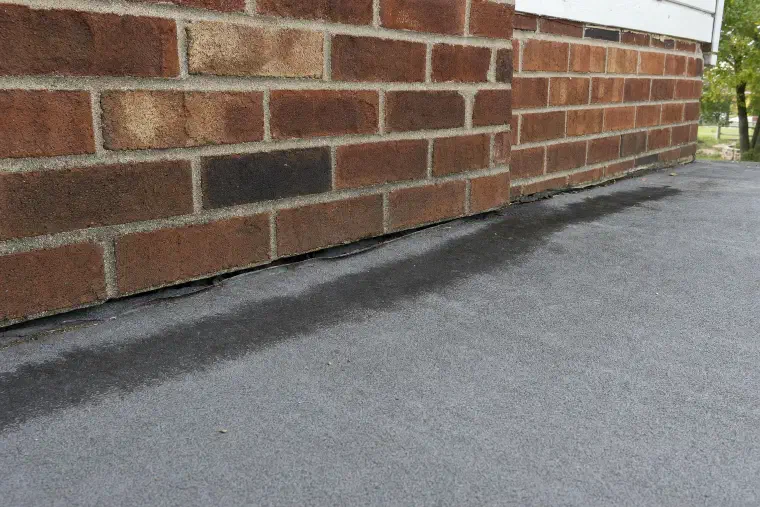
To repair a leaking flat roof, you find where the water gets in, dry that spot, and fix it with a patch that matches the roof. The hard part is the first step. Water runs along a flat roof before it drips inside, so the stain on your ceiling is often a long way from the hole.
The short version
- Flat roofs usually leak at a seam, an edge or a spot where water sits.
- Look at those three places first, on a dry day, from a safe spot.
- A small tear or split seam can be patched. Wet insulation or soft decking cannot.
- Fix the reason water sits, or the same leak comes back.
- A repair that fails twice is a sign to ask about a new roof.
Where does a flat roof leak?
A flat roof leaks at its seams, its edges and the places where water sits after rain. We see the same few spots on every flat roof: seams where two sheets meet, edges where the roof meets a wall, anything poking up through the roof like pipes and vents, and low spots that never drain.
This Old House says to look for seam separation or lifted edges (opens in a new tab) along the roof surface, and to check flashing and vents too. Flashing is the strip of metal or rubber that seals where the roof meets something else.
Water also spreads out under a flat roof before it finds a way down. So start at the stain, then work outward across the roof, not straight above it.
How do you find the leak?
You find a flat roof leak by looking at the roof when it is dry, then following the water trail from the stain. Check the seams first, then the edges along walls, then every pipe, vent and drain.
A few things that help:
- Walk the ceiling stain’s outline and mark it, so you can tell if it grows
- Look in the attic or crawl space for damp insulation, if there is one
- Check the low spots for dark rings, which show where puddles dry out
- Look for blisters, wrinkles and cracks in the surface
Keep in mind that finding the exact entry point can take more than eyes. We bill a proper leak trace separately, and it typically runs $150 to $400, because it can mean a hose test or a moisture meter. Sometimes the cause is not the roof at all, but condensation or a leaking window or wall.
Is standing water the real problem?
Often, yes. Water that sits on a flat roof for days wears out the surface and finds every weak spot. This Old House notes that even a small slope makes a big difference (opens in a new tab) in keeping water off, and it says to keep drains and scuppers clear. A scupper is the opening that lets water run off the edge of the roof.
A blocked drain is the easiest cause to fix. Federal housing inspection rules from HUD say that when debris limits the drain, ponding water may occur (opens in a new tab), and that ponding adds weight to the roof.
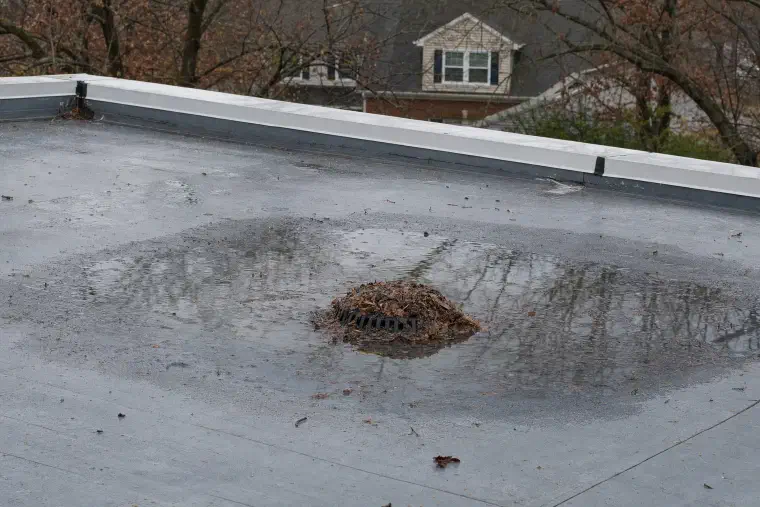
If the drain is clear and water still sits, the roof has a low spot. A patch over a leak in a low spot will fail again. That low spot needs building up, or the roof has sagged and needs a closer look.
Can you patch a flat roof leak yourself?
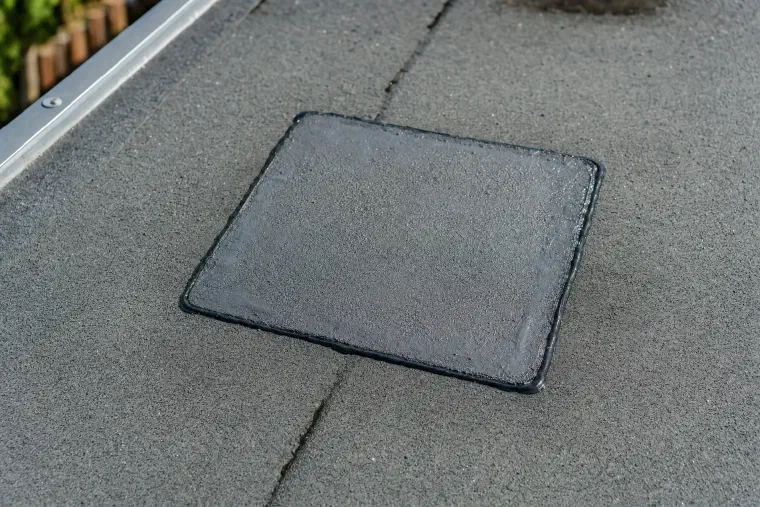
You can patch a small tear or a short split seam yourself, if the roof is dry and solid underfoot. This Old House advises repairing punctures and tears promptly with compatible patch kits (opens in a new tab), meaning a patch made for your type of roof.
The steps are simple:
- Wait for a dry day and clean the spot of dirt and loose grit.
- Cut the patch so it reaches well past the damage on every side.
- Press it down firmly and seal the edges.
- Check it after the next rain.
Stay off the roof if it feels soft, spongy or bouncy. That means the deck is wet or rotted, and no patch fixes that. It is also not a job for a wet or icy roof.
A patch is also not the same as a repair. Tar smeared over a crack often hides the problem and can make a later proper fix harder, which is why we call a patch a stopgap.
When is a patch not enough?
A patch is not enough when the roof is wet underneath, soft underfoot, blistered across much of its surface or leaking in several places. In those cases a repair is a short delay, not a fix.
| What you see | Usually means | Typical area cost |
|---|---|---|
| One tear or one open seam, roof dry | A small repair can hold | A small reseal typically runs $400 to $850 |
| Leak that keeps coming back | The cause has not been found | A single leak diagnosis and repair typically runs $500 to $1,600 |
| Soft spots, wet insulation, blisters all over | Water is inside the roof | A low-slope membrane repair typically runs $2,500 to $6,000 |
| Rotted deck under the leak | Wood has to be replaced | Decking found wet is typically added at $150 to $500 or more |
These are area ranges, not quotes. Your roof size, access and the cause move the number. Most small repairs land near the minimum service call, which typically runs $350 to $550 for an independent roofer, because getting a crew out costs more than the patch.
If the repair bill starts to look like a big share of a new roof, read our guide to the best flat roof material before you decide.
How do you keep a flat roof from leaking again?
You keep it from leaking by checking it twice a year and after storms, and by fixing small things quickly. FEMA says a roof should be inspected at least twice per year (opens in a new tab), generally in spring and fall, and after high wind events, with needed repairs completed quickly.
On a flat roof that means clearing leaves from drains, looking at every seam and edge, and noting any spot where water stays. Wooded lots like many around Ellicott City drop a lot of debris onto a flat roof, so fall is the check that matters most.
Common questions
How long does a flat roof repair take?
Most repairs take one to four hours on site, but the whole job usually runs one to two weeks from your call to the finish. A storm can stretch that to three to six weeks. Repairs need a dry roof, and winter repairs may not bond until spring.
Can a flat roof leak with no hole in it?
Yes. Water can get in at a seam you cannot see, or the damp may come from condensation instead. Both look like a roof leak from inside. That is why we rule out non-roof causes before anyone cuts into the roof.
Does a repair come with a guarantee that the leak will stop?
No, and be wary of anyone who says it will. Leak tracing is a matter of odds, and a second visit is sometimes needed. Repairs typically carry a warranty of 30 days to 1 year on the repaired area, and none on roofs more than 15 to 20 years old.
Does insurance pay for a flat roof leak?
It depends on what caused the leak. Your policy and your adjuster decide, so read the policy first. We cover this in more detail in our guide to homeowners insurance and roof leaks.
What to do next
If you cannot find the leak, or the roof feels soft, start with a free roof inspection. We walk the roof, check the seams, edges and low spots, and tell you plainly whether it can be repaired or not. We would rather repair than replace whenever the roof allows it. If it needs work, the flat roof repair page is where that begins.


