

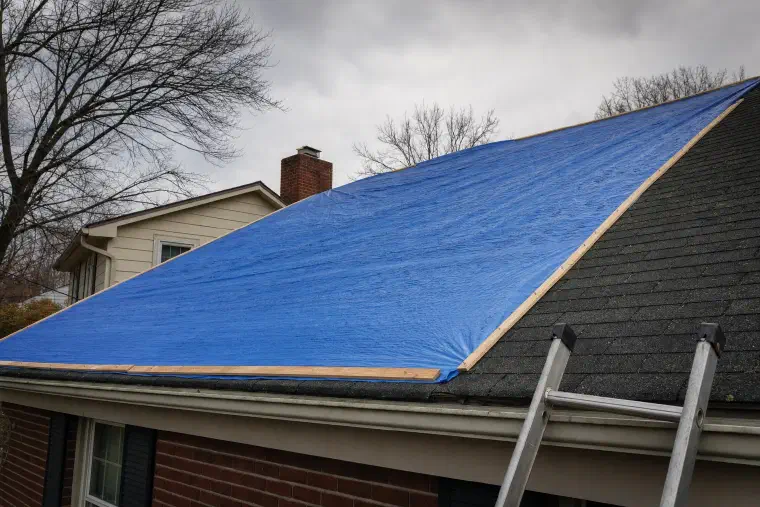
To tarp a leaking roof, you cover the damaged spot with a heavy waterproof sheet that runs up and over the ridge, and you hold the edges down with wood strips. It is a stopgap that keeps water out for days or weeks, not a repair. On a wet or steep roof, it is also a job best left to a roofer.
The short version
- A tarp only buys time. It does not fix the leak underneath.
- Do the inside work first: catch the water, move things, and relieve a bulging ceiling.
- Stay off a wet, windy or steep roof. A fall costs far more than a leak.
- Emergency tarping typically runs $350 to $900, and it is often billed separately from the repair.
- Keep the receipts and photos. Your insurance company will want them.
Should you tarp a leaking roof yourself?
Only if the roof is dry, low and easy to reach from a ladder, and a second person is there to hold the ladder and the tarp. Otherwise, call a roofer.
The reason is plain. A tarp is a big sail, and a gust that catches one on a slope can pull you with it. Rain turns shingles slick. A roof that is already damaged can also be weaker than it looks.
Most leaks start in the middle of a storm, which is the worst time to be up there. If the weather is bad, the right move is to protect the inside of the house and make the call. We answer the phone 24/7 for emergency repairs, and a tarp is one of the things we put up.
What does a roof tarp actually do?
A roof tarp sheds rain away from the spot where water is getting in. FEMA describes its tarps as large, loose-fitting sheets of waterproof material (opens in a new tab) that can be tied down with grommets (the metal-ringed holes along the edge).
It does not stop the leak. It keeps rain from reaching the broken part until somebody can fix it. The Army Corps of Engineers’ storm program uses plastic sheeting held down with wood strips, and those covers are designed to last 30 days (opens in a new tab). That is a fair guide for any tarp: weeks, not months.
One thing to keep in mind. The screws that hold a tarp down go through your shingles, so the repair crew will have holes to deal with. That is a small price for a dry attic, but it is why nobody tarps a roof that is not leaking.
What should you do inside the house first?
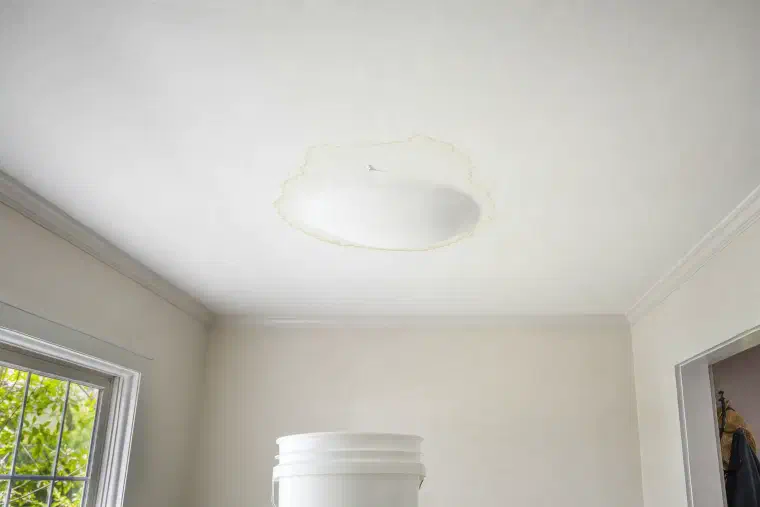
Start inside, because that is where the damage is happening right now. Put a bucket under the drip, move furniture and electronics out of the way, and keep clear of any wet light fixture.
If the ceiling has a bulge in the paint, the water is pooling behind it. Poking a small hole at the lowest point lets it drain into the bucket instead of coming down all at once. Our guide on a leak in the ceiling walks through it step by step.
Take photos of the stain, the bucket and anything damaged. Do it before you clean up. You will want them later.
How does a tarp go on a roof?
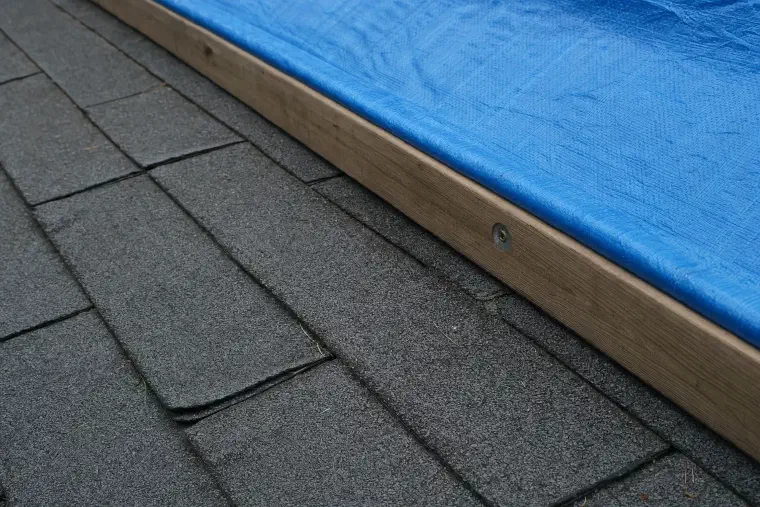
The tarp covers the damaged area and runs well past it on every side, then up and over the ridge so water cannot run in under its top edge. The edges are held down with wood strips screwed into the roof, because nails or screws through a bare tarp tear out in the first good gust.
Here is the order a roofer follows:
- Find the damaged area, from a ladder or from the attic, and clear loose debris.
- Cut the tarp so it reaches well past the damage on every side.
- Run it up to the ridge and over the top, so the highest edge sheds water away.
- Fold each edge over a wood strip and screw the strip down.
- Check that the tarp is pulled flat. A loose, flapping tarp wears through fast.
Sandbags and weights are sometimes used for a short wait, but they slide in wind and rain. A tarp that moves is a tarp that lets water in.
What does tarping a roof cost?
Emergency tarping typically runs $350 to $900, and it is often billed separately from the repair. Ask whether it gets credited toward the repair, because it may or may not.
| Item | What it typically runs |
|---|---|
| Emergency tarping | $350 to $900 |
| Finding the leak (attic check, hose test) | $150 to $400 |
| Free roof inspection | $0 |
The leak-finding line matters. A tarp covers the spot you know about, and water is sneaky about where it actually enters. Our free roof inspection covers the roof surface, flashing, valleys and attic, though pinning down the exact entry point of a leak is a separate paid job.
Will insurance pay for a tarp?
It can, but your policy and your adjuster decide, and we cannot promise what a claim will pay. What we can tell you is what the state says to do.
The Maryland Insurance Administration says to make only the repairs needed to prevent further damage (opens in a new tab), and names covering a roof with plywood, canvas or other waterproof material as an example. It also says to keep every receipt for emergency repairs. A tarp fits that description.
The same page warns against permanent repairs before you talk to your agent or insurance company, since unauthorized repairs may not be reimbursed. So tarp first, call your insurer, then schedule the real fix. Our article on whether homeowners insurance covers a roof leak goes into the details.
What happens after the tarp is up?
The tarp is the start of the job, not the end of it. Somebody still has to find out why the water got in and fix that spot.
A repair needs a dry roof, so it waits for the weather. After a big storm it can also wait behind other roofs in the county. The tarp is what keeps the house dry in the meantime.
Do not smear roofing tar over the problem as a quick fix of your own. Tar stops new shingle from bonding, traps moisture, and often hides rotted decking underneath. If you are weighing a small fix against something bigger, a roof patch versus a roof repair is worth reading first.
Common questions
How long can a tarp stay on a roof?
Plan on weeks. Plastic sheeting installed by the Army Corps of Engineers’ storm program is designed to last 30 days, and wind is hard on any of them. Book the permanent repair as soon as the roof is dry.
Can you tarp a roof in the rain?
You should not do it yourself. Wet shingles are slippery and wind makes a tarp hard to control. If water is coming in during a storm, protect the inside of the house and call a roofer.
Will a tarp fix my leak?
No. A tarp keeps rain off the damaged spot. The leak itself still needs a repair, and sometimes the stain on the ceiling is nowhere near the opening on the roof.
Does tarping a roof damage it?
The screws that hold the wood strips leave holes in the shingles, which the repair crew deals with. A tarp that is left flapping can also scuff the surface. Both are minor next to the water you are keeping out.
What to do next
If water is coming in, call us and we will get a tarp over it. Our emergency roof repair service covers the tarp and the permanent fix that follows.


