To unclog a downspout, flush it with a garden hose first, then push a plumber’s snake through if the water still backs up, and take the pipe apart if neither works. Most clogs sit at the bottom elbow, so you can usually do it from the ground.
The short version
- Run a hose in the top to find out whether it is clogged, and what the water does at the bottom.
- A hard spray clears a light clog, and a plumber’s snake handles a stubborn one.
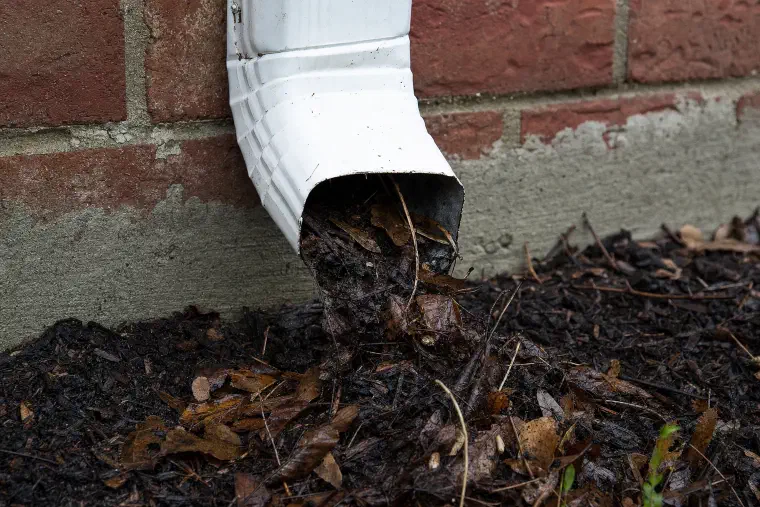
- A clog packed into a bend often needs the elbow taken off.
- Work from the ground when you can, and never overreach on a ladder.
- If the same downspout clogs every fall, the problem is the gutter above it.
How do you know a downspout is clogged?
Water tells you. In a hard rain, a downspout that is clogged lets the gutter overflow right above it, usually over the front edge. You may also see a dry bottom while the top is running full, or a slow drip where there should be a stream.
To be sure, put a hose in the top and turn it on. If water pours out of the bottom, the line is clear. If it comes out slowly, or backs up and spills over the gutter, there is a plug somewhere in between.
A clogged downspout does the same damage as a clogged gutter. Water that cannot leave stands in the trough, and that is how fascia, the board behind the gutter, starts to rot. We cover that in what a fascia board is and why it rots.
What is the easiest way to clear a clog?
Start with water. This Old House says to spray water through the downspout at high pressure (opens in a new tab) to remove minor clogs, and that is the step to try before anything else. Push the hose nozzle in as far as it goes and turn it on full.
Then check the bottom. If the clog comes loose, you will see a rush of leaves and brown water. Keep the hose running until the water coming out is clear.
Take off any extension or flexible hose at the bottom first. If it connects to a buried pipe, clear what you can see at the opening and leave the rest for the next section. Pushing a plug down into the pipe makes it harder to reach.
What if the hose does not work?
Use a plumber’s snake. It is a long, bendy steel cable with a crank on one end, and most hardware stores sell a short one made for this. This Old House says that for a few tough blockages (opens in a new tab) in your downspouts, a plumber’s snake will clear them. Another page from the same publisher says you can often clear a clog using a plumber’s snake or by flushing with a garden hose (opens in a new tab).
Feed the snake in from the bottom and turn the crank as you push. When it breaks through, pull it out, then run the hose again to wash out whatever is left.
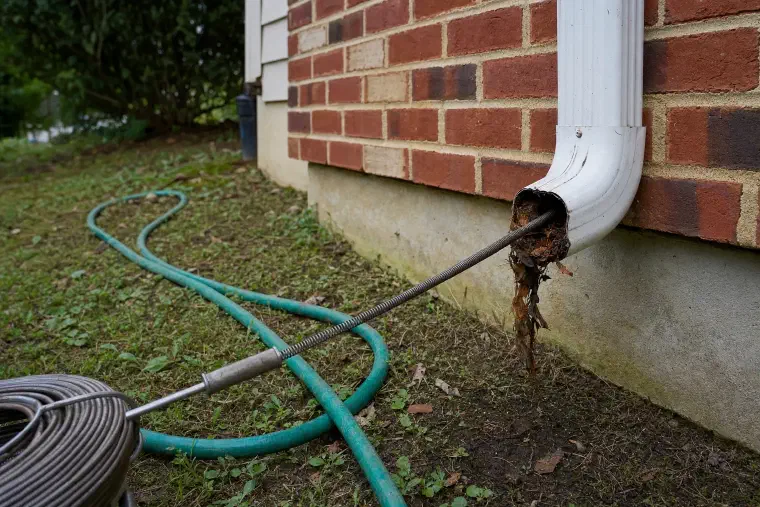
One thing to keep in mind: the snake catches on bends. Elbows are where leaves and grit pile up, and they are also the part a snake has the most trouble getting around.
When should you take the downspout apart?
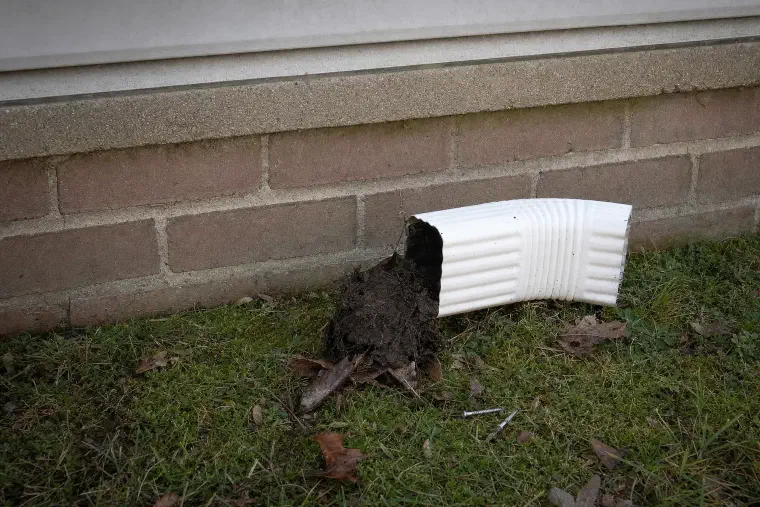
When both of those fail, or when you can feel the plug sitting in a bend. This Old House says that for a stubborn clog you can remove the elbow and yank out the sludge, leaves and sticks (opens in a new tab) stuck in it. For a clog higher up, it says to unfasten the downspout and place it on the ground (opens in a new tab).
Most sections are held with a few small screws, or they pull apart at the joints. Take out the screws, pull the sections apart and shake the debris out onto a tarp. Then put it back together with the upper piece sitting inside the lower one, so water flows down through the joint and not out of it.
The same page gives the reason this works better than going in from above: snaking from above just pushes clogs farther along the system (opens in a new tab).
Which fix goes with which clog?
Here is how the usual clogs line up with the fix that tends to work:
| What you find | Try this first | If that fails |
|---|---|---|
| Water runs slowly, or only a little comes out | Hose with the nozzle on full | Plumber’s snake from the bottom |
| Leaves packed in the lower elbow | Take the elbow off and pull the debris out | Run the hose through again |
| Clog somewhere in the middle | Unfasten that section and take it down | Snake each piece on the ground |
| Hose water never comes out of the buried line | Check the opening in the yard | Call a pro to clear the line |
What about a downspout that goes underground?
A buried line is harder, because you cannot see the plug or pull the pipe apart. Run the hose in from the top and watch the yard. If the water does not come out of the far end, the line is blocked or it goes somewhere you did not expect.
A federal guide on foundation drainage says downspouts should be piped to a sloping final grade (opens in a new tab) away from the house. If you are not sure where yours ends, our piece on downspouts that drain into an underground pipe explains where those lines should end.
Our gutter cleaning covers the troughs, the downspouts and the underground lines, so a buried plug is something we can clear.
What about a downspout that is frozen?
Ice is a different clog, and it is not one to chip at. This Old House says that freezing can be a concern in colder climates (opens in a new tab), and that it most often happens when the day is mild and the night drops below freezing. A pipe full of wet leaves is the one that freezes solid.
Wait for a thaw, then clear the leaves. Do not hit the pipe with a hammer. Thin aluminum dents easily.
How do you stay safe on a ladder?
Keep the ladder off the job when you can. Most downspout clogs are in the bottom elbow, and you can get to it standing on the ground.
If you do need a ladder for a clog up high, this Old House advises that you have a spotter nearby to stabilize the ladder (opens in a new tab) and that you should never overextend or overreach (opens in a new tab). Climb down and move the ladder rather than leaning out. If you are not sure about a second story, leave it alone and call someone.
How do you stop it from clogging again?
Clean the gutters before the downspouts get the chance to fill. Leaves and grit wash down from the gutter into the pipe, and the pipe is where they stop. Our guide to how often to clean your gutters gives a schedule, and the answer is more often under oaks, maples and pines.
Gutter guards cut down what gets in, though fine grit still slips past.
Common questions
Can you unclog a downspout without a ladder?
Often, yes. Start at the bottom with a hose and a snake, and take off the elbow if it is packed. A ladder only comes into it when the plug is high up and the pipe will not come apart from the ground.
Why does my downspout clog every year?
Because debris from the roof and the gutter ends up in it, and the bottom bend is where it settles. Trees overhanging the roof make it worse. Clean the gutters first, and the downspout has far less to deal with.
Is it okay to use a pressure washer?
A garden hose with a nozzle on full does the job for most clogs. A pressure washer can force a plug deeper into a bend or blow a joint apart, so we would not reach for one.
Can a clogged downspout hurt my house?
It can. Water that cannot leave the gutter spills over the edge and soaks the ground by the foundation, and it can sit against the fascia until the wood rots.
What to do next
Try the hose first. If the water backs up, snake it or take the elbow off. If the line is buried, or the clog is up where you do not want to climb, call us. Our gutter cleaning clears the downspouts as well as the gutters. We answer the phone any time, day or night.