

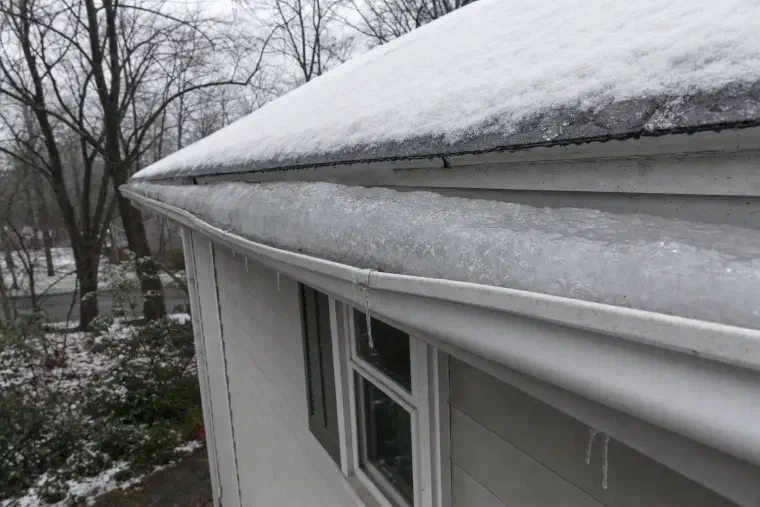
Ice dams in gutters are a build-up of frozen meltwater along the roof edge, and the weight of that ice can bend a gutter, pull it off the house and rot the board behind it. The gutter doesn’t cause the dam. It sits in the worst spot to be crushed by one.
The short version
- Gutters don’t cause ice dams. Heat leaking into the attic does.
- A gutter full of ice gives a dam something to grow on, and the weight can tear the gutter off.
- Clear gutters before the first freeze, and get sagging or loose ones fixed first.
- Heat cables and chipping at ice tend to make things worse.
- Fixing the gutter won’t stop a dam. Fixing the heat leak will.
Do gutters cause ice dams?
No. The University of Massachusetts says plainly that gutters do not cause ice dams (opens in a new tab). It adds that gutters do help concentrate ice and water at a very vulnerable part of the roof edge.
The cause is upstairs. Warm air from the house melts the snow on the roof, and the water runs down to the cold overhang and freezes again. If you want the full picture, our guide to how to prevent ice dams walks through it.
So why do the gutters get blamed? Because that’s where you see the ice. The gutter is the lowest, coldest edge of the roof, and it’s the first thing to fill up.
What do ice dams do to gutters?
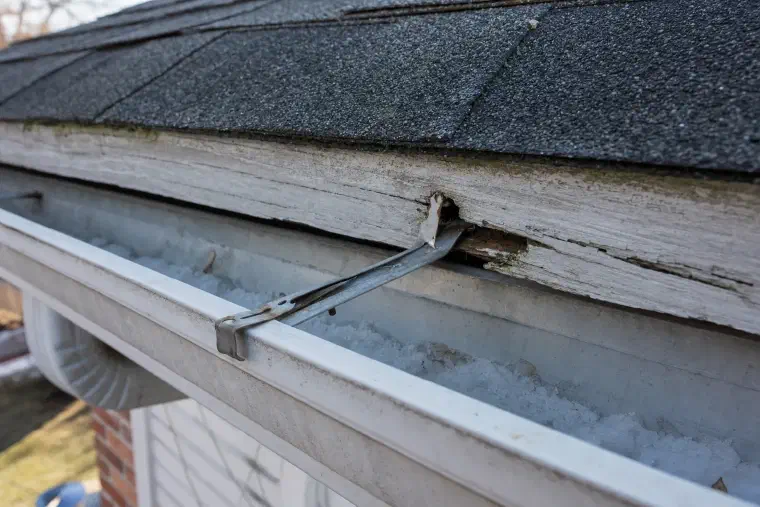
They load them with weight they were never built to carry. The same University of Massachusetts author writes that as gutters fill with ice, they often bend and rip away from the house (opens in a new tab), bringing the fascia, fasteners and downspouts with them.
A gutter is a thin trough hung on a row of hangers. It’s made to carry water, which drains away. Solid ice doesn’t drain, and a full trough of it can weigh a lot more than the hangers can hold. The usual order of damage looks like this:
| What you see | What is happening | What it means |
|---|---|---|
| Gutter bowed outward | Ice is pushing the front lip | The trough may stay bent after the thaw |
| Gap between gutter and board | Hangers are pulling out of the wood | Water now runs behind the gutter |
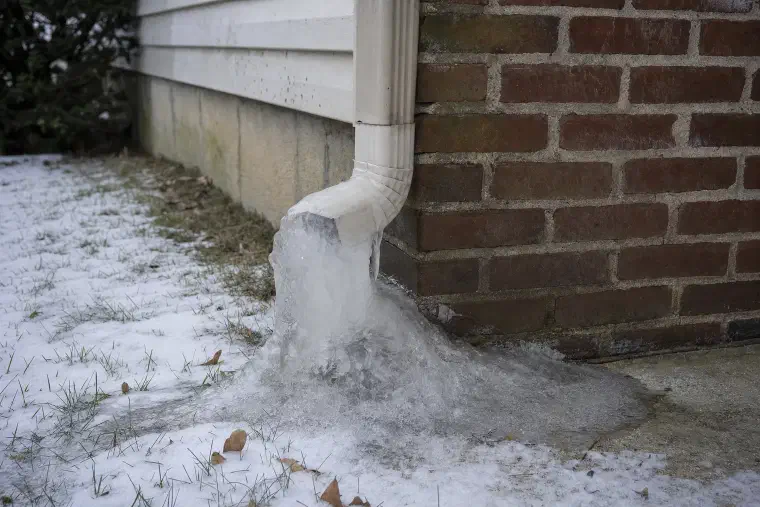
| Downspout twisted or detached | Ice in the pipe and the weight above it | Water spills at the foundation |
| Dark, soft board behind the gutter | Fascia has been wet for a while | The rot may reach the rafter ends |
None of that shows from inside the house. We cover the board behind the gutter in what a fascia board is and why it rots.
Can a clogged gutter make an ice dam worse?
Yes. A gutter packed with leaves holds standing water, and standing water freezes into a solid shelf. That’s a ledge for the next round of melt to freeze against.
The Asphalt Roofing Manufacturers Association says ice dams can come from frozen slush backing up in gutters (opens in a new tab), and tells homeowners to keep gutters and downspouts free of debris. It also says the outer edge of the gutter should sit lower than the line of the roof slope, so snow and ice can slide clear instead of piling on the trough.
This is one of the problems we see most around Ellicott City’s wooded lots. A full gutter holds water against the fascia, then the rafter ends, then the first few inches of roof decking. A freeze on top of that gives a rotting board a heavy load to hold. Our guide to how often to clean your gutters has the schedule. Late fall, after the leaves are down, is the one cleaning not to skip.
What do icicles tell you?
They tell you water is getting past the dam. The U.S. Department of Energy’s Building America program says icicles are often a sign that more liquid water is building up (opens in a new tab) behind the dam.
A few icicles on a cold morning are fairly harmless on their own. A long row of them, thick ice behind the gutter, or icicles with a wet stain on the ceiling below them is a sign to take seriously. The ice is telling you the roof edge is holding more than it should.
Should you use heat cables in your gutters?
We wouldn’t. Heat cables are the usual quick fix people reach for, and the evidence isn’t kind to them. The University of Massachusetts author says the electric cable creates an ice dam just above it (opens in a new tab), and advises against spending the time or money.
A cable melts a channel for water right where it sits. Past the end of the cable, the water meets cold shingles and freezes again. You’ve moved the dam up the roof.
The same goes for chipping. Hacking at ice with a hammer or a shovel from a ladder tends to dent the gutter and strip the shingles, and it puts you on a ladder in the cold. If the ice is already heavy, our guide to how to remove an ice dam covers the safer options.
How do you protect your gutters before winter?
Fix what’s already weak, then clear what’s in them. In order:
- Clear the leaves and grit from every gutter and downspout, so water can leave before it freezes.
- Look for gutters that sag, pull away or leak at the seams. A gutter that already sags holds water in the low spot, and that water freezes first.
- Press on the board behind the gutter. Soft wood won’t hold a hanger when the ice comes.
- Check the downspout bottoms. They should drain away from the house and not sit buried in leaves.
- Deal with the heat leak. It’s the only step that stops dams.
On step 2 and 3, the order matters. A gutter fastened into soft wood pulls out again, so the rotted board gets replaced first and the gutter is refastened into solid wood with new hangers. That’s how we do our gutter repair.
Common questions
Will my gutters bend or fall off if they fill with ice?
They can. Ice is heavy, and gutters hang on small hangers. The University of Massachusetts says ice-filled gutters often bend and pull away from the house along with the fascia and downspouts. A gutter that was already loose or sagging goes first.
Do gutter guards stop ice dams?
No. A guard keeps leaves out, which means less debris to freeze, but it doesn’t touch the heat leak that melts the snow in the first place. Ice can still build on or behind a guard.
Should I take my gutters down for winter?
We don’t see the point. The dam still forms without them, and water then runs down the wall and the foundation. The better move is to keep them clear and fastened into solid wood, and to find out where the heat is escaping.
Is ice damage to gutters covered by insurance?
It depends on your policy and on what the adjuster decides, so we can’t say. Take photos of the damage before you clear anything, and read your policy or call your insurer.
What to do next
If your gutters sagged, bowed or pulled off last winter, get them looked at before the next freeze. We repair loose and sagging gutters and replace the rotted boards behind them, and the roof inspection that looks at the gutters and the attic is free.


