A flat roof coating is worth it when the roof underneath is still sound: dry, mostly watertight and not near the end of its life. On that kind of roof it adds years for less than a new roof costs. On a roof that already leaks and holds water, it is money spent covering up the problem.
The short version
- A coating is a thick, paint-like layer rolled or sprayed over the roof. It is not a new roof.
- It pays off on a roof in good or moderate shape, after the repairs are done.
- It does not pay off on a wet, soft or worn-out roof, or one that holds standing water.
- The Department of Energy says today’s white coatings last about 10 years, with research aiming for 15.
- A free roof inspection is how you find out which kind of roof you have.
What is a flat roof coating?
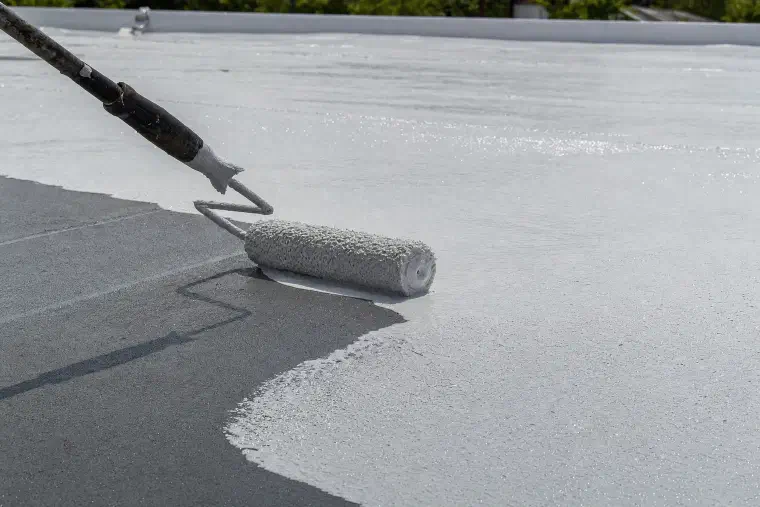
A flat roof coating is a liquid layer that dries into a tough, unbroken skin over the existing roof. The Department of Energy describes coatings as very thick paints (opens in a new tab) that protect the roof surface from sunlight and chemical damage, and some also add water protection.
Most are white, because white sends sunlight back. That is the cool roof idea, and it matters on a flat roof because the whole roof faces the sky. The same guide says typical dark roofs absorb 90% or more (opens in a new tab) of the sun’s energy, and that reflective roofs cut air conditioning use.
A coating sits on top of whatever is already there. It does not add framing, fix a soft spot in the deck or replace wet insulation. Keep that in mind, because it decides everything below.
When is a flat roof coating worth the money?
A coating is worth it when the roof is in good shape or needs only small repairs. The DOE says coatings can extend a roof’s service life (opens in a new tab) as long as the roof is still in good condition. For a roof in moderate condition, it says a coating can go on after the repairs have been made.
That order matters. The seams get fixed, the flashing gets resealed, the drains get cleared, and then the coating goes over the top as a protective skin.
It helps in two smaller ways too. A light color keeps the roof surface cooler in July, and an unbroken layer has fewer places for water to find. Neither is a reason to coat a roof that is failing.
When is a coating a waste of money?
A coating wastes money when the roof is wet underneath, soft underfoot or past its useful life. The DOE says that if a roof is in poor condition or near the end of its life, it is usually best to re-cover, replace or retrofit (opens in a new tab) it instead.
These are the usual signs that a coating is the wrong call:
- Water has already got into the insulation, so the roof feels spongy in spots
- The deck dips or flexes when you step on it
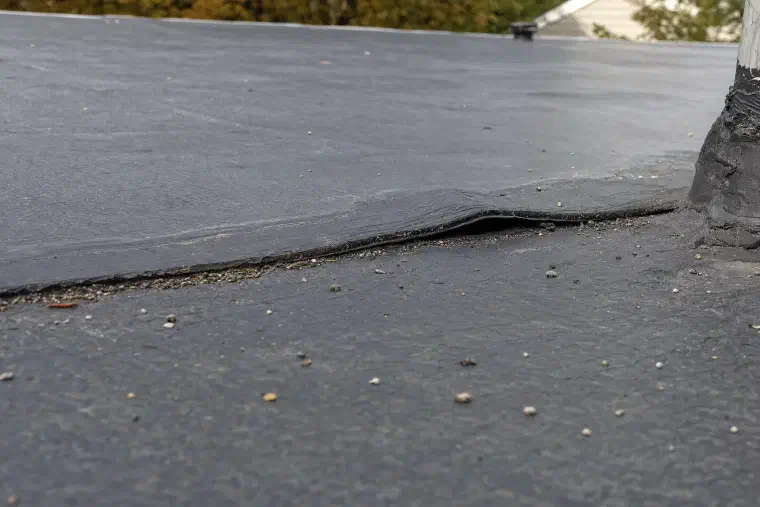
- Seams have split open along their length, not in one spot
- The membrane is cracked all over, not in a few places
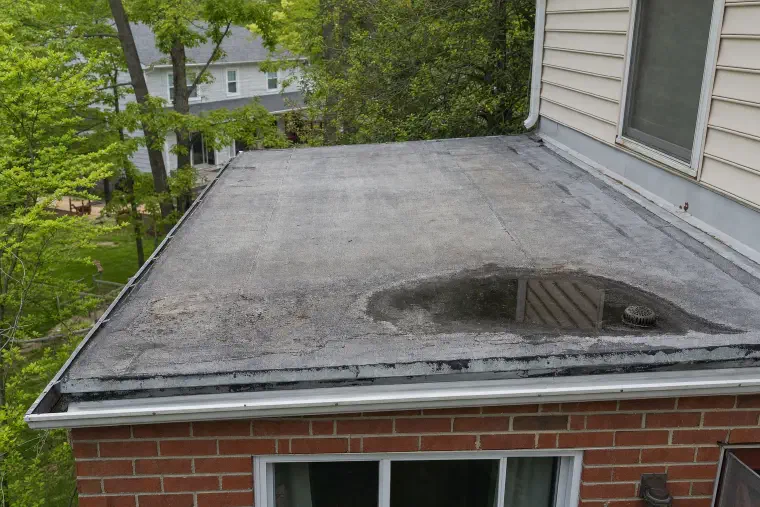
- Water sits in the same low spot for days after rain
That last one deserves its own line. Standing water is a flat roof’s most common wound, and a coating does not change the slope. This Old House notes that even a small pitch makes a big difference (opens in a new tab) in preventing standing water and extending the life of a roof. Ponding that is there before the coating is usually there after it.
How long does a flat roof coating last?
Not as long as a new roof. The DOE is working on stay-clean white coatings with a service life of 15 years (opens in a new tab) or more, and says making them tougher would lift the life of this kind of coating from about 10 years to at least 15. That is a research goal, not a promise from any product.
Plan on a coating being a layer you refresh, not a one-time fix. The DOE counts recoating and cleaning (opens in a new tab) as ongoing costs of a cool roof, and notes that mold or algae on a white surface can be cleaned off.
Compare that with the roof underneath. This Old House says flat roofs can last up to 25 years (opens in a new tab) with proper installation and maintenance. A coating on a decent roof buys time toward the end of that range. It does not reset the clock.
How does a coating compare with repairing or replacing?
Here is how the three choices line up for a flat roof around Ellicott City.
| Choice | Fits a roof that is | What it does | Typical area cost |
|---|---|---|---|
| Coating | Dry, mostly tight, mid-life | Adds a protective skin and some years | Get a written price for your roof size |
| Repair | Leaking in one or two places | Fixes the seam, edge or flashing that fails | A low-slope membrane repair typically runs $2,500 to $6,000 |
| New flat roof | Wet, soft or worn out | Starts again with a new membrane | A low-slope section often starts at $2,500 to $5,000 minimum |
We have not put a price on a coating here, because it swings with the size of the roof and the product. Get it in writing, and ask what condition the roof has to be in for the maker to stand behind it.
If you want to see what a new flat roof is made of, we cover that in our guide to the best flat roof material and in what a TPO roof is.
Should you repair the roof first?
Yes, always. A coating over an open seam or loose flashing seals the surface and leaves the leak where it was. The DOE says a coating goes on after any repairs have been made (opens in a new tab).
Flat roofs usually leak at a seam, an edge or a spot where water sits, so that is where to look first. This Old House says to watch for seam separation or lifted edges (opens in a new tab) and to inspect around flashing, vents and drains.
Our view is repair over replace whenever the roof allows it. If your roof needs a repair and a coating, we would rather tell you that than sell you a new roof. If it needs more, we will say so too.
What should you ask before you say yes?
Ask the person quoting the work to show you why your roof qualifies. A good answer names what they checked, not just what they sell.
Questions worth asking:
- Is the insulation under the roof dry, and how do you know?
- What gets repaired before the coating goes on?
- What happens to the standing water in the low spot?
- What does the maker’s warranty need from the roof, and who gives it?
- When will it need recoating?
A quote that skips the first two is selling a color, not a roof.
Common questions
Can you put a coating over a leaking flat roof?
Not as a fix. A leak means water is getting in at a seam, edge or flashing, and a coating over it hides the spot without closing it. Repair the leak first, let the roof dry out, then decide whether a coating still makes sense.
Will a white coating lower my cooling bill?
Probably a little, mostly in the rooms right under the flat section. The DOE says reflective roofs reduce air conditioning use because they send the sun back instead of soaking it in. How much you save depends on the room, the insulation and how dirty the white gets, and we will not put a number on it.
Is a coating the same as a new flat roof?
No. A new roof is a new waterproof membrane. A coating is a protective layer over the old one. Our flat roof installation page explains what a new flat roof involves.
How do I know if my flat roof can take a coating?
Someone has to look at it, on the roof and not from the ground. Wet insulation, soft decking and failing seams do not show from the yard.
What to do next
If you have a flat roof and are not sure whether to coat it, repair it or replace it, start with the free roof inspection. We walk the roof, check the seams, edges and low spots, and tell you plainly which of the three fits. If it needs a repair first, the flat roof repair page is where that starts.