

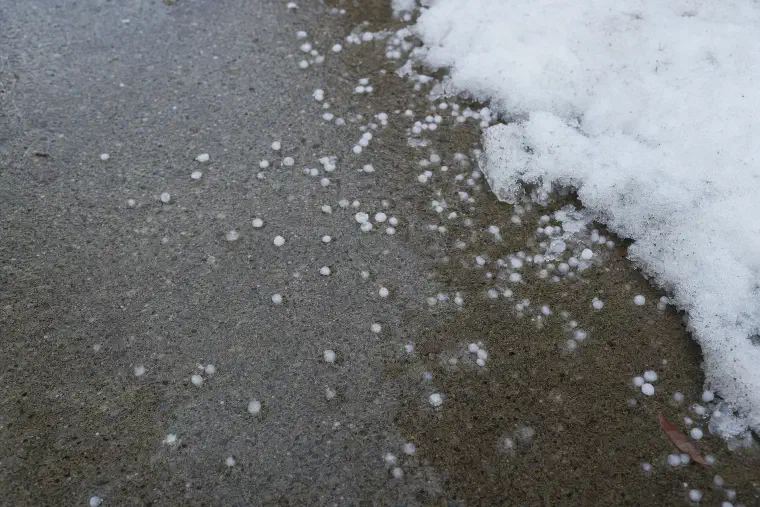
Calcium chloride is the least harsh of the common ice melters, so it is the usual pick for an ice dam. Used in a stocking and laid across the ice, it is a fair short-term fix. It is not harmless, though, and it is rough on plants, pets’ paws and anything it drips onto.
The short version
- Calcium chloride beats plain rock salt for ice dams, but “gentler” does not mean “safe for everything”.
- Keep it in a stocking on the ice. Never scatter it over the shingles.
- Shrubs and flower beds under the eave take the runoff, and pets can pick it up on their paws.
- We found no university or government test of what it does to shingles or gutters, so we won’t promise it is harmless.
- Water coming into the house means call a roofer. Melting a channel only buys you a few days.
Is calcium chloride safe for shingles?
Nobody we could cite has tested it, so the honest answer is “probably fine in small amounts, but not proven”. We read the university extension pages on ice dams and none of them tests an ice melter on shingles. What they do warn about is harsher treatment. This Old House says hacking at an ice dam is bad for your roofing (opens in a new tab), and that is the bigger risk to a shingle than the melter.
The way to cut the risk is the way the method is meant to be used. Fill the leg of an old pair of pantyhose with the melter, tie it off and lay it across the dam so it can melt a channel (opens in a new tab) down toward the gutter. The pellets stay inside the nylon, on the ice, and out of the shingle surface. Tossing a handful across the roof does the opposite, spreading it over surfaces that never needed it.
Why use calcium chloride instead of rock salt?
It works in the cold and it is easier on plants. University of Nebraska Extension says calcium chloride gives off heat (opens in a new tab) as it dissolves, so it often outperforms other deicing salts at low temperatures. The same page says rock salt can burn plants and corrode metal and concrete (opens in a new tab).
Rock salt is the one to leave in the garage. This Old House puts it bluntly: throwing salt on an ice dam will do more harm to your plantings (opens in a new tab) than to the ice. Check the bag too. Some “ice melt” blends mix calcium chloride with salt, and the label is where you find out.
What does it do to the plants below?
It can still hurt them. University of Illinois Extension lists calcium chloride among the gentler options, but says it can still cause some plant damage (opens in a new tab). UMass Extension adds that deicers without sodium are safer for plants (opens in a new tab) than rock salt, which is a long way from saying they are safe.
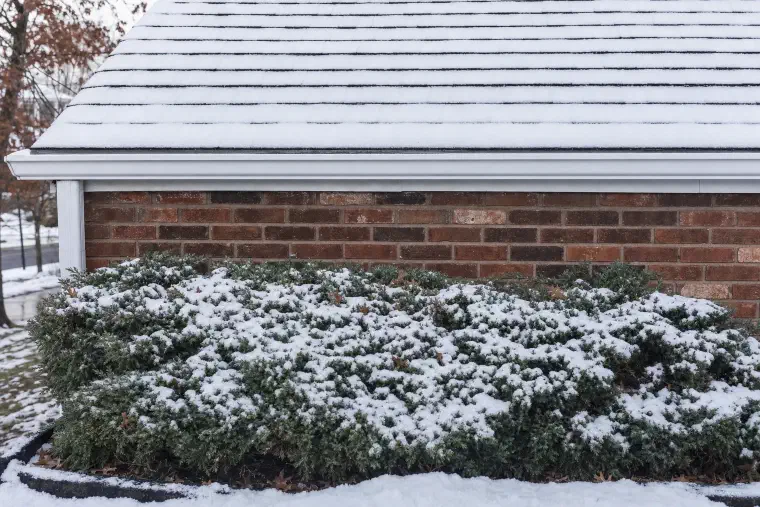
Think about where the water goes. Whatever dissolves in that channel runs off the eave and lands on whatever is planted under it, usually a foundation shrub. The same University of Illinois page describes chloride building up in the growing points of plants, which is the kind of slow damage you notice in spring. If you can, lay a tarp over the bed first and rinse the area when the thaw comes.
Is it safe for pets and kids?
No, keep it away from both. Iowa State University veterinarians warn that calcium chloride is highly caustic, similar to lye (opens in a new tab), and can cause skin burns. The residue also sticks to paws (opens in a new tab), and a dog that licks its feet can burn its mouth and stomach.
The risk is mostly at ground level, where the runoff lands and where the bag sits. Store the bag where children and pets can’t reach it, wipe paws after a walk past the drip line, and sweep up any pellets that fall out of the stocking. That is dull advice, but it is the whole fix.
What about gutters and metal?
We can’t give you a tested answer, and we won’t invent one. The Nebraska page says rock salt can corrode metal, and it says nothing either way about calcium chloride. What we can say from the job is that the gutter is where this goes wrong in other ways. A gutter packed with ice is heavy, and that weight pulls hangers loose and gives the next dam something to build on. We cover that in ice dams in gutters.
So treat a stocking that hangs over the gutter as a short visit, not a permanent fixture. Pull the stocking back once the channel opens, and keep your gutters clear in the fall so there is less ice to fight in the first place.
How do the options compare?
| Method | What it gets you | What to watch |
|---|---|---|
| Calcium chloride in a stocking | A melted channel so trapped water can drain | Runoff on plants, pellets on paws, channel fades within days (opens in a new tab) |
| Warm tap water from a hose | The same drain channel with no chemicals | Needs a warm day (opens in a new tab) and a hose that reaches without climbing |
| Rock salt | Cheap melting | Harms plants and metal, so skip it |
| Hammer or chisel | Feels productive | Can crack shingles and put you at risk |
University of Minnesota Extension says that on a warm day, hosing with tap water (opens in a new tab) will cut a channel, and it warns that the channel becomes ineffective within days. The same is true of the stocking. Neither one is a cure.
When should you stop and call a roofer?
When water is already getting inside, or when the dam comes back every time it snows. A dam that leaks has outgrown a stocking. Emergency tarping typically runs $350 to $900, and active leak diagnosis typically runs $150 to $400, so it pays to find out where the water is really coming from.
Ice dams are a symptom. Warm air leaking into the attic is the cause, and a poorly vented attic is a big reason the roof edge freezes while the middle melts. A repair starts with a diagnosis for that reason. If you want the full routine for clearing one safely, read how to remove an ice dam.
Common questions
How much calcium chloride do I put in the stocking?
Fill the leg loosely and tie it off, so it lays across the dam and hangs over the gutter. Use enough stockings to cover the length of the dam, and check them as the ice softens. We don’t have a tested amount to give you, so start small and add another stocking if the ice isn’t opening up.
Can I use driveway ice melt on my roof?
Only if the bag says calcium chloride and nothing else. Many driveway products are mostly rock salt, which is the kind that harms plants and metal. If the label lists several ingredients, check it before it goes near your roof.
Will calcium chloride stop ice dams from coming back?
No. It melts the ice that is there now. To stop the next dam you have to deal with heat escaping into the attic, which is a job for insulation, air sealing and airflow. The free roof inspection is a good time to have someone look at the attic.
What to do next
If a dam is leaking or keeps coming back, have the roof and attic checked. Our roof repair team can trace where the water is getting in and fix it at the source. Winter is a good time to look, because frost on the underside of the roof deck shows where moisture is getting trapped.


