

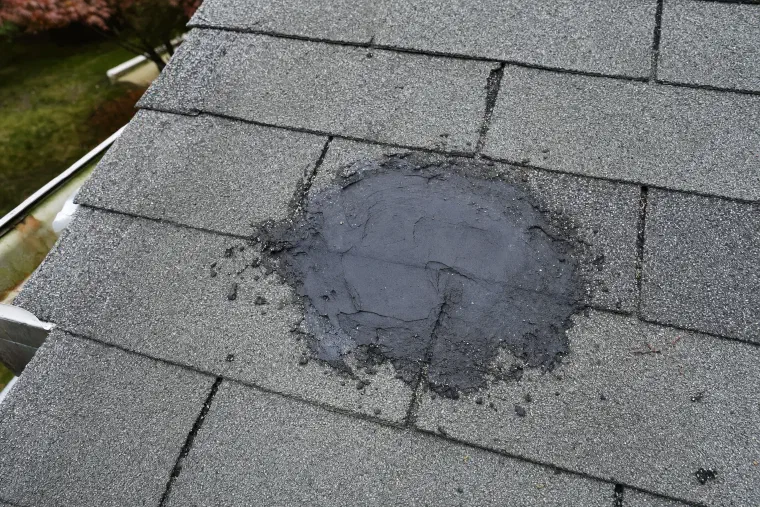
Roofing tar is a poor fix for a leak. It can slow a drip for a few weeks, but it cracks, it traps water under the patch, and it makes the real repair harder and more expensive. Use it only as a short-term stopgap, and only on a dry roof.
The short version
- Tar stops a drip for a while. It does not fix why the water got in.
- It dries out, cracks and pulls away, and the leak comes back.
- Water trapped under a tar patch can rot the wood deck underneath.
- A real repair replaces the bad shingle, boot or flashing. That typically runs $500 to $1,600 for a single leak.
- Small amounts of roof cement are fine during a proper repair. Big smears are not.
Does roofing tar fix a roof leak?
No. Roofing tar covers a leak, and the cause is still there underneath. Water got in because a shingle cracked, a nail backed out, or the metal around a vent or chimney failed. Tar smeared over the top does nothing about any of those.
Even the shingle makers say so. The Asphalt Roofing Manufacturers Association says compatible roofing cement may work as a temporary repair (opens in a new tab) for a puncture, and that it should not be considered a suitable long-term repair.
This Old House says the same about patching in general. A patch is sometimes only a stopgap (opens in a new tab) until the flashing can be replaced with the rest of the roof.
Why does tar make a leak worse over time?
Tar makes things worse because of what it does to the roof after the first week. We see this often enough to say it plainly: tar prevents new materials from bonding, it traps moisture, and it often hides rotted decking underneath.
Here is how that goes, in order:
- The tar goes on thick. It looks like the leak is gone.
- Sun and cold work on it. It dries, shrinks and cracks along the edges.
- Water finds the new cracks and slips under the patch.
- The tar now holds that water against the roof instead of letting it dry out.
- The wood deck, the sheets of plywood or boards the shingles sit on, soaks for months.
By the time a stain shows on the ceiling, the damage is old. A ceiling stain is the last stage of a leak, not the first. Our piece on roof decking explains what the wood underneath does when it stays wet.
Can too much tar damage the shingles?
Yes. A thick coat is worse than a thin one, and the manufacturers warn about it directly. The Asphalt Roofing Manufacturers Association’s installation manual cautions that excessive use of asphalt roofing cement may cause blistering (opens in a new tab) in the shingles.
Lumps cause a second problem. This Old House points out that big beads or lumps of sealant (opens in a new tab) can divert water and stop it draining the way it should. A tar mound on a slope is a little dam. Water backs up behind it and goes looking for a way in.
The annoying part is that tar is sticky and black and permanent-looking, so it feels like a strong fix. It is the opposite. It is a coating, and coatings peel.
When is roofing tar okay to use?
Tar is okay as a short bridge in an emergency, and as a small part of a real repair. Both uses have rules.
As a bridge, it only works on a dry roof, on a small hole, for days or weeks. Rain tonight and a roofer on Thursday is the usual case. The goal is to get to Thursday, then have the roof looked at. A tarp over the damaged spot does the same job without gluing anything down.
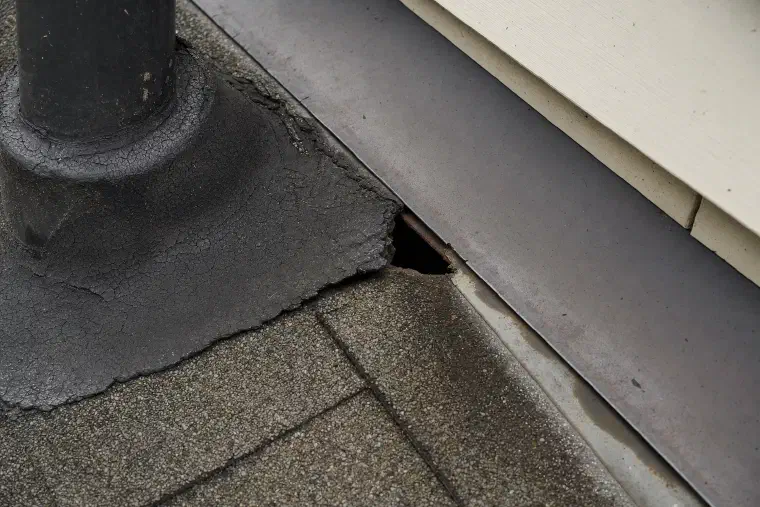
As part of a real repair, a roofer uses a bead of roof cement under a shingle tab or around a vent flange. The shingle manufacturers’ manual calls for asphalt roof cement under the shingles and over the flange (opens in a new tab) at a vent pipe, and it also says to avoid using too much. That is a measured dab under a fresh shingle, not a smear over a bad one.
Keep in mind that the safe place for a homeowner to be is the ground. Walking a wet or steep roof to apply tar is how people get hurt.
What does a real fix look like?
A real fix finds the entry point and replaces the part that failed. For a typical leak that means a new shingle or a few, a new pipe boot, a resealed or replaced piece of flashing, or a repaired valley.
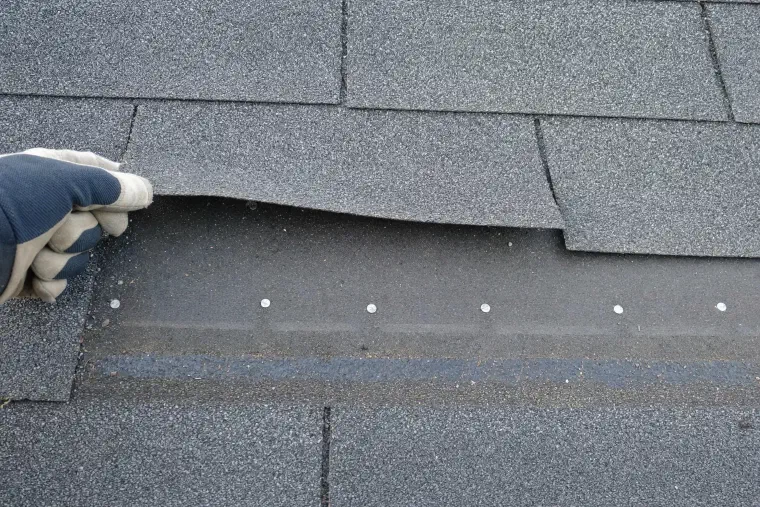
Finding the spot is usually the hard part. This Old House says it plainly: the hard part is finding the leak itself (opens in a new tab), and an accessible attic is where to start looking. Water often travels along a rafter before it drips, so the stain and the hole are rarely in the same place. Our guide to finding a leak in your roof walks through it.
A repair also has a limit. The leak is usually fixed when the cause is fixed, but we can’t promise one visit will do it, since leak tracing is not an exact science. A new leak two feet away is a new problem, not a failed repair.
| Fix | What it does | Typical cost around Ellicott City |
|---|---|---|
| Roofing tar smear | Covers the spot for a few weeks | Cheap, but adds to the final bill |
| Small sealant reseal | Closes a thin gap in sound material | $400 to $850 |
| New pipe boot | Replaces the cracked rubber collar | $350 to $750 |
| Single leak found and repaired | Fixes the cause | $500 to $1,600 |
| Wet decking section and new shingles | Fixes rot left behind | $1,500 to $5,000 |
These are typical ranges for the area, not a quote. If wet decking is found under a patch, it typically adds $150 to $500 or more to the repair.
What if there is already tar on my roof?
If a past patch is already up there, don’t add more on top. Have it looked at. Correcting a bad tar job usually means replacing every shingle it touched, and often the wood under them, because tar will not let new material bond to it.
That is more work than the original leak would have been. It is also why we would rather see a roof early. A free roof inspection includes a walk on the roof, lifting shingles to check the nailing, and a photo report, with no obligation to book work.
Common questions
Is roofing tar the same as roof cement?
They are close cousins, and people use the words loosely. Both are black and sticky and made from asphalt. Roof cement is thicker and made for small jobs like sealing a shingle tab or a vent flange. Neither one is meant to be spread over a leak and left.
How long does a tar patch last?
Plan on weeks to a season, not years. That is our rule of thumb, and it is shorter in full sun or hard freezes. Ellicott City sees both, and a patch that holds in October may be cracked by March. When a tar patch fails, the leak often comes back worse because water has been trapped beneath it.
Can I put tar over a leaking roof in the rain?
No. Tar needs a dry surface to stick, and a wet roof is a dangerous place to stand. Contain the water inside with buckets, and call for an emergency tarp. Winter repairs can also be slower, since repairs need a dry roof and may not bond until spring.
Will tar fix a leak around a chimney or vent?
Rarely. Those spots leak because metal flashing or a rubber boot has failed, and tar over the top hides that. We treat any detail that depends on sealant as a scheduled leak, and tar is worse than sealant.
What to do next
If tar is holding a leak for you right now, treat it as borrowed time. Our roof repair work finds the cause, replaces the part that failed, and takes off the old tar so the new repair can bond. Call us any hour, and we will tell you plainly whether you need a small repair or something bigger.


