

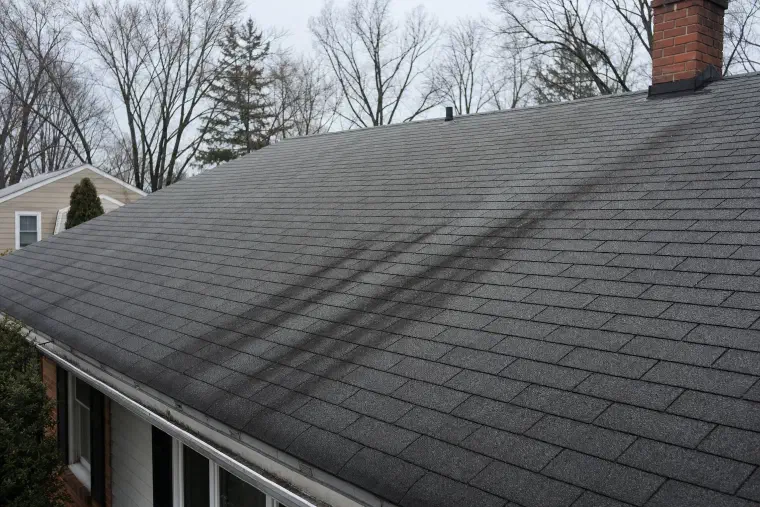
Soft washing is safe for an asphalt shingle roof when it is done the way the shingle makers describe: a cleaning solution sprayed on, left to sit, then rinsed off with low pressure water. The part that hurts shingles is the pressure, not the cleaner. Pressure washing is the one to avoid.
The short version
- Soft washing means low pressure and a cleaning solution. It is close to the method the shingle makers’ association describes.
- A pressure washer is the thing that wrecks shingles, because it blasts off the granules.
- The black streaks are mostly a looks problem. Moss is the one that can cause leaks.
- The risks of soft washing are to your plants, paint and footing, not the shingles.
- Walking a wet roof is dangerous, so most people should hire it out.
What is soft washing?
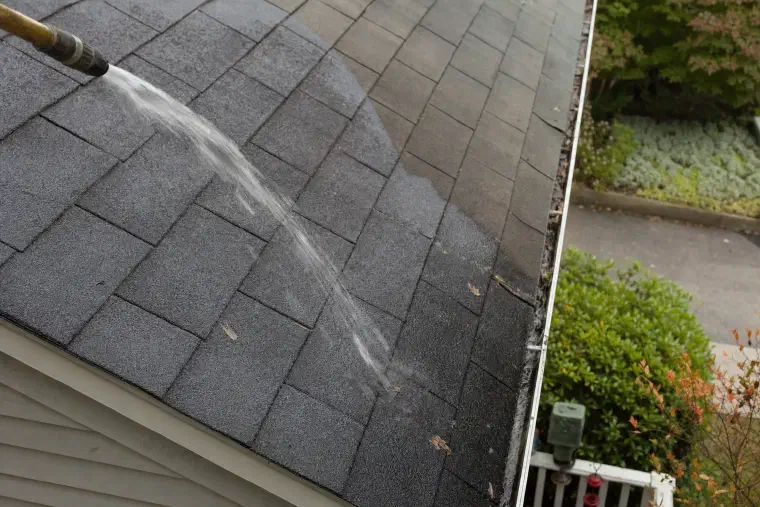
Soft washing is the trade name for cleaning a roof with a gentle spray and a cleaning solution, not a hard jet of water. The solution does the work of killing the growth. The water just carries it away.
The name is not a rule or a standard, so one company’s “soft wash” can differ from another’s. What matters is what is in the tank and how hard it hits the roof. That is the part to ask about, and we cover the questions further down.
What are the black streaks on my roof?
They are almost always algae. The Asphalt Roofing Manufacturers Association says the most common kind is gloeocapsa magma, or blue green algae (opens in a new tab), which grows a dark sheath to protect itself from sunlight. That dark sheath is the streak you see running down the slope.
Here is the part that surprises people. The same page says there is no scientific evidence that algae is damaging (opens in a new tab) to asphalt shingles, although it certainly affects how the roof looks. So the streaks are mostly a curb appeal problem.
Moss is different. The association says moss can be detrimental to shingle performance (opens in a new tab) and may even cause leaks.
Is soft washing safer than pressure washing?
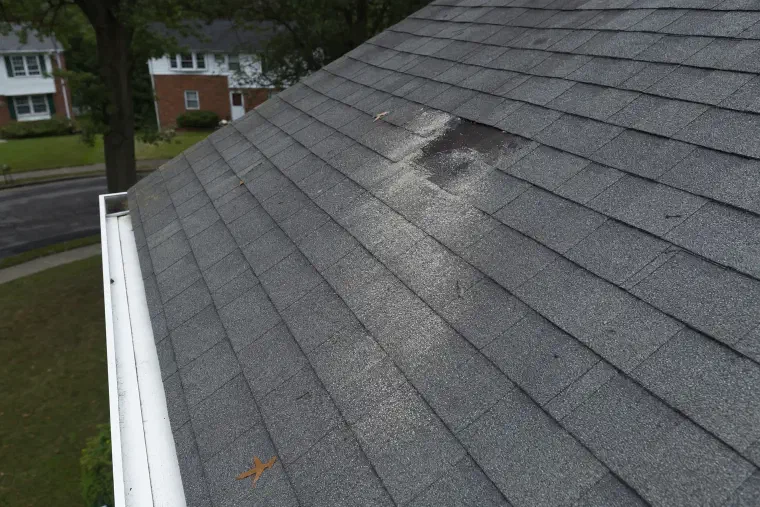
Yes, by a wide margin. The Asphalt Roofing Manufacturers Association is blunt about it: never use a pressure washer (opens in a new tab) on an asphalt shingle roof, because it causes granule loss and very likely early failure of the roof.
Granules are the gritty coating on top of a shingle. They shield the asphalt underneath from sun and water. Once they are gone, they do not come back.
Oregon State University’s extension service is a little softer on the point. It says improper technique can damage shingles (opens in a new tab), and that when in doubt you should hire a professional or use a long-handled scrub brush. On a roof you plan to keep, we would skip the pressure washer altogether.
How do soft washing and pressure washing compare?
They differ in what does the cleaning. Soft washing leans on the solution, and pressure washing leans on force.
| Soft washing | Pressure washing | |
|---|---|---|
| What does the work | A cleaning solution | A hard jet of water |
| Rinse | Low pressure water | The same jet |
| Risk to the shingles | Low when done as described | Granule loss, early failure |
| Risk to plants and paint | Yes, from the solution | Runoff still falls |
| Matches the shingle makers’ advice | Close to it | No |
What goes in the tank?
Usually chlorine bleach in water, sometimes with a soap added. The shingle makers’ association says the most effective method is a 50:50 mix of laundry strength liquid chlorine bleach (opens in a new tab) and water. You spray it on, let it sit for 15 to 20 minutes, then rinse thoroughly with low pressure water.
The same page tells you to protect landscaping and the area around the house from the solution. That is where soft washing goes wrong in real life. The shingles handle it fine. The azaleas under the eave, the painted trim and the patio furniture do not.
Oregon State also warns that roof treatments can run off into waterways and may harm wildlife, especially aquatic organisms (opens in a new tab). Ask any cleaner how they keep the runoff off plants and out of storm drains.
Is it safe for you to be on the roof?
Not if it is wet, steep or two stories up, and a roof being washed is wet by definition. OSHA says falls are the leading cause of death (opens in a new tab) for workers in residential construction, and those are people who do it for a living.
Oregon State’s advice for a ladder is to set it on stable ground and extend it at least 3 feet above the roofline (opens in a new tab). Wet algae is also slippery. If any of that sounds like a bad afternoon, hire it out.
Does soft washing fix a roof that is already worn?
No. Cleaning makes a roof look better and clears off growth. It does not put back lost granules, lay down curled shingles or seal a leak.
One thing we see a lot on wooded lots around Ellicott City is a roof that stays damp under heavy tree cover. That damp grows algae and moss, and the moss can lift the edges of the shingles. Washing clears what is there today, and the shade grows the next batch. Trimming back branches does more over the years than the washing itself.
If you want to know whether a streaky roof is only dirty or is also worn out, our piece on how long roof shingles last is a start, and someone looking at it up close is better.
What should you ask before you hire a soft washer?
Ask three things, and a good one will answer all of them without a pause.
- What is in the solution, and how strong is it? You want to hear a plain answer, not “our secret mix”.
- How hard does the water hit the roof? The answer should be low pressure, and never a pressure washer on the shingles.
- How do you protect the plants and the gutters? Wetting the beds first and covering delicate plants are the usual ways.
Also ask whether the cleaning could affect your shingle warranty. We cannot say, because warranties differ by maker and by product line. Read yours, or ask the maker, before anything is sprayed.
Common questions
Will soft washing damage my shingles?
Not when it is done at low pressure with a solution and rinse the way the shingle makers describe. The damage comes from pressure, from scraping, or from leaving a strong solution to sit well past the time it needs.
Do I need to soft wash if I only have a few streaks?
Probably not. Algae streaks are mostly about looks, and the shingle makers’ association found no scientific evidence that they harm the shingles. Moss is the one to deal with, because it holds water against the roof. Our guide to getting rid of moss covers it.
Can I do it myself with a garden sprayer?
You can, but the hard parts are the ladder and the wet roof, not the sprayer. If you do it, stay off the slope where you can, wear shoes with good grip and protect the plants first. Our piece on what kills moss without harming shingles lists gentler products if you would rather skip bleach.
What to do next
Roof washing is not one of the jobs we do. What we can do is tell you what is under the streaks. A free roof inspection is a visual check of the roof surface, flashing, valleys, gutters and the attic when we can get in safely. If the check turns up worn or lifted shingles, that is a roof repair job, and no amount of washing will fix it.


