

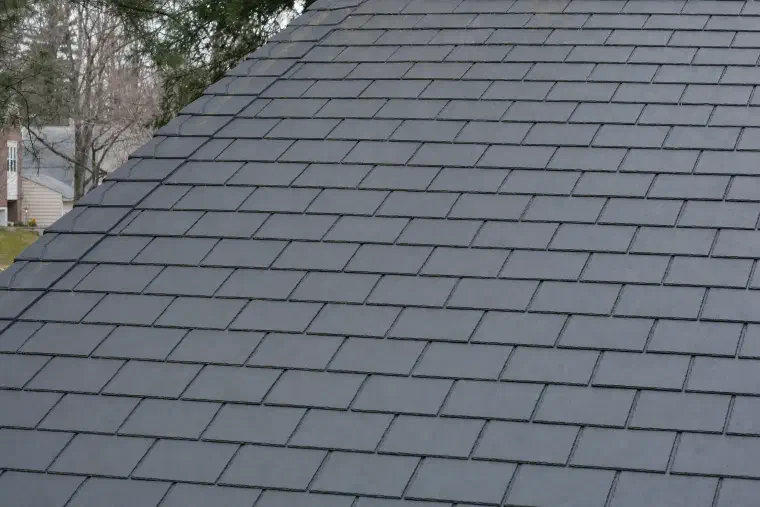
Synthetic slate is worth it when you want the look of slate without its weight and price, and you plan to stay long enough to see it age. It is not worth it if you expect it to match real slate for life or value. It costs less than natural slate and usually lasts a lot less.
The short version
- Synthetic slate is made of polymers and recycled material, and it looks like slate from the street.
- This Old House puts its life at 30 to 50 years (opens in a new tab), against 60 to 125 years or more for real slate.
- It is lighter than natural slate, which can spare you extra framing.
- It can fade, and the National Park Service says it does not suit historic restoration.
- Who puts it on matters as much as what you buy.
What is synthetic slate roofing?
Synthetic slate is a molded roofing tile that copies the look of natural slate. This Old House says it is made of recycled materials and polymers (opens in a new tab), and that it mimics slate but costs much less and weighs less. It is sold under many names: composite slate, engineered slate, fake slate.
Some products are rubber, some are plastic, some are fiber cement or clay. They are not one material, so a claim about “synthetic slate” is really a claim about one brand’s tile. That is the first thing to remember when you read a sales sheet.
How much does synthetic slate roofing cost?
Nationally, it runs about $4 to $12 per square foot. This Old House gives $4 to $12 per square foot (opens in a new tab), averaging $8, for synthetic slate, and puts composite types at the low end of that range.
Here is how the three compare. The asphalt figure is what a full architectural shingle roof typically runs around Ellicott City.
| Architectural asphalt | Synthetic slate | Natural slate | |
|---|---|---|---|
| Typical cost | $6.00 to $9.00 per square foot installed | $4 to $12 per square foot (opens in a new tab) nationally | 3 to 5 times asphalt |
| How long it lasts | 18 to 25 years in Maryland | 30 to 50 years (opens in a new tab) | 60 to 125 years or longer (opens in a new tab) |
| Weight on the framing | Standard | Lighter than slate | Heavy |
Those national numbers are not a quote for your roof. Pitch, roof size, tear-off and flashing change the total, and a roof with chimneys and valleys costs more per square foot than a plain one. For the full asphalt picture see how much a roof replacement costs.
Is synthetic slate cheaper than real slate?
On the tile, yes. On the finished roof, less than you would hope. The National Park Service, comparing real slate with artificial slate, says the total initial cost of an artificial slate roof is only marginally less (opens in a new tab) than a natural slate roof, because labor, flashing and tear-off cost the same either way.
That is a historic-roof source and today’s products have changed, so treat it as a caution rather than a rule. Still, ask any bidder for the whole roof price, not the price per tile.
How long does synthetic slate last?
Plan on decades, not a century. This Old House lists 30 to 50 years (opens in a new tab) for synthetic and composite roofing as a group, and says a synthetic slate roof has a much shorter life span (opens in a new tab) than natural slate. Its main drawback, in that review, is exactly that.
Our own read: the number on a brochure is a promise about the tile, and the warranty on a tile is a defect warranty, not a prediction of how long your roof will last. In Maryland, asphalt shingles realistically last 18 to 25 years, and the crew and the details decide where in that range yours lands. The same goes for any tile.
What goes wrong with synthetic slate?
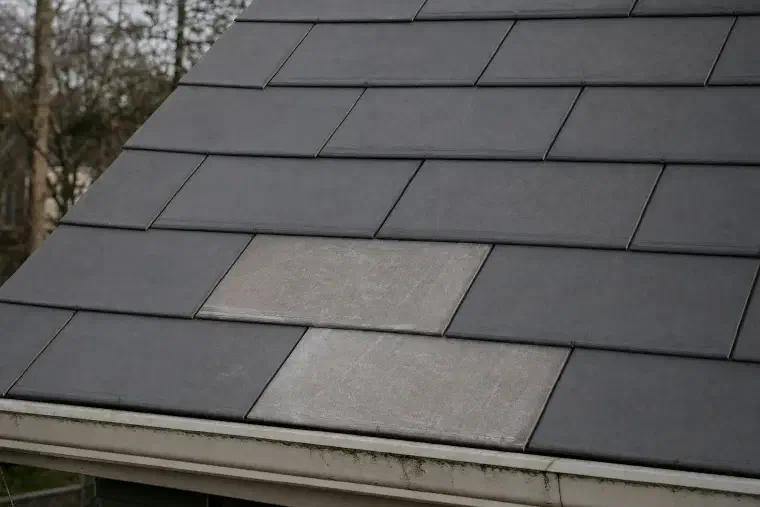
Fading is the one with a source. The National Park Service notes that artificial slates may also have a tendency to fade over time (opens in a new tab).
Beyond that, products differ by brand, and a newer product has a shorter track record than stone that has been on roofs for centuries. Before you sign, ask how long that exact tile has been on roofs, what the written warranty covers and who it covers. Ask what the tile needs for nailing and flashing, because a tile that is fastened wrong fails early, the same as a shingle does.
Does synthetic slate need a stronger roof frame?
Often not, and that is its best selling point. This Old House says synthetic slate weighs less (opens in a new tab) than natural slate, which often calls for additional structural support (opens in a new tab). A lighter tile means a house built for asphalt may be able to carry it.
“May” is doing real work in that sentence. When framing trouble turns up after tear-off, an engineer’s letter typically runs $600 to $1,500 and the fix can add $3,000 to $15,000 or more. Have the roof looked at before you pick a material, not after.
Will it be allowed on a historic or HOA house?
Not always. In Old Ellicott City, the Historic Preservation Commission can add months to a roof job and restrict which materials you may use. In covenant-controlled neighborhoods like Turf Valley, Font Hill and the Columbia villages, review can add 30 to 45 days.
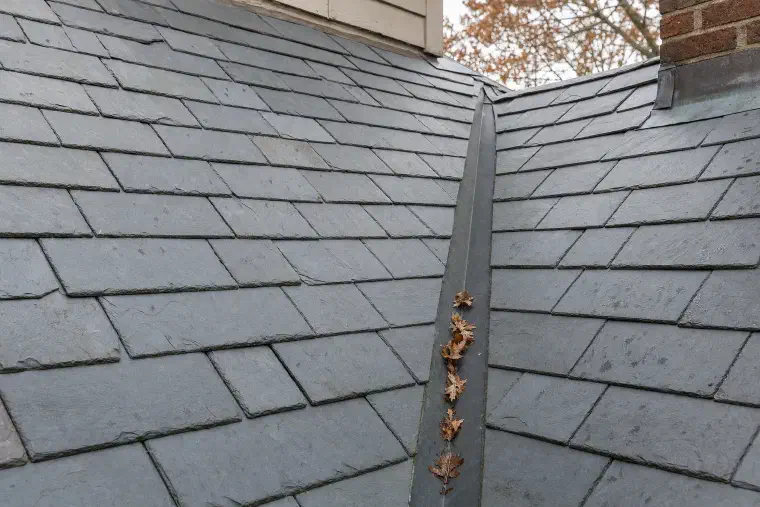
The National Park Service goes further for old slate roofs: it says historic slate roofs should be repaired rather than replaced whenever possible (opens in a new tab), and it considers artificial slate unsuitable for restoration because its look is that of a manmade material. If your house has a real slate roof, check the rules before you swap it.
Is it better than asphalt or metal?
It depends on what you want to pay for. Synthetic slate gives you a slate look, which asphalt can only suggest. It does not give you the longest life, which real slate does, or a light roof built to last, which metal can. Standing seam metal typically runs 2 to 2.5 times asphalt. Our article on metal shingles covers the slate-look metal option.
For a house you will sell in ten years, a good architectural shingle usually makes more sense. If you want to see how the long-lived options stack up, start with slate roof pros and cons.
Common questions
Is synthetic slate as good as real slate?
No, not on life. Real slate lasts 60 to 125 years or longer (opens in a new tab), and synthetic is listed at 30 to 50. Synthetic wins on weight and tile price, and it can look very close from the street.
Does synthetic slate look real?
From the street, usually. Up close, the National Park Service says artificial slate can show a rigid, manmade look. That matters more on a restoration than on a new roof.
Is synthetic slate good for Maryland weather?
The sources we opened do not test it in Maryland, so we will not promise that. This Old House says synthetic slate is more impact-resistant than natural slate (opens in a new tab). Ask any maker for the written rating of the exact tile, and ask how it holds up to freeze and thaw.
What to do next
If you are choosing between asphalt, metal and a slate look, the first step is knowing what your roof and framing can carry. Our free roof inspection includes a walk on the roof and a written report with a measured square count, with no obligation to book work. Our roof installation page covers what a full replacement includes, and our financing page explains payment options. You can call any time to set up the visit.


