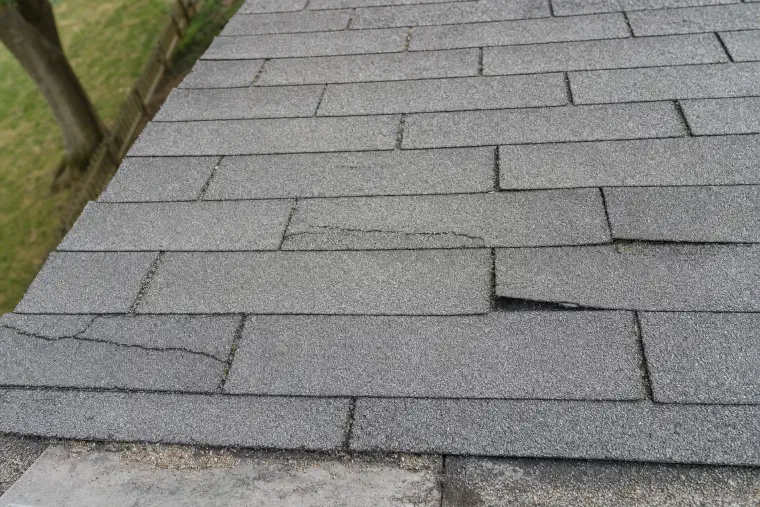
The clearest signs you need a new roof are shingles that are bare, cracked or missing across a whole slope, grit piling up in your gutters, a roof line that sags, and an age past 20 years. One stain or one loose shingle is usually a repair. Several of these together on an older roof are not.
The short version
- Age matters, but the shape of the wear matters more. Spread across the roof means replace. One spot means repair.
- Grit in the gutters, bare patches, cracked tabs and a sagging line are the signs you can see from the yard.
- The attic tells you the rest: daylight, damp wood, stained boards and frost.
- A leak on its own does not mean a new roof. Leaks that keep coming back on an old roof do.
- Our inspection is free, and we walk the roof to give you a straight answer.
How old is too old for a roof?
For asphalt shingles, 20 years is where you start paying attention. This Old House puts architectural shingles at about 30 years and three-tab shingles at about 20 (opens in a new tab), and those are best-case figures. Consumer Reports says it is wise to replace an out-of-warranty roof that is more than 20 years old (opens in a new tab), even with no damage showing.
Around here the real number runs lower. In Maryland, asphalt shingles realistically last 18 to 25 years. The “50-year” on the box is a warranty against manufacturing defects, not a promise about how long the roof stays on your house.
Age alone is not a verdict. A 22-year-old roof with a clean attic and tight nailing can have time left, and a 12-year-old roof with a hot, unvented attic can be done. We cover the lifespan question in full in how long roof shingles last.
What can you see from the ground?
Walk around the house on a dry day with binoculars, or just look from the yard. You are looking for wear that is spread out, not a single spot.
The usual signs are:
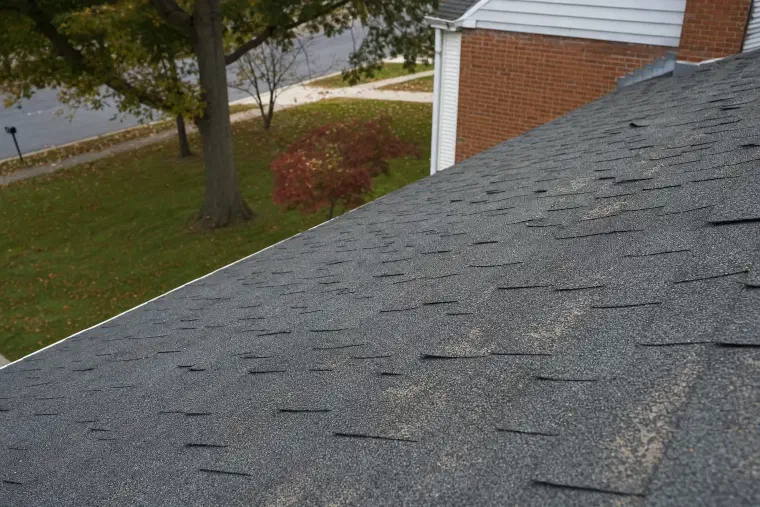
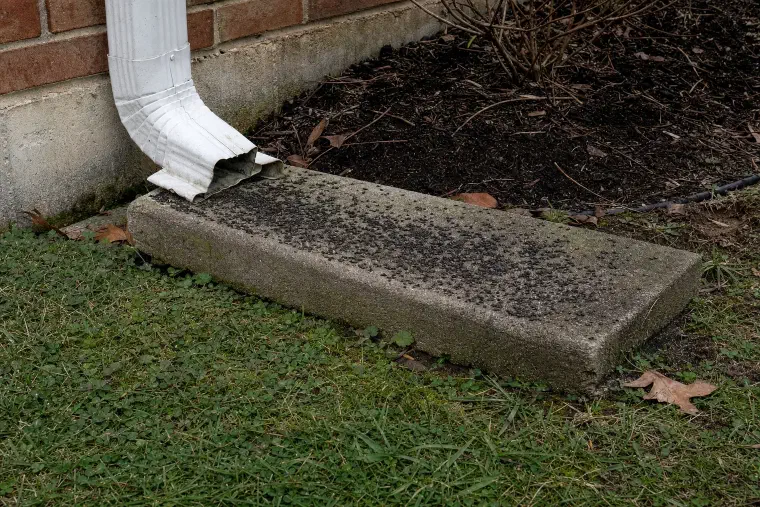
- Grit in the gutters or at the bottom of a downspout. Shingles are coated in small stone granules. Consumer Reports notes that the granules give shingles their color and help deflect UV light (opens in a new tab), so when they wash off, the shingle underneath is left to cook in the sun.
- Bald or darker patches where the granules are gone, often on the slope that gets the most sun.
- Cracked or curling shingles across more than one slope. Curling has several causes, and we go through them in why shingles curl.
- Missing shingles that keep coming back after each repair.
- A dip or wave in the roof line. An inspector will look for signs of sagging and uneven planes (opens in a new tab), because a sag can point to wet decking or a framing problem under the shingles.
Which signs mean repair and which mean replace?
A sign that stays in one place usually means repair, and a sign that shows up everywhere on the roof usually means replace. This table is how we sort them.
| What you see | What it usually means | Usual answer |
|---|---|---|
| A few missing or lifted shingles on a roof under 15 years old | Wind caught a weak spot | Repair |
| Grit in the gutters on a roof past 20 years | The surface is wearing out | Plan to replace |
| Cracked tabs on one slope | Sun, age or foot traffic on that slope | Repair, then watch it |
| Cracked or bald shingles on every slope | The whole roof is aging out | Replace |
| A dip in the roof line | Wet decking or a framing problem | Inspect first |
| Leaks in several places | Water is getting in at more than one spot | Often replace |
The roof’s age is the tiebreaker. On a roof past 15 to 20 years there is typically no warranty on a repair, and shingles that old can be too brittle to lift without breaking, so a small fix can grow into a much bigger one.
What does the attic tell you about the roof?
The attic shows what the shingles hide. Go up with a flashlight on a dry day, if you can get there safely, and look at the underside of the roof boards.
Three things point to a roof in trouble. Daylight coming through the boards means there are holes. Dark stains or soft, damp wood mean water has been getting in for a while. And a stuffy, hot attic is a problem of its own: the Asphalt Roofing Manufacturers Association lists premature failure of the roofing system (opens in a new tab) among the results of poor ventilation.
Winter is the best time to look. If you see frost on the underside of the sheathing (the plywood under your shingles) on a cold morning, warm, damp air from the house is reaching the roof deck. That moisture can wear out a roof deck without one drop coming in from above. It also means the roof may be failing early for a reason a new roof alone will not fix.
Does a roof leak mean you need a new roof?
No. Most leaks are a local failure, such as a cracked pipe boot, worn flashing or a few lifted shingles, and a repair stops them. Consumer Reports makes the same split: most leaks can be stopped if they are limited to a few spots (opens in a new tab).
The line moves when the leaks keep coming. The same guide says that with recurring leaks and a roof out of warranty (opens in a new tab), a new roof is in order. A third repair on the same old roof is money that could have gone toward a new one.
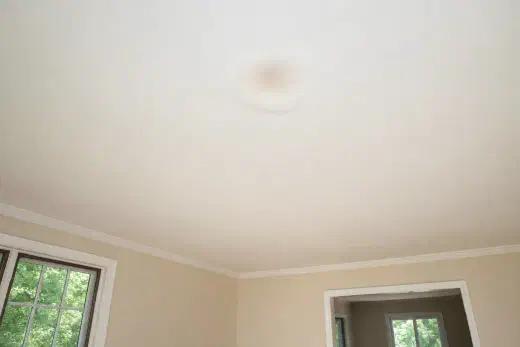
One more thing to know. A ceiling stain is the last stage of a leak, not the first. By the time it shows, water has usually been getting into the decking and insulation for a long while. No stain does not mean no leak.
What happens if you wait?
Waiting costs more when the water reaches the wood. Replacing damaged decking is priced per 4x8 sheet, typically $70 to $150 installed, and a repair that finds wet decking under the patch adds $150 to $500 or more. A roof that could have been replaced on schedule becomes a roof with a bill for new boards.
Waiting is fine when the roof is sound. If an inspection says a roof has a few more years, we’ll tell you to repair what’s there and wait. We’d rather keep you as a customer for twenty years than sell you a roof this year.
A typical Ellicott City replacement of an architectural shingle roof, about 3,580 square feet, usually runs $22,500 to $29,500. Roofs vary a lot, so use that as a rough guide, not a quote. If you are weighing the two, our guide on whether you can repair instead of replacing goes through it.
Common questions
How many signs does it take to need a new roof?
There is no magic count. One sign on a roof under 15 years old is usually a repair. Two or three signs spread over the roof, on a roof past 20 years, point to replacement. The inspection is how you tell which side of that line you are on.
Can you replace just part of a roof?
Sometimes. If the damage is on one slope and the rest is sound, replacing that slope can work. Partial slope work usually runs about $850 to $1,100 per square, more per square than doing the whole roof, and new shingles will not match the old ones in color.
Is a bad-looking roof always a bad roof?
No. Moss, stains and dirty streaks can look awful on a roof that still works. Bare patches, cracks and leaks are the signs that count.
What to do next
Look at your gutters, your roof line and your attic this week, then book a free roof inspection. We walk the roof, lift shingles to check the nailing, and write you a report with photos and a remaining-life estimate. If it needs a new roof, our roof installation page shows what a full replacement includes.