

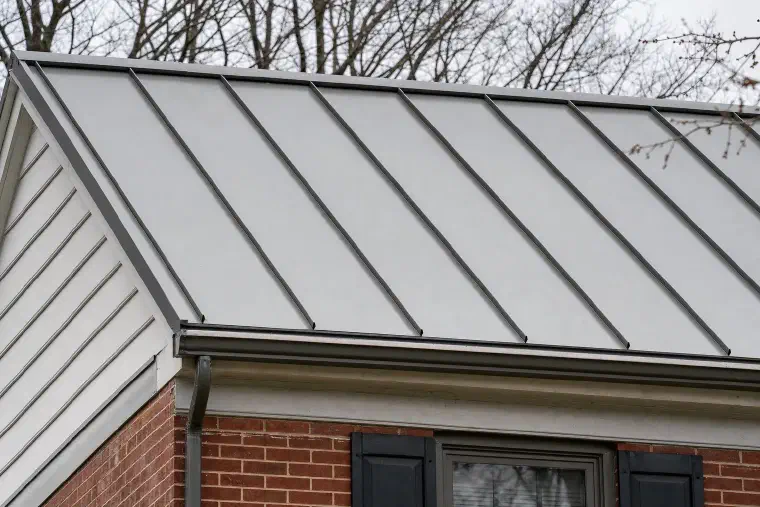
The difference between snap lock and mechanically seamed standing seam is how the raised seam between two panels gets closed. Snap lock panels click together by hand. Mechanically seamed panels get folded shut with a seaming tool. Both hide the screws, and both are standing seam.
The short version
- Both types have raised seams and hidden fasteners. The difference is how the seam locks.
- Snap lock goes on faster. Mechanically seamed takes added time and labor (opens in a new tab), so it usually costs more.
- Slope is the big deciding factor. Flatter roofs are where the extra locking step earns its keep.
- On a roof this expensive, who installs it matters more than which seam you pick.
What is a standing seam roof?
A standing seam roof is made of long metal panels whose side joints stand up above the roof surface. The Insurance Institute for Business and Home Safety describes it as side joints arranged in a vertical position (opens in a new tab) above the roof line, with each panel held down by concealed clips screwed to the roof underneath.
That is why you see no screw heads on the face of the metal. The U.S. Forest Service says panels with no exposed fasteners are known as standing-seam types (opens in a new tab), joined with crimped or snap-together seams. Those two words are the whole snap lock versus mechanically seamed question.
How does a snap lock seam work?
A snap lock seam closes when one panel’s edge is pressed over its neighbor’s, and it clicks into place without any special machine. The panel is fastened to the roof deck, the next panel is pushed onto it, and the seam is done.
That speed is the appeal. This Old House notes that snap-lock installation is faster, which could save on labor costs (opens in a new tab). On a simple roof with long straight runs, that adds up.
How does a mechanically seamed standing seam work?
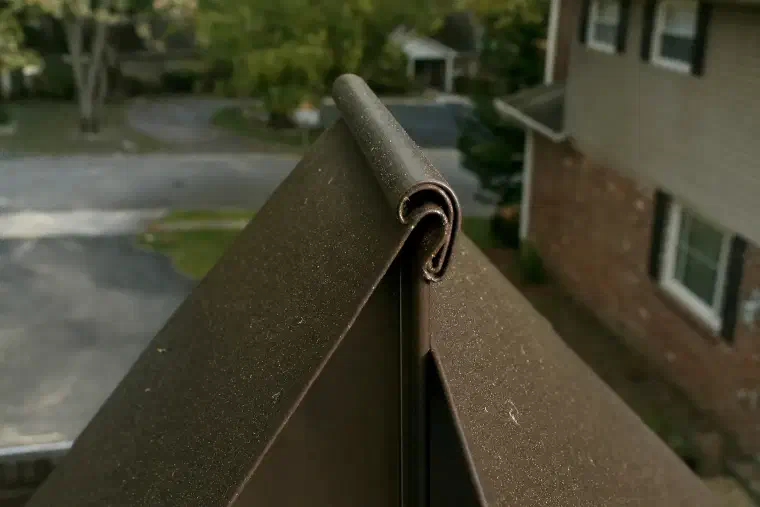
A mechanically seamed seam is closed in a second step, after the panels are laid, by folding the two raised edges over each other. This Old House says it takes a hand or electric seamer (opens in a new tab) to join the vertical legs of two panels.
The result is a tighter, folded lock rather than a clip-together one. It is also slower, and the same guide says the option can be more expensive (opens in a new tab) because of the added time and labor. Every foot of seam gets a pass with the tool, so a roof with long seams or a lot of cut-up geometry costs more to finish.
How do the two compare side by side?
Here is the short comparison. It covers how the work goes, not a brand or a product.
| Snap lock | Mechanically seamed | |
|---|---|---|
| How the seam closes | Panels click together by hand | Seam is folded shut with a seaming tool |
| Fasteners | Hidden clips under the seam | Hidden clips under the seam |
| Install time | Faster | Slower, with an extra step |
| Labor cost | Usually lower | Usually higher |
| Where it tends to be used | Simple roofs with a good slope | Flatter or more cut-up roofs |
Either one costs well above shingles. Standing seam metal typically runs two to two and a half times what asphalt costs, and we break that down in our metal roof cost article.
Which one is better for a low-slope roof?
On a low slope, most roofers lean toward the folded seam, and the manufacturer’s instructions for your exact panel decide whether a snap lock is allowed at all. Standing seam can go on a very gentle roof. IBHS says a standing seam roof may be installed down to 1/4 inch on 12 (opens in a new tab), which is a 2% slope. Its roof guide lists the minimum for standing seam or snap lock (opens in a new tab) at the same figure.
Keep in mind that is a floor for the building code, not a promise that every panel works that flat. Each maker sets its own limit for its own profile, and a flatter roof gives rain and melting snow longer to sit against the seam. That is the case where a folded lock, and the sealant the maker calls for, matter most.
Low slopes matter for a reason that has nothing to do with the seam. Any part of a roof under a 2/12 pitch can’t legally take shingles, and it needs modified bitumen, TPO or standing seam. That work is often subcontracted at a $2,500 to $5,000 minimum.
Does the seam type change how well the roof holds up in wind?
The seam is only part of it. Wind performance comes from the whole system: the clips, how many there are, how far apart, and what they are screwed into. IBHS says standing seam systems must be tested for wind uplift (opens in a new tab) under ASTM E1592, so ask for the test result for the exact panel and clip layout, not just the seam name.
Our view on shingles carries over. The same product can last 25 years or 9, depending on where the fasteners went. The installer matters more than the label on the box.
How long will either one last?
Both are long-lived roofs when they are installed well. This Old House says metal roofs can last 40 to 70 years (opens in a new tab) on average, and sometimes longer. What cuts that short is rarely the seam type. It is usually trim, flashing and the details at the edges, which we cover in how long a metal roof lasts.
If you are comparing quotes, ask each roofer which seam they plan to use and why. The answer should depend on your slope and roof shape. One that depends only on what they happen to have on the truck is not an answer. Our metal roofing installation page shows where metal makes sense and where it does not.
Common questions
Is snap lock standing seam as good as mechanically seamed?
For the right roof, yes. On a simple roof with a decent slope, a snap lock panel installed well is a sound choice and saves on labor. On a flat or cut-up roof, the folded seam gives you more margin. The roof’s shape should make the call.
Can you tell which type a roof has by looking at it?
Often not from the ground. Both show raised seams and no screw heads. The install paperwork or the panel maker’s name is the sure way to know.
What if a standing seam roof leaks?
The seam type is rarely the first suspect. Trim, flashing and the spots where the metal meets a chimney or wall are the usual culprits, and a roofer needs to see it up close. Our free roof inspection is the place to start.
Do exposed-screw panels count as standing seam?
No. Corrugated and ribbed panels put the screws through the face of the metal, and each screw has a rubber washer that wears out. We explain why in why metal roof screws leak.
What should you do next?
Ask for the seam type, the slope and the clip spacing in writing before you compare prices. If you want us to look at your roof, call us any time. The roof inspection is free, and it comes with a written report that includes the measured square count.


