

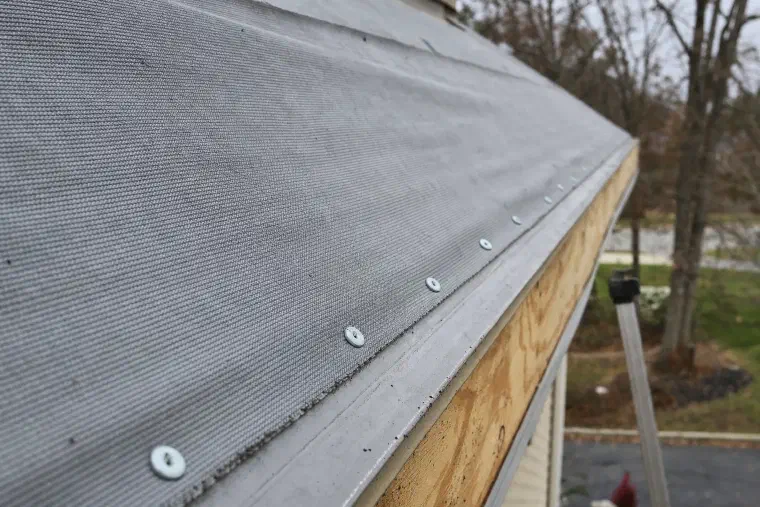
Synthetic underlayment is the better choice for most shingle roofs. It is tougher, it lasts longer out in the weather before the shingles go on, and it covers more roof per roll. Felt costs less and is still allowed, so it is a fair pick on a tight budget. Neither one is a roof on its own.
The short version
- Synthetic is a woven plastic sheet. Felt is a paper-like sheet soaked in asphalt.
- Synthetic is lighter, tougher and tears less, but it costs more per roll.
- Felt is the old standard and building codes still accept it.
- The sheet matters less than where the nails go and how the edges are lapped.
- Our roof replacements include synthetic underlayment.
What is the difference between synthetic and felt underlayment?
Felt is the older material and synthetic is the newer one, and they are built from different things. According to the Asphalt Roofing Manufacturers Association, there are three basic types (opens in a new tab) under asphalt shingles: asphalt-saturated felt, self-adhering underlayment and non-asphalt synthetics made from polymers. Felt is the most common of the three.
Both do the same job. They sit on the bare wood deck under the shingles and act as a second layer of water protection. We cover that job in our article on what roof underlayment does. This one is only about which sheet to put there.
| Felt | Synthetic | |
|---|---|---|
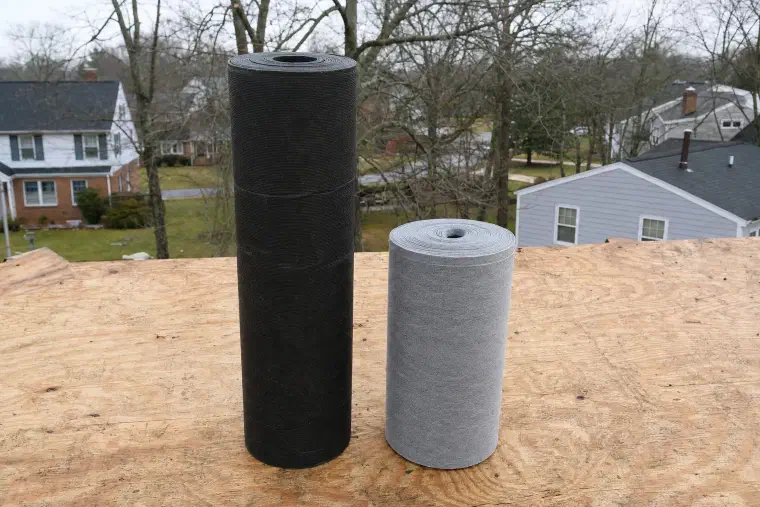
| Made of | Paper-like sheet soaked in asphalt | Woven plastic polymer |
| Weight | Heavier | Lighter |
| Coverage per roll | Less | More |
| Tears and blows off | More likely | Less likely |
| Left open before shingles | Short gap | Longer gap |
| Cost | Lower | Higher |
Is synthetic underlayment better than felt?
For most roofs, yes, because it holds up better while the job is going on. This Old House says synthetic is tougher and less likely to tear (opens in a new tab) or blow off in the wind, and it can be left exposed for longer. Felt, in the same article, is quick to install and gives some protection during unexpected rain (opens in a new tab) showers.
That “longer exposed” part matters in Maryland, where a tear-off can get rained on halfway through. A sheet that stays put through a gust or a stalled afternoon is one fewer thing to go wrong. Synthetic is also lighter than felt yet covers a larger area (opens in a new tab) per roll, so the crew carries fewer rolls up the ladder.
The price is the catch. Synthetic is more expensive than felt (opens in a new tab), and some homeowners reasonably ask whether it is worth it.
Does building code allow synthetic underlayment?
Yes. Codes accept either one, as long as the product is approved. The Pacific Northwest National Laboratory’s Building America guide calls for an underlayment of code-compliant #30 building felt or an approved synthetic (opens in a new tab) sheet, which puts the two side by side as equals.
Your local code can ask for more than the basics. On a low slope, between 2 and 4 inches of rise for every 12 inches across, the same guide says a double underlayment application (opens in a new tab) is required. In cold climates with a history of ice dams, the code asks for an ice barrier (opens in a new tab) of two cemented layers or a self-adhering membrane. That is the sticky sheet we explain in our ice and water shield article.
What goes under the shingles on our roofs?
Our roof replacements include synthetic underlayment, plus ice and water shield at code minimum: the eaves, the valleys and around anything that pokes through the roof. Both are part of the price, not add-ons. The full list of what a replacement covers is on our roof installation page.
Two things are extra. Ice and water shield beyond code minimum, such as full coverage or low-slope areas, is an upgrade. And rotted decking found after the tear-off is priced per sheet, because nobody can see the wood until the old roof is off.
For scale, a full asphalt shingle system typically runs $6.00 to $9.00 per square foot installed, depending on roof size, pitch, complexity and access. The underlayment is one line inside that number.
Does the underlayment matter more than the installer?
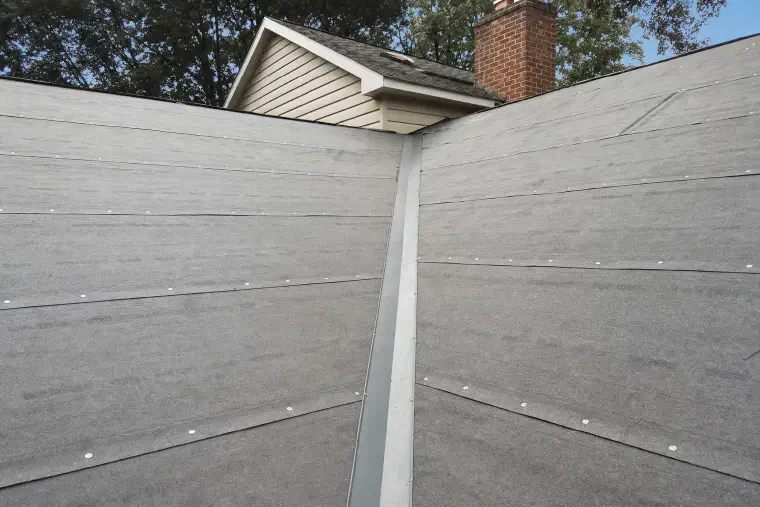
No. The sheet you pick matters less than how it goes on. We say the same about shingle brands: water gets in at flashing, valleys, pipes and edges, and those are labor details. A premium sheet with loose overlaps between rows or missing nails at a valley will still let water through.
So when you compare quotes, the brand name on the roll is the least useful question. Better ones are below.
- Where does the underlayment start and stop at the eaves and valleys?
- Is ice and water shield included, and how far does it run?
- Is the underlayment synthetic or felt, in writing?
- What happens if it rains halfway through the tear-off?
A roofer who answers all four plainly has probably thought about the job.
Common questions
Is synthetic underlayment worth the extra cost?
For most homeowners, yes. It costs more per roll, but it is the tougher sheet, it can sit exposed longer, and it goes under the shingles one time. If a roof is on a very tight budget, felt is still an accepted choice, and the nailing and flashing deserve your attention either way.
Can you put new underlayment over old shingles?
No. Underlayment goes on the bare deck, so it can only go in when the old roof comes off. That is why a replacement starts with a tear-off and a look at the wood. Our piece on how long a roof replacement takes walks through that day.
How do I know which one is on my roof now?
You usually cannot tell from the ground or the attic, because it sits under the shingles. Your paperwork from the last replacement may name it. Otherwise, a free roof inspection can tell you the roof’s age and condition, which is the part that decides what happens next.
What to do next
If you are getting quotes for a new roof, ask each roofer which underlayment is in the price and where the ice and water shield stops. We are glad to walk you through ours when you ask for a quote.


