

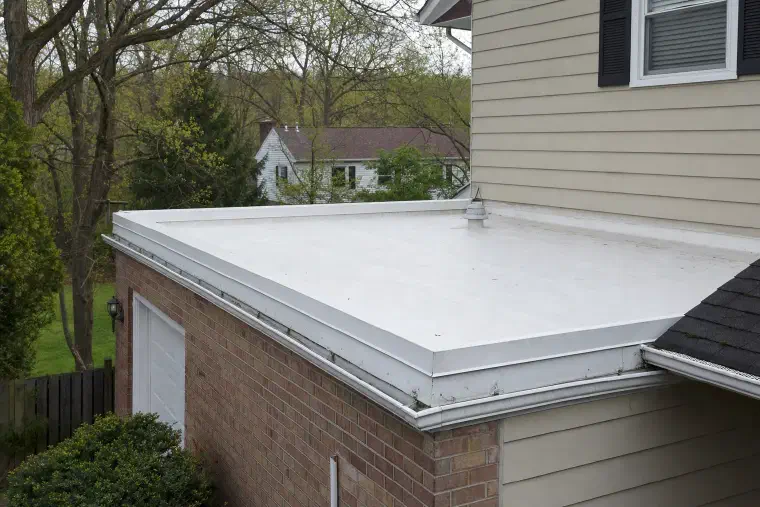
TPO and PVC are both white, single-sheet flat roof membranes with heat-welded seams, and for a house the two are closer than the sales pitches make them sound. PVC has the longer track record. TPO is the newer one, and a little stronger on paper. Neither one beats a good install.
The short version
- Both are white, single-layer sheets with seams melted together.
- PVC has been used for decades, while TPO is newer.
- TPO is described as slightly stronger than PVC.
- Both reflect sunlight, and both leak at seams, edges and pipes.
- Who installs it matters more than which one you pick.
What do TPO and PVC have in common?
They are both single-ply membranes, which means one manufactured sheet rolled over the roof instead of many layers of tar and gravel. The Department of Energy says single-ply membranes are pre-fabricated sheets rolled onto the roof (opens in a new tab) and attached with fasteners, adhesives or ballast, which is gravel, stones or pavers.
TPO stands for thermoplastic polyolefin. PVC stands for polyvinyl chloride. You do not need to remember either one. What matters is that both are thermoplastics, meaning heat softens them. That is why their seams can be welded instead of glued.
What is the real difference between TPO and PVC?
Mostly age and feel. This Old House says the biggest difference is that PVC has been used for decades (opens in a new tab) while TPO is relatively new. It also says both are flame-resistant and long-lasting, but that TPO is slightly stronger than PVC (opens in a new tab).
Slightly stronger is not a reason to rule PVC out. Blends differ from one maker to the next, so two sheets sold under the same name can behave differently. We would rather look at the specific product and the roof it is going on than argue about the letters.
Are the seams different?
Not in the way that counts. The Insurance Institute for Business & Home Safety says thermoplastic membranes have seams formed with heat or chemical welding, and that these seams are as strong as or stronger (opens in a new tab) than the membrane itself. That covers both TPO and PVC.
That is a good day on paper. A weld needs a clean sheet, the right heat and a steady hand, and a skipped patch is invisible from the ground. The nail line is where a shingle roof fails. The weld is where a membrane roof does.
Which one keeps a house cooler?
Either one. The Department of Energy says TPO and PVC membranes are usually white and reflective (opens in a new tab), with no extra coatings needed. So the color is not what separates them.
Over a bedroom addition in July, a white roof helps. Over a garage, you will likely never notice. Our guide to what a TPO roof is covers the heat question in more detail.
How do TPO and PVC compare side by side?
Here is the short table.
| TPO | PVC | |
|---|---|---|
| Type | Thermoplastic, single sheet | Thermoplastic, single sheet |
| Seams | Heat-welded | Heat-welded |
| Usual color | White | White |
| Track record | Newer | Decades |
| Strength | Slightly stronger | Slightly less |
Price is the line missing from that table on purpose. We do not have a number for PVC that we trust, and a made-up one would do you no favors. Roofs differ too much in size, pipes and access for a per square foot figure to mean much.
Where do both of them leak?
At the same places every flat roof does: seams, edges and anything that pokes through the sheet. The open field in the middle is rarely the problem. Pipes, vents, skylights and the joint where the roof meets a wall are, and they all depend on flashing, the metal or membrane strips that seal a joint.
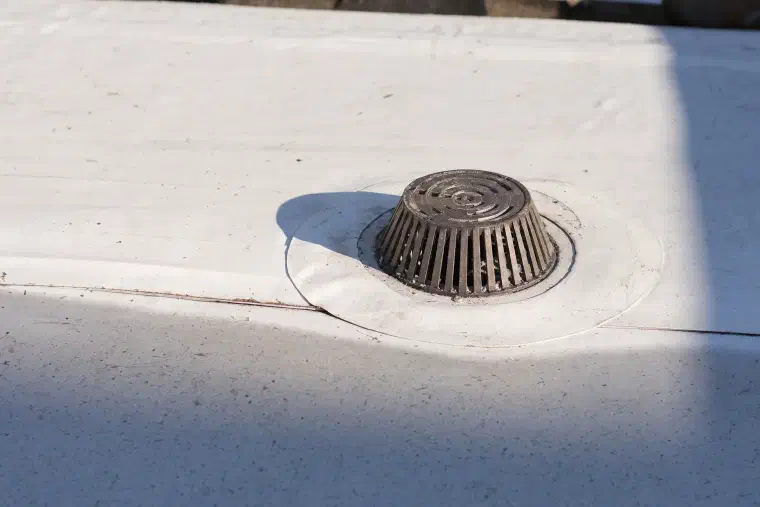
We also treat caulk as a scheduled leak. Sealant lasts about 5 to 10 years, so a flat roof that gets a tube of it every summer is telling you something. If you already have a flat roof that is giving trouble, our guide to whether a flat roof coating is worth it covers the middle ground between a patch and a new roof.
Do you even get to choose?
Sometimes. A section flatter than 2/12 cannot take shingles, so it needs modified bitumen, TPO or standing seam metal. That work is often subcontracted at a minimum of $2,500 to $5,000, which is a typical range for the area, not a quote. Our comparison of the best flat roof material lines up all the options.
Common questions
Is PVC better than TPO?
Not across the board. PVC has the longer history, and TPO is described as slightly stronger. Both are white, both weld at the seams. For a small porch or addition, the installer and the details around pipes and edges decide how long it lasts.
Which lasts longer, TPO or PVC?
We do not have a trustworthy number to give you. Lifespan depends on the product, the weather and how well the seams and flashing were done. A maker’s warranty is a defect warranty, not a promise about the field, so the workmanship warranty matters more.
Can I mix the two on one roof?
Please don’t. Different membranes do not necessarily weld to each other, so a patch in the wrong material is a likely future leak. Whoever repairs it should know what is on the roof first.
What to do next
If you are choosing a membrane for a flat roof, start by finding out what is there now. Our free roof inspection includes a walk on the roof and a written report with photos. Then our flat roof installation page explains what we put on and where.


