

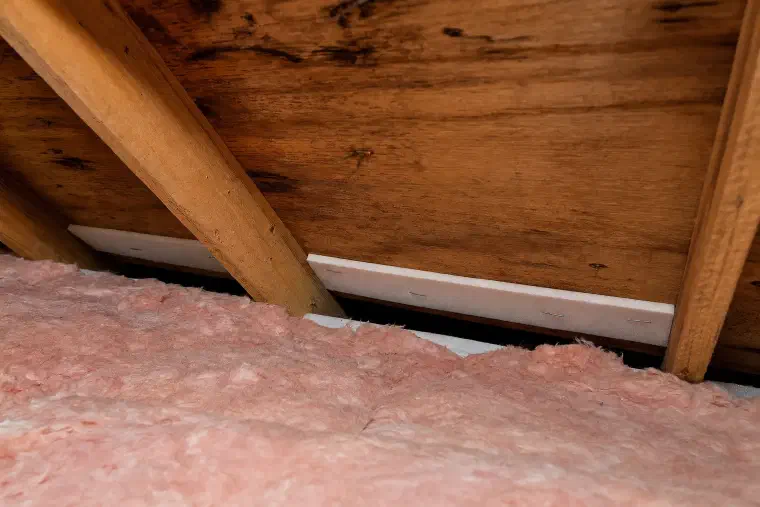
Attic baffles are thin foam, plastic or cardboard channels that sit between the rafters at the edge of your attic. They keep insulation from covering your soffit vents, so air can still flow in under the roof.
The short version
- A baffle is a channel that holds insulation back and leaves a path for air.
- It goes in the rafter bay above each soffit vent, running from the attic floor up the underside of the roof deck.
- Without one, insulation tends to slump or get blown over the vent and block it.
- A blocked vent means a hot, damp attic and a roof that wears out early.
- Baffles are cheap, but fixing a blocked attic is a job where you want to see the whole picture first.
What do attic baffles do?
A baffle keeps a lane of air open. The Pacific Northwest National Laboratory says baffles keep insulation from blocking the soffit vents (opens in a new tab) and keep air from blowing through the attic insulation. That is two jobs from one piece of foam.
The soffit is the panel under the edge of your roof, and the soffit vents are the slots or holes in it that let outside air in. That air rises under the roof deck and leaves at the ridge or other exhaust vents. Insulation is soft and fluffy, so it ends up wherever it is pushed. The baffle is the wall that tells it to stop.
Where do attic baffles go?
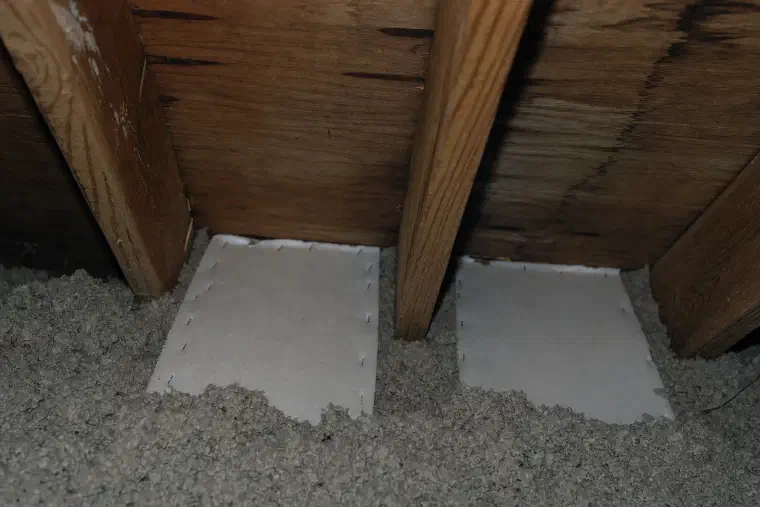
They go at the low edge of the attic, in the gap between each pair of rafters. The same PNNL guide says that with continuous soffit vents, there should be a baffle in every rafter bay (opens in a new tab). If the vents are spaced out along the soffit, there should be one at every vent location.
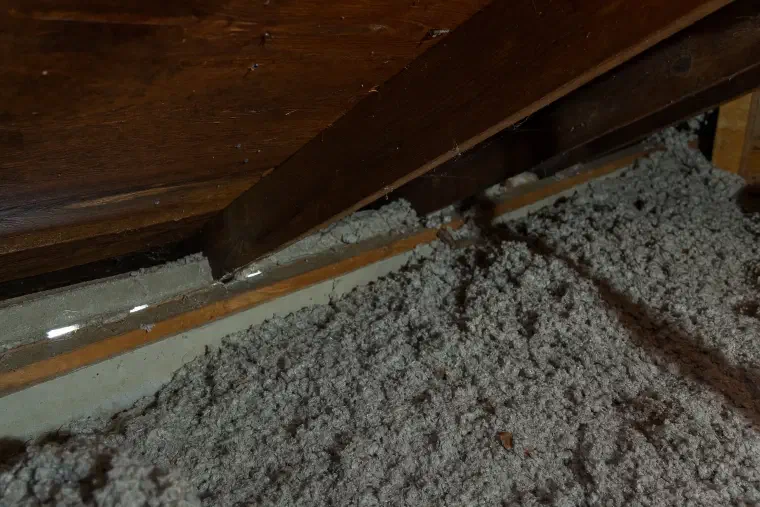
Each baffle runs from the attic floor, along the eave, and up the underside of the roof deck. It is stapled to the deck. The bottom edge sits at the outer wall so insulation can reach the edge of the attic without spilling over the vent.
What happens when insulation blocks the soffit vents?
The air has nowhere to come from, so the vents up top have nothing to pull. Energy Star puts it bluntly: never cover attic soffit vents with insulation (opens in a new tab). The Asphalt Roofing Manufacturers Association adds that intake vents should never be blocked or covered (opens in a new tab) so that air can enter and exit freely.
We see this one a lot. A new ridge vent goes on, but the soffits were never opened, or the insulation was added later and buried the intake. The roof looks vented. The attic is not. In summer the heat sits under the shingles, and in winter the damp air from your house sits on the cold roof boards. We cover the bigger picture in why attic ventilation matters.
Do baffles help with ice dams?
They help, because they keep the roof deck cold. PNNL says effective attic ventilation is important to prevent ice dams (opens in a new tab) from forming on the roof in winter. Energy Star notes the same idea from the other side: a cold attic in winter cuts the chance of ice dams at the roof edge.
A baffle is not a cure on its own. Air sealing the ceiling below and having enough insulation matter just as much. But a blocked eave is one of the quickest ways to get a warm roof edge, and a baffle is the cheapest way to stop it. Our guide on how to prevent ice dams covers the rest.
How can you tell if your baffles are missing or blocked?
Go up into the attic and look at the eaves. You are checking whether you can see a clear channel above each soffit, or whether insulation is piled against the roof deck at the edge.
The signs from below are the usual attic signs:
- Insulation that looks pushed, flattened or drifted at the eaves
- Daylight or a visible gap at the soffit that has been covered over
- Frost on the underside of the roof boards on a cold morning
- A musty smell, or damp spots on the decking
Winter is the best time for this. Frost on the underside of the roof boards shows a moisture problem that is invisible the rest of the year. If you see dark staining or mold, read what causes mold in the attic.
What are attic baffles made of?
Most are foam, plastic or cardboard. PNNL says black, gray, white, yellow and pink plastic or molded foam are common, as is brown cardboard (opens in a new tab). The material matters less than the fit. A baffle that is stapled flat to the deck with a clear lane behind it works. One that is crushed or has fallen down does not.
Some baffles have a small wind dam at the back that drops into the rafter bay. It acts as a backstop for the insulation. Energy Star also warns that blown-in insulation may need an extra block (opens in a new tab) so it is not blown into the soffit.
Can you install attic baffles yourself?
Often, yes, if you can get into the attic safely. PNNL says to staple the edges of fallen baffles to the underside of the roof deck (opens in a new tab), and to put new ones in each rafter bay that has a soffit vent. Wear a mask and long sleeves, and step only on the framing.
Where it gets harder is when the roof has no soffit vents at all, or the soffit is closed up behind the insulation. At that point you are talking about an intake problem, not a baffle problem, and the fix is cutting vents in. That is part of our attic venting installation work.
Common questions
Do I need baffles if I have a ridge vent?
Yes, if your soffits are the intake. A ridge vent only moves air that gets in at the bottom. Baffles are what make sure the bottom stays open.
Can I use baffles with blown-in insulation?
Yes, and this is where they matter most. Loose insulation drifts, so a baffle with a block at the back is what keeps it from sliding over the vent.
How many baffles does an attic need?
One for every rafter bay that has a soffit vent. With continuous soffit vents, that means every bay along the eave.
Does the free roof inspection check the baffles?
We look at the attic when we can get in safely, and we will tell you if insulation is covering the eaves. We do not run a full ventilation calculation on the free visit.
What to do next
If you are not sure whether your soffits can breathe, have someone look. A free roof inspection includes a look at the attic when it is accessible. If the intake is blocked, we can tell you what a fix involves.


