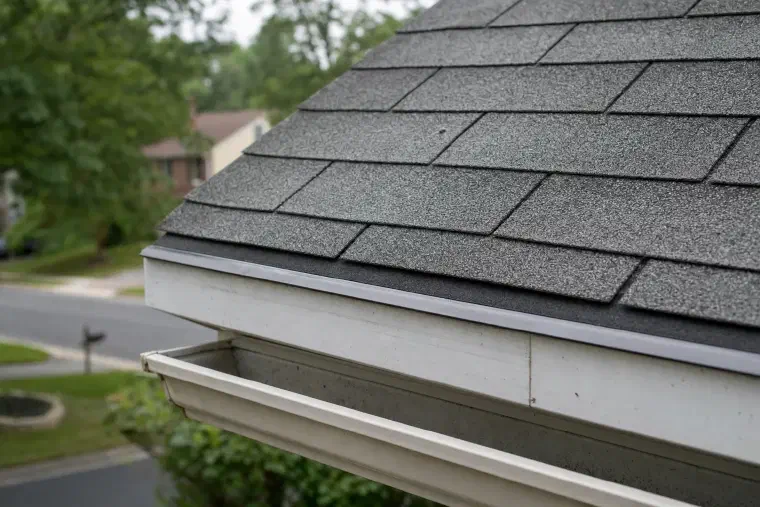
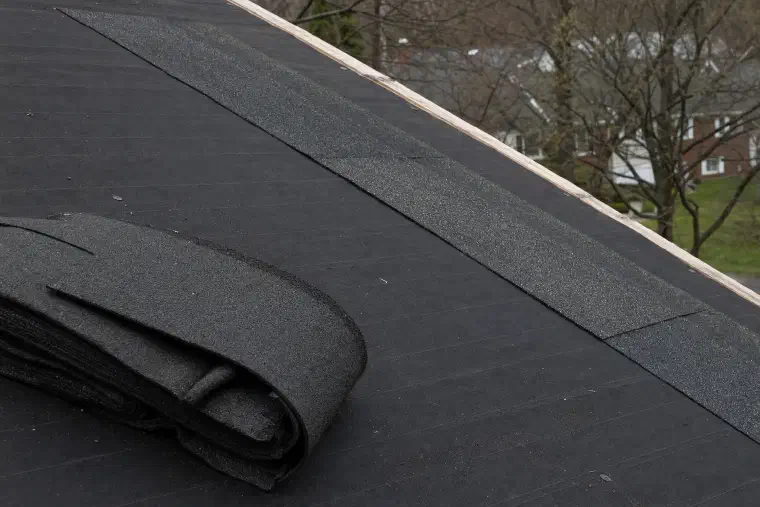
Starter shingles are the narrow first row of a shingle roof, laid along the edges before the shingles you see go on. They hide under that first visible row, so most homeowners never notice them. Their job is to glue the edge down and keep wind and water from getting under it.
The short version
- Starter shingles are a thin strip with a sealant line, laid first along the eaves (the bottom edges) and the rakes (the sloped side edges).
- They give the first visible row something to bond to, which helps stop wind from peeling shingles off at the edge.
- The edges are where roofs take the most wind, so a missing starter strip matters more than it looks.
- You cannot see them once the roof is done, so ask whether they are on the quote.
- A new roof from us includes them.
What are starter shingles?
They are a strip of shingle material with the tabs cut off and a line of sealant on it. The Asphalt Roofing Manufacturers Association says starter strip products provide the first row of sealant (opens in a new tab) needed to help prevent shingle blow-offs and water penetration.
Think of a shingle roof as rows that stick to the row below them. The first visible row has nothing under it to stick to. The starter strip is that something.
Where do starter shingles go?
They go along the eaves first, and along the rakes too. The order of layers on a new roof runs from the bottom up: drip edge and underlayment, then the starter strip, then the first full row of shingles on top of it. Our article on drip edge covers the metal at the edge, and the one on underlayment covers the sheet under the shingles.
A starter strip is laid so its sealant line sits close to the edge, where the first row needs to be held down. Its seams are staggered so they do not line up with the seams of the row above. A starter strip that runs along the rake is a detail some crews skip, and it is one we do not.
Why do roof edges need their own row?
Because that is where wind attacks a roof. A federal building science guide on roof edge protection says the greatest stress roof assemblies see in high wind zones is at roof edges (opens in a new tab), and that most blow-off starts there too. That guidance was written for high-wind regions, but the physics is the same on a street in Ellicott City. Wind gets under an edge easily and has nothing to stop it from lifting.
The same guide says that for shingle roofs, starter strips must be adhered (opens in a new tab) at the eave and the rake. Once the edge row lets go, the courses above it can follow.
Can you just cut regular shingles for a starter?
You can, and some crews do. It is a shortcut, and it is not the same thing. A cut-up shingle may have its sealant in the wrong place for an edge, and the thick piece can make the next row sit crooked.
A made-for-the-job strip has the sealant where the first row needs it. It also costs very little next to the roof it protects, so there is not much reason to skip it.
| Made-for-the-job starter strip | Cut-up field shingle | |
|---|---|---|
| Sealant line | Placed for the edge | Wherever the shingle had it |
| Thickness | Thin, no tabs | Full shingle, can lift the next row |
| Time on the roof | Roll or bundle, lay it down | Cutting each piece by hand |
| What we put on | Yes | No |
How does a roof end up with no starter strip?
Usually a rushed or low-priced job left it out. We see a missing starter strip at the eaves and rakes on roofs a previous contractor worked on, along with missing drip edge, a second layer put over the first, and shingles laid in cold weather before the sealant could set.
Here is the annoying part. A roof can look perfect from the lawn with no starter strip at all. Nothing shows until a gust lifts the edge, or a roofer lifts the shingles to look. A roof that looks fine but was put on wrong is exactly the case a quick visual check will not catch.
How can you tell if your roof is missing them?
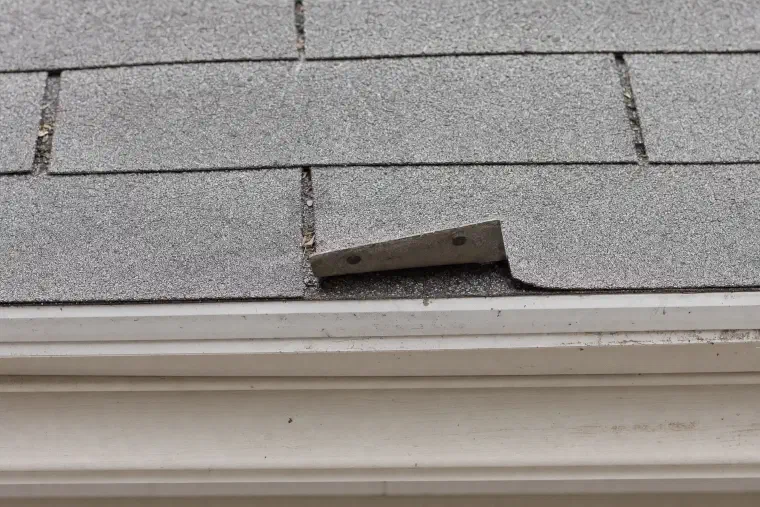
Often you cannot, from the ground. A few signs point that way: shingles lifted or missing along the bottom edge or the sloped sides after a windy day, edge shingles that look loose or wavy, and a roof put on by a contractor you would not hire again.
The sure way is to have someone lift the edge shingles and look under them. Our free roof inspection includes a walk on the roof and lifting shingles to check the nailing, which is where we would look. The report comes with photos. Keep in mind that a free inspection is also a sales visit, and a paid independent inspector is the pick for a dispute.
Common questions
Do starter shingles go on a rake?
Yes. The rake is the sloped side edge on a gable end, and wind catches it as easily as the bottom edge. The federal roof edge guide cited above says starter strips must be adhered at both the eave and the rake. We run the strip along both.
Are starter shingles included in a new roof?
With us, yes. Our roof replacement includes new drip edge, starter strip and the main shingles, along with underlayment and flashing. Rotted fascia and trim are separate, since nobody can see that wood until the old roof comes off.
Do starter shingles matter as much as how the shingles are nailed?
They do different jobs, and both count. Nails hold the shingle to the roof. The starter strip’s sealant holds the edge row down against wind. Our article on how many nails per shingle explains the nailing side.
What to do next
If you are comparing quotes for a new roof, ask each roofer whether the price includes starter strip at the eaves and the rakes, and whether it is new material or cut-up shingles. It is a one-line answer. Our roof installation page lists what a full replacement covers.