

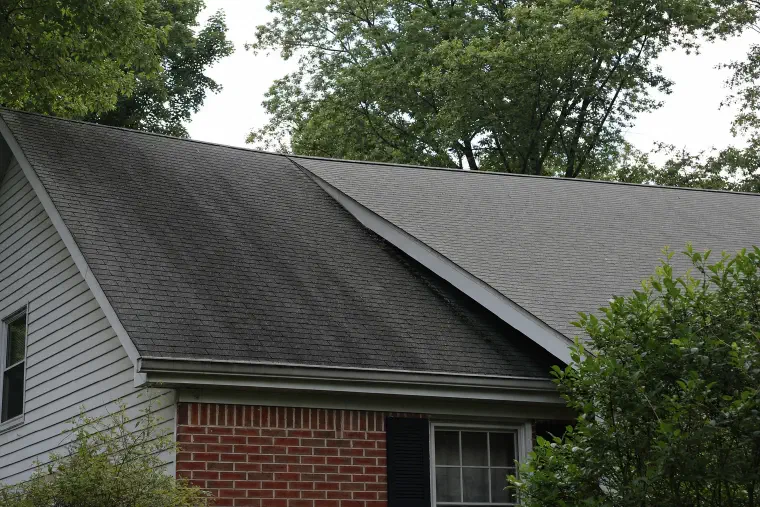
Black streaks on a roof are almost always algae, a blue green kind that rides in on the wind and settles where your shingles stay damp. The streaks are mostly a looks problem. They are still worth understanding, because they tell you something about how your roof dries.
The short version
- The streaks are algae, most often a kind called gloeocapsa magma, which makes a dark coating to shield itself from the sun.
- Algae spores travel through the air, so a clean roof next door does not protect yours.
- Warm, humid weather and shade help it grow, which is why one slope can be streaked and another clean.
- The shingle makers’ association says there is no scientific evidence that algae damages shingles. Moss is a different story.
- Shingles made with algae-resistant copper granules are the fix to ask about when you replace the roof.
What are the black streaks on a roof?
They are algae growing on the shingle surface. The Asphalt Roofing Manufacturers Association says gloeocapsa magma, or blue green algae (opens in a new tab), is the most common type, and that its growth is what shows up as black streaks. A second ARMA page adds that gloeocapsa magma is probably the most prevalent (opens in a new tab) of several algae species behind roof discoloration.
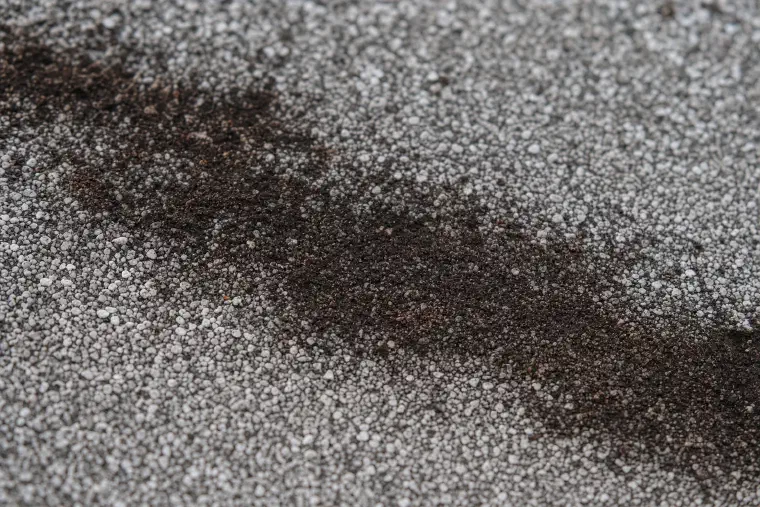
Why black? The same page says the algae makes natural pigments that turn light roofs dark brown or black (opens in a new tab) over time. The first page adds that the algae protects itself from damaging ultraviolet rays (opens in a new tab) by producing a dark pigmented sheath. The streak you see is that sheath.
Where does the algae come from?
From the air. The association says algae spores are carried by the wind or by animals (opens in a new tab) and can spread quickly from one rooftop to another. Nobody gave it to you, and nobody on your street is to blame.
That is also why a streak that starts as a small patch near the ridge can spread. Once it has a foothold, there are more cells to spread. A neighbor’s roof being clean today does not mean it will stay that way.
Why does it grow on one side of my roof?
Because that side stays wet longer. The association says algae can form where moisture tends to dwell (opens in a new tab) on the roof surface, and that coastal or humid climates give it the best conditions. A slope that gets sun all afternoon dries fast. A slope in shade does not.
Oregon State University makes the same point about shade. Its pest guide says algae grows in shady locations (opens in a new tab), and tells you to thin overhanging branches that shade the surfaces you care about.
Here is what we see on wooded lots around Ellicott City. Heavy tree cover keeps the roof damp, and the damp grows algae and moss. The shaded side of the house tends to go dark first, and the side that gets the afternoon sun stays clean.
Are black streaks bad for the roof?
Mostly not. The association says there is no scientific evidence that algae is damaging (opens in a new tab) to asphalt shingles, although it certainly changes how the roof looks. It is a curb appeal problem more than a leak problem.
Two cautions. First, a roof that stays wet enough to grow algae can grow moss too, and moss is the one that can cause trouble. The same page says moss can be harmful to shingle performance. We cover it in our guide to getting rid of moss. Second, streaks hide the surface. If the shingles under them are worn, you will not see it from the yard.
| What you see | What it usually is | How worried to be |
|---|---|---|
| Dark streaks running down a slope | Algae | Not very. It is mostly looks. |
| Green, fuzzy mat on the shingles | Moss | More. It holds water against the roof. |
| Bare, gritty patches under the streak | Worn shingles | A repair job, not a cleaning job |
| Streaks plus curled or lifted edges | Algae with an aging roof | Get it looked at |
How do you get black streaks off a roof?
Gently, and probably not yourself. The association says the most effective method is a 50:50 mix of bleach and water (opens in a new tab), left on for 15 to 20 minutes and rinsed with low pressure water. It also says to never use a pressure washer on asphalt shingles, because it strips granules. Its algae page warns against scrubbing, since friction may loosen and remove granules (opens in a new tab).
A wet, algae-covered roof is slippery, and washing it is not a good first project on a ladder. Our piece on soft washing a roof covers what to ask a cleaner. Roof washing is not one of the jobs we do.
How do you stop the streaks coming back?
Let the roof dry, and when the time comes, pick shingles that fight algae. Oregon State’s advice for moss applies here too: let the sun in (opens in a new tab) by trimming nearby trees so more light reaches the roof. Clear leaves out of valleys and gutters so water does not sit.
For a new roof, the association says you can use shingles with algae resistant copper granules (opens in a new tab). It does not recommend adding zinc or copper strips to an existing roof. Algae-resistant shingles are worth a question when you price a replacement on a shaded lot.
When is a streaky roof a sign of something else?
When the shingles under the streaks are the real story. Streaks on a 25 year old roof can sit on top of granule loss, cracking and lifted edges. Our guide to how long shingles last shows where the age line usually falls.
A free roof inspection sorts it out. We walk the roof, lift shingles to check them, and give you a written report with photos. There is no obligation to book work.
Common questions
Is the black stuff on my roof mold?
Almost always algae, not mold. The shingle makers’ association names gloeocapsa magma, a blue green algae, as the usual cause of black streaks. A patch that looks green and fuzzy is more likely moss.
Will the streaks go away on their own?
Not while the roof stays damp. Algae is alive and the wind keeps bringing more. The streaks tend to stay and spread until the shade and moisture that feed them are dealt with.
Do algae streaks mean my roof is failing?
Not by themselves. They mean the surface stays damp. What matters is the condition of the shingles beneath, and a quick look tells you that.
What to do next
If your roof is streaked and you are not sure what is under it, have us take a look. A shingle that is worn, lifted or cracked is a roof repair job, and cleaning will not fix it.


