

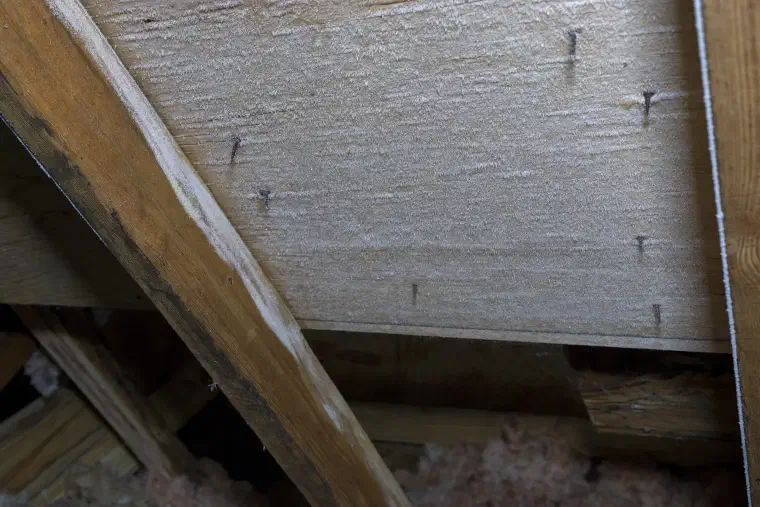
Condensation forms in an attic when warm, damp air from the house reaches a cold surface, usually the underside of the roof boards. Water vapor turns to droplets, or to frost in winter. The air gets there through gaps in the ceiling, from a bath fan or dryer that ends in the attic, or because the attic cannot dry out.
The short version
- The water comes from inside your house: showers, cooking, laundry and breathing.
- It rides warm air up through gaps around lights, pipes and the attic hatch.
- Frost on the underside of the roof boards on a cold morning is the clearest sign.
- A fan or dryer that ends in the attic makes it much worse.
- Sealing the gaps comes first. Venting helps, but it cannot keep up with a big leak of house air.
What actually causes condensation in the attic?
Condensation in the attic is house moisture meeting a cold roof. Everyday life puts water vapor into the air, and warm air rises. ARMA, the asphalt roofing manufacturers’ group, warns about water vapor condensing on cooler surfaces (opens in a new tab) when it reaches an unconditioned space like an attic.
In winter, the roof boards are the coldest thing in the building. Warm air from the rooms below touches them, cools off and drops its water. That is the same thing that happens on a cold glass of lemonade, only slower and out of sight.
Where does the moist air get in?
Moist air gets into the attic through every small hole in your ceiling. ENERGY STAR says that proper insulation and air sealing blocks the entry of heat and moist air (opens in a new tab) from below. The usual gaps are:
- recessed can lights
- holes where pipes and wires pass through the ceiling
- plumbing chases (the open boxed-in channels around pipes)
- the attic hatch, especially one that does not sit tight
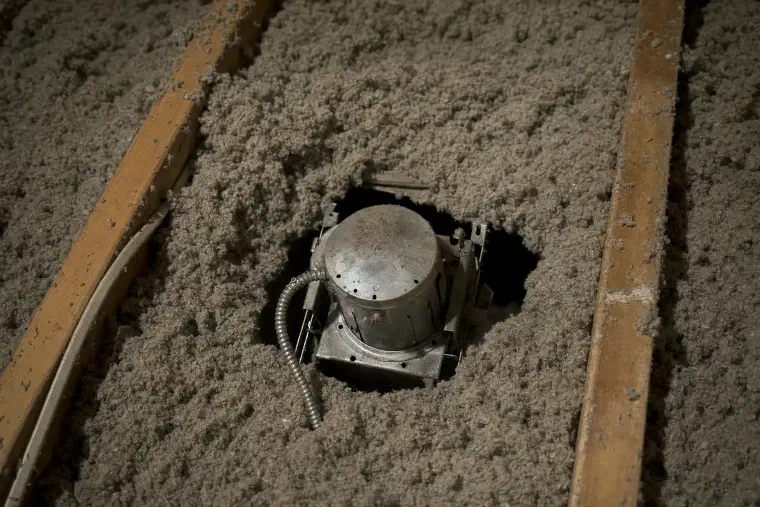
None of these looks like much from the room. Add them up across a whole ceiling and a lot of damp air finds its way up.
Can a bath fan or dryer cause it?
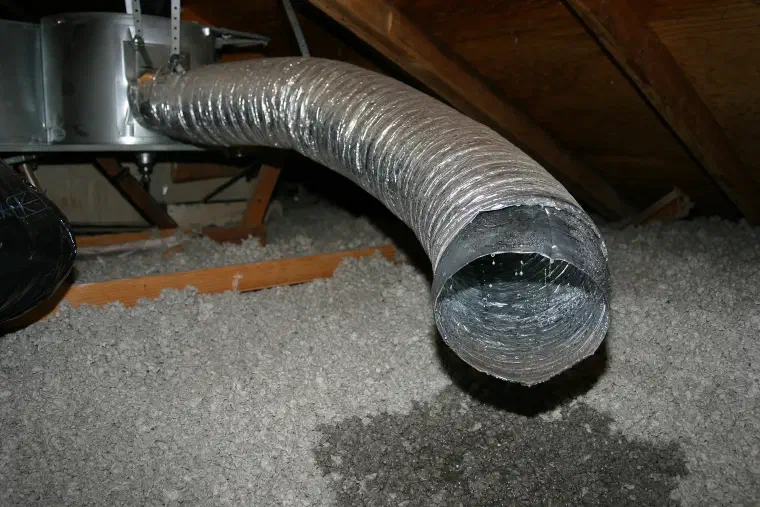
Yes, and it is one of the fastest ways to do it. A fan that ends in the attic dumps a shower’s worth of vapor right under the roof. The Department of Energy’s building science lab says to install a bath fan to vent outdoors, not into an attic (opens in a new tab), crawlspace or space between floors.
A dryer is worse. The same lab says that if a dryer vent empties into an attic or other cavity, the potential for moisture-related damage (opens in a new tab) is significant. When we correct a ventilation problem, a bath fan or dryer that stops in the attic is a common find, and it often leads to wet roof boards that need replacing. Our piece on whether a dryer vent can go through the roof shows how to end one outdoors.
How do you spot attic condensation?
Look on a cold morning, because winter is the best time to inspect an attic. Frost on the underside of the roof boards shows a moisture problem that is invisible the rest of the year. Take a flashlight up, look at the wood between the rafters, and check the nail tips, which frost first.
Other signs are damp insulation, dark patches on the wood, rusty nails and drips that show up when the frost melts. That last one fools people. A drip on a dry day gets blamed on the roof, when the roof is fine.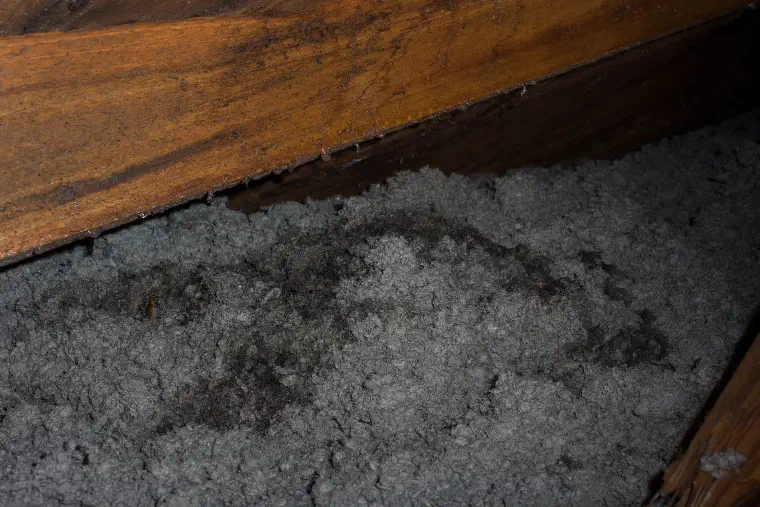
| What you see | Likely cause | First move |
|---|---|---|
| Frost over the whole roof | Too much house air getting up, weak airflow | Seal the ceiling gaps, then check the vents |
| Frost or damp around a duct end | Fan or dryer venting into the attic | Run the duct outdoors |
| Frost over the bathroom only | Warm air from the bathroom ceiling | Seal around the fan and lights |
| A wet patch that grows after rain | A real roof leak | Find the leak |
Why does it damage the roof?
Frost melts and soaks into the wood again each time the weather warms. We see this a lot: the boards soak up water and dry out through dozens of cycles, then start to come apart. A roof deck can be ruined this way without a drop of rain coming in from above.
ARMA says that trapped moisture may cause wood to rot (opens in a new tab) in the roof framing and decking. Damp insulation also stops doing its job. It is quiet damage, which is why we call poor ventilation the most underrated roof killer.
Does more ventilation fix it?
Venting helps, but it is the second step. Air moving from the low vents at the eaves to the high vents at the ridge carries moisture out. If a lot of house air is pouring in through the ceiling, though, the attic cannot clear it fast enough. Seal first, then make sure air can move.
Also check that insulation is not pushed over the eave openings, and that one roof is not running a ridge vent, gable vents and box vents together, which tend to short-circuit each other. Our guide to why attic ventilation matters goes through how the airflow should work, and the mold side of this is in what causes mold in the attic.
What to do next
Wait for a cold morning and look. If you see frost, damp insulation or a loose duct, that is the roof side of the problem and it is ours to fix. Our attic venting repairs page covers what we do, and the free roof inspection includes a look at the attic when it is safe to get in.
Keep in mind that we fix the roof and the venting. Drywall, paint and insulation inside the house are never part of a roof job. If wet decking has to be replaced, it typically runs $70 to $150 per 4x8 sheet installed, on top of the repair.
Common questions
Is condensation in the attic normal?
A little damp air in an attic is normal, and a healthy attic dries it out. Frost that stays for days, wet insulation or dark wood is not normal. It means more moisture is arriving than the attic can clear.
Why is there frost in my attic in winter?
Warm, damp house air reached the cold roof boards and froze there. It tends to show on the coldest mornings and melt by afternoon. Seal the ceiling gaps and check that no fan ends in the attic.
Will a dehumidifier in the attic help?
It treats the air you can reach while the source keeps feeding it. Stop the moisture getting in first.
Does condensation mean I need a new roof?
Not usually. If the boards are still solid, sealing and venting repairs are often enough. We would rather repair than replace, and we will say so after we have looked at the wood.


