

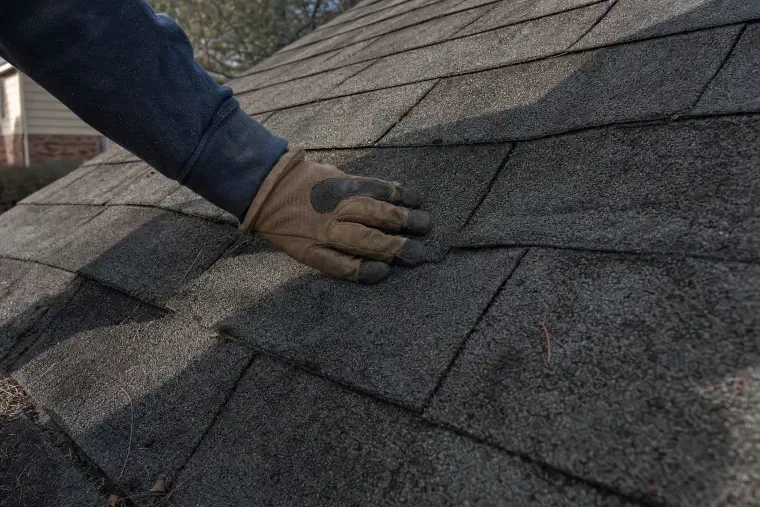
A roof inspection includes a walk across the roof, a close look at the shingles and flashing, a check of the gutters, and a look at the attic from underneath. At the end you get a written report with photos, a measured size and a remaining-life estimate. Ours is free, and it takes one to two hours.
The short version
- The inspector gets on the roof, lifts shingles and presses for soft spots. A look from a drone or the ground is not the same thing.
- Flashing, valleys, gutters and the attic all get checked, when the attic is safe to reach.
- You get a written report with photos, the pitch and a measured square count, kept separate from any price.
- It is a snapshot. It does not find the exact spot a leak comes in, and it is not a guarantee.
- Moisture scans, certification forms and an engineer’s letter cost extra, from any company.
What does a roof inspection include?
A full roof inspection covers the roof surface, the flashing, the valleys, the gutters and the attic, then ends in a written report. Our free roof inspection includes a physical walk on the roof, not a drone-only pass, so the inspector can touch what they are judging.
Here is what that walk looks like:
- Surface. Cracked, curled or missing shingles, worn granules and exposed nail heads.
- Hands-on checks. Lifting shingles to see where the nails went, and pressing on the roof for soft spots.
- Flashing and valleys. The metal that seals the joints, and what type it is.
- Gutters. Whether they are full, pulling away or holding water against the roof edge.
- Attic. When it is accessible and safe, a look at the underside of the roof deck.
Why does the inspector walk on the roof?
The inspector walks on the roof because some problems cannot be seen from the ground or from a photo. A shingle can look perfect and still be held down by its sealant strip alone, because the nails were put in too high. The only way to know is to lift it.
The same goes for soft spots. Wet or rotted decking feels different underfoot, and a thumb press tells you what a picture does not. This Old House says an inspector will look for signs of damage (opens in a new tab) in the roof covering and in what sits underneath it.
We say it plainly: the same shingle can last 25 years or 9, depending on where the nail went. That is why we lift them.
What happens to the flashing and valleys?
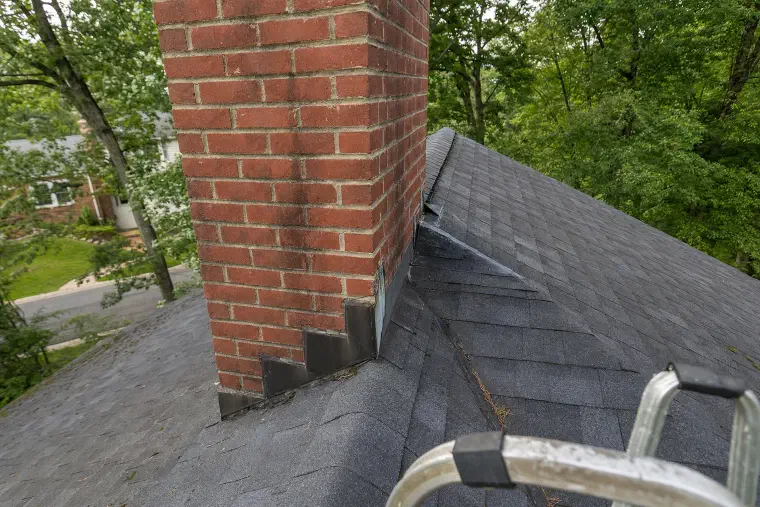
The inspector checks every joint where water could get in, because flashing is where roofs actually leak. Flashing is the thin metal (or rubber) that seals a roof where it meets a wall, a chimney, a pipe or a skylight.
The Pacific Northwest National Laboratory notes that flashing creates a barrier against water (opens in a new tab) at exactly those junctions, and that step flashing belongs along walls and chimneys. The Asphalt Roofing Manufacturers Association says flashings are the most vulnerable points (opens in a new tab) on a roof.
So we look at what the flashing is made of, whether it is the original or was reused, and whether it leans on caulk. Caulk is a consumable that lasts 5 to 10 years, so any joint that depends on it is a leak with a date on it.
Do they check the attic?
Yes, when the attic can be reached safely, the inspector looks at the underside of the roof deck from inside. Stains around vents, chimneys and walls show where water has been getting in, often long before a ceiling stain appears.
Attics also show things the roof surface hides: wet insulation, blocked soffit vents, and bath fans that end in the attic instead of outside. Winter is the best time for this. Frost on the underside of the roof deck on a cold morning points to warm, damp air leaking up from the house.
What do you get at the end?
You get a written report with photos, separate from any proposal. It includes the pitch (the steepness of the roof), a measured square count (one square is 100 square feet of roof), and a remaining-life estimate with the reasoning behind it, such as granule loss or shingles that have stopped sealing.
There is no obligation to book work. The visit takes one to two hours on site. The report usually arrives the same day or within 24 to 48 hours, and scheduling is typically within 2 to 5 business days, though after a storm it can be 1 to 3 weeks.
What does a roof inspection not include?
A free roof inspection does not include finding the exact spot a leak enters, measuring ventilation, scanning for moisture, or signing any certification forms. Those are separate jobs.
| Not part of a free inspection | What it typically runs |
|---|---|
| Finding the exact leak entry point (attic tracing, hose test, moisture meter) | $150 to $400 |
| Moisture metering or thermal imaging | $400 to $700 |
| VA/FHA or insurance condition forms | $150 to $400 |
| A structural engineer’s letter | $600 to $1,500 |
Those are typical ranges around Ellicott City, not a price list. A few other limits are worth knowing. The inspection is a snapshot, not a warranty that the roof passed, because a windstorm next week can change everything. A roofer can flag a sagging ridge, but only an engineer can say for sure what is wrong with it.
Is a free inspection a fair one?
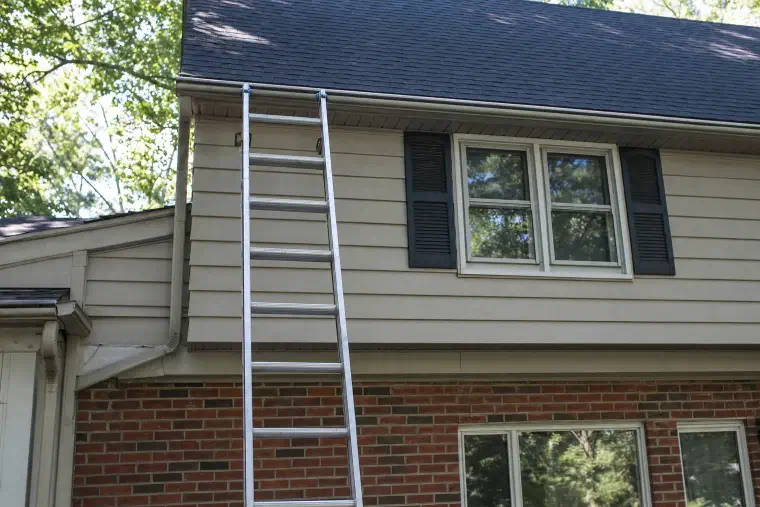
A free inspection is a sales visit, and you should know that going in. The person doing it is paid when contracts close, so it is not an independent opinion. That is a fair thing to weigh, and it is why the report is separate from any proposal.
If you are in a claim dispute or buying a house, a paid independent inspector is the better choice. A home inspector’s roof section is typically $150 to $250 when bundled with the full house inspection. A standalone independent inspector typically runs $200 to $450. If you are weighing a fix against a new roof, our article on repairing instead of replacing explains how to think it through.
When should you get one?
Most roofs are worth a look once a year, and sooner after a bad storm. Experts recommend inspecting once a year (opens in a new tab), and more often as a roof nears the end of its life. The Asphalt Roofing Manufacturers Association suggests spring and fall (opens in a new tab) checks by a professional roofing contractor.
Good times to book one:
- After a wind or hail storm
- Before you buy or sell a house
- When you spot a stain, a missing shingle or granules in the gutter
- When the roof is getting old and you want to know how long it has left
If shingle age is the question, our piece on whether a 30 year shingle lasts 30 years is worth a read first.
Common questions
How long does a roof inspection take?
Ours takes one to two hours on site. This Old House puts the range at 45 minutes to four hours (opens in a new tab), depending on roof size and access. A cut-up roof with steep sections takes longer.
Will the inspection find every leak?
No. It finds the signs and the likely trouble spots. Pinning down the exact entry point of a leak is a separate paid service, and even then a leak can take a few tries to stop. Our article on why a roof leaks after the rain stops shows why.
Is the quote free too?
Yes. The inspection is free, and so is the quote for anything it turns up.
What to do next
If you want to know what shape your roof is in, ask for a free inspection. There is no obligation, and you keep the report whatever you decide.


