

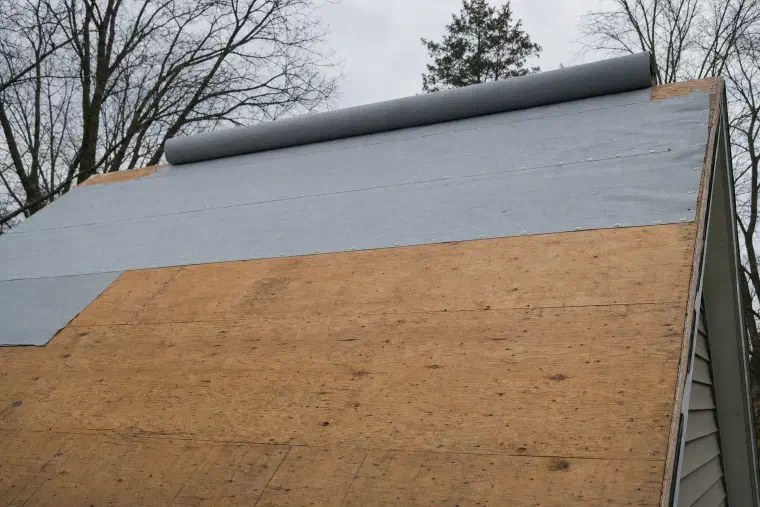
Roof underlayment is a thin water-resistant sheet that covers the whole roof deck under the shingles. It is the backup layer. If wind-driven rain gets past a shingle, the underlayment is what keeps that water off the wood. You never see it once the roof is done, so it is easy to skip over when you read a quote.
The short version
- Underlayment is a second layer of water protection between the wood deck and the shingles.
- It also keeps the deck dry while the roof is being built, and helps the roof pass its fire rating.
- The three kinds are felt, synthetic and self-adhering. Felt is the old standard, synthetic is tougher.
- It is a backup, not a roof. Shingles still do most of the work.
- Our roof replacements include synthetic underlayment, plus ice and water shield at code minimum.
What does roof underlayment do for a roof?
It does several jobs, and water is only the first. According to the Asphalt Roofing Manufacturers Association, underlayment provides secondary protection (opens in a new tab) for the roof deck from wind-driven rain and other moisture. Shingles shed water, but rain blown sideways can slip under a shingle edge. The underlayment catches it.
It has a few quieter jobs too. It helps protect the deck (opens in a new tab) until the shingles go on, so a crew that tears off in the morning is not leaving bare wood open to a surprise shower. It also keeps the shingles from touching the wood, and resins from wood decking (opens in a new tab) can harm asphalt shingles over time.
Then there is the look of the roof. Underlayment helps cut down on “picture framing,” the visible outline of deck panels (opens in a new tab) showing through the shingles.
Do you need underlayment under shingles?
Yes. Shingle makers direct the use of underlayment (opens in a new tab) over wood decks, and most building codes (opens in a new tab) call for it. Leaving it out can also affect the fire rating. The same bulletin says an asphalt shingle on its own is not classified for fire resistance. The rating belongs to the whole roof assembly: the deck, the underlayment and the shingles together.
Local codes can ask for more than the basics. On a low slope, one that rises only 2 to 4 inches for every 12 inches across, codes call for a double layer or a single self-adhering layer (opens in a new tab).
What are the types of roof underlayment?
There are three: asphalt-saturated felt, self-adhering membrane, and synthetic sheet made from plastic polymers. Felt is the most common type (opens in a new tab) used under asphalt shingles.
| Type | What it is | Where it fits |
|---|---|---|
| Felt | Paper-like sheet soaked in asphalt, often called tar paper | The traditional choice, low cost, quick to lay |
| Synthetic | Woven plastic sheet | The whole roof deck; lighter and tougher than felt |
| Self-adhering | Sticky rubberized asphalt, peeled and pressed onto the deck | Eaves, valleys, low slopes and around openings |
Synthetic is lighter than felt, and it covers more roof per roll (opens in a new tab), so the crew spends less time hauling and rolling. This Old House says synthetic underlayments are tougher and less likely to tear or blow off (opens in a new tab) in the wind, and can be left exposed longer than felt.
The self-adhering kind is the one we cover in our article on ice and water shield.
Is felt or synthetic better?
For most new roofs, synthetic is the better pick. Felt is the cheaper sheet, and it can tear or lift in a gust before the shingles go on. A torn corner is an open door for rain. Synthetic is built to stay put and to wait out a longer gap between the underlayment and the shingles.
Felt is not useless. It is the old standard for good reason, and plenty of roofs have done fine on it. But if you are paying for a full tear-off anyway, the extra cost of a tougher sheet is small next to the cost of the roof, and it goes under the shingles once.
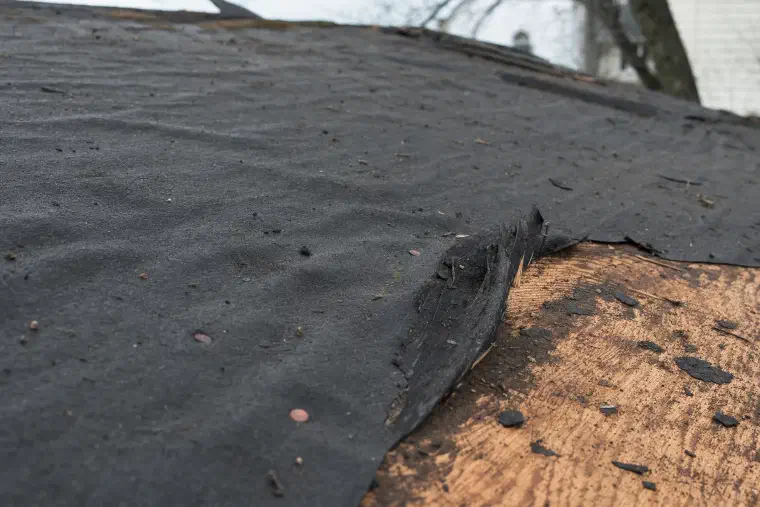
What goes under the shingles on one of our roofs?
Our roof replacements include synthetic underlayment over the whole deck. Ice and water shield goes in at code minimum too, which means the eaves, the valleys and around anything that pokes through the roof. Both are part of the price, not add-ons. See our roof installation page for the full list of what a replacement covers.
Two things are not in that base price. Ice and water shield beyond code minimum, such as full coverage, valleys on a low-slope roof or extra areas, is an upgrade. And rotted decking found after the tear-off is priced per sheet, because nobody can see the wood until the old roof is off.
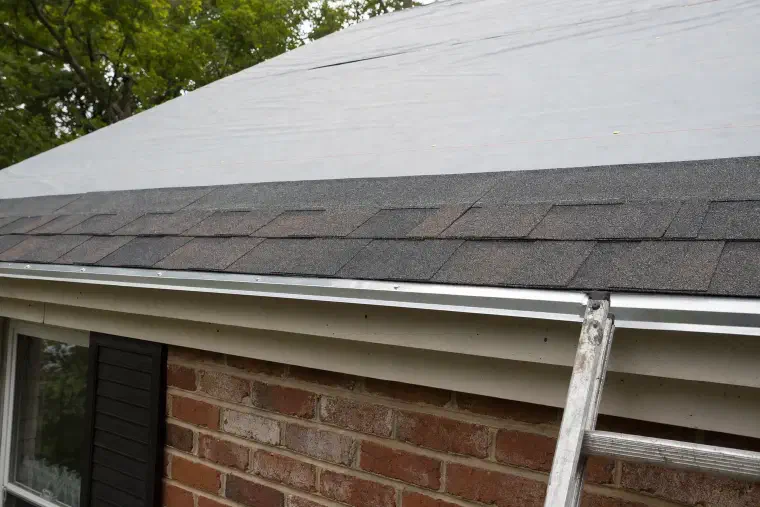
Can underlayment replace a roof that is wearing out?
No. Underlayment is a backup, not a roof. It is not built to sit in the sun and rain for years, and it does not make a worn-out shingle roof last longer. When shingles are failing, the sheet under them is under the same weather and the same age.
A question that comes up often: can a roofer just lay new underlayment under old shingles? No. Underlayment goes on the bare deck, so it can only go in when the shingles come off. That is why it belongs in a replacement, and why how long a roof replacement takes includes a day for tear-off and deck checks before anything new goes down.
Common questions
How long does roof underlayment last?
It is meant to last as long as the shingles over it, since it stays covered the whole time. Synthetic is the tougher of the two, but neither one is a reason to stretch an old roof.
Can you see underlayment from the attic?
Not usually. It sits on top of the deck, under the shingles, so from inside you see the underside of the wood. A roofer on the roof can see an edge where the shingles stop, and our free roof inspection is a good time to ask what is under yours.
Is underlayment the same as ice and water shield?
No, though both go under the shingles. Ice and water shield is a sticky membrane used in the spots where water backs up. Regular underlayment covers the rest of the deck and is fastened down in overlapping rows.
What to do next
If you are comparing quotes for a new roof, ask each roofer what kind of underlayment is included and where the ice and water shield stops. A vague answer to either one tells you something about the job. We are glad to walk you through ours.


