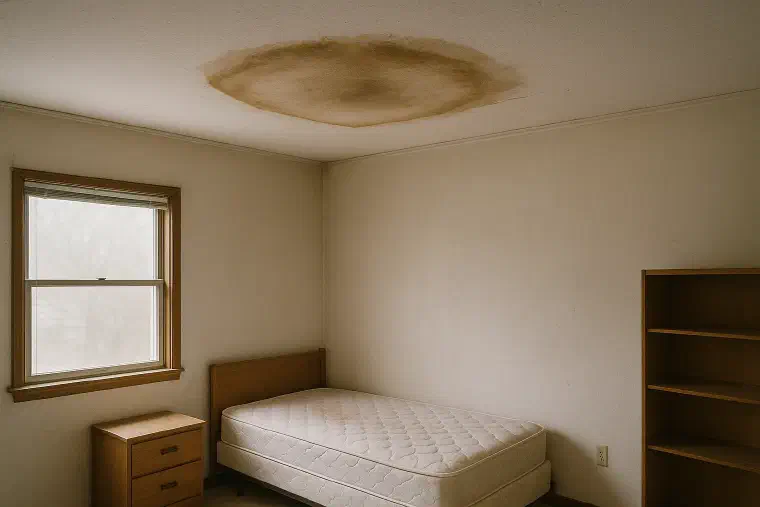
An untreated roof leak doesn’t stay small. Within 24 to 48 hours, trapped moisture can trigger mold growth, and by the time a ceiling stain appears, the decking underneath may already be rotted. What starts as a $500 flashing repair can escalate to $5,000 in structural damage if ignored.
TL;DR:
- Damage begins long before you see a stain: water soaks insulation, rots decking, and feeds mold within two days.
- A visible ceiling stain is the last stage of a leak that has often been active for months or years.
- Repair costs multiply quickly: a $350 shingle fix can become a $15,000 framing repair if left untreated.
- Mold can make parts of a home unsafe, especially for people with asthma, allergies, or compromised immune systems.
- A free roof inspection finds the real problem early, before a small leak turns into a major expense.
What’s the hidden timeline of an untreated roof leak?
Water damage starts long before you see any sign on the ceiling. Within hours of a leak, insulation gets soaked, and the wood decking beneath the shingles begins absorbing moisture. The clock on mold starts ticking fast: wet building materials need to be dried within 48 hours to prevent mold from taking hold. If the leak persists, the decking swells, delaminates, and loses strength, and the framing underneath starts to rot.
That timeline is why we tell homeowners the same thing every time: a ceiling stain isn’t the beginning of a leak. It’s the last stage. By the time you see it, water has often been working its way through the roof assembly for months, quietly damaging decking and insulation. A free roof inspection catches these hidden problems before they reach the drywall.
What actually happens to your roof decking and framing?
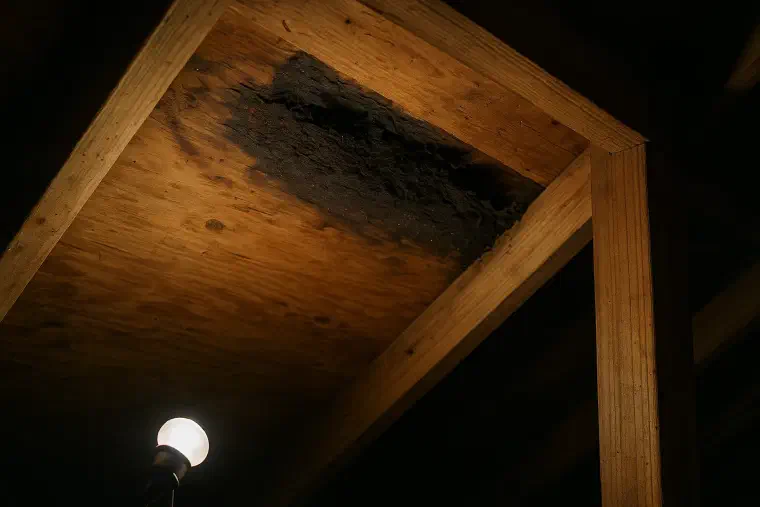
The decking, usually OSB or plywood, is the first structural layer to suffer. Water causes it to swell, lose its bond, and eventually crumble. Once the decking rots, the rafters and trusses beneath it stay wet and begin to decay. Wet framing loses its load-bearing capacity, and a sagging roof plane or a soft spot underfoot becomes a real structural concern.
I’ve seen decking that looked solid from the attic but disintegrated when touched because moisture had been trapped between the shingles and the insulation for years. Replacing a small section of decking can run $150 to $500 or more, but if the rot spreads into the rafters, the repair jumps to $1,500 to $5,000 for a decking section plus reshingle, and rafter sistering or ridge correction can hit $3,000 to $15,000. That’s why a roof damage repair is never just about the shingles you can see.
How fast does mold become a real concern?
Mold can start growing on wet materials in as little as 24 to 48 hours. Once it gets into drywall, insulation, or the paper facing on fiberglass batts, it spreads quickly, often inside wall cavities where you can’t see it. The EPA stresses that controlling moisture is the only way to control mold, and the CDC links damp indoor environments to respiratory issues like asthma, allergies, and throat irritation.
A roof leak that wets attic insulation creates a perfect mold nursery: warm, dark, and damp. Even after the leak is fixed, the contaminated material needs to be removed and replaced. We’ve found mold behind bathroom ceilings where a bath fan had been venting into the attic instead of outside, turning a small leak into a full-blown indoor air quality problem.
Why a ceiling stain is the last warning, not the first
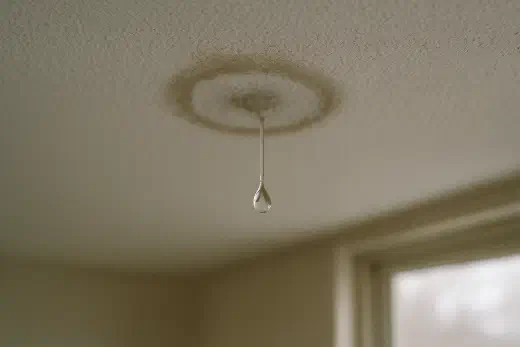
Water enters at a failed flashing, a cracked pipe boot, or a wind-lifted shingle. It travels along the roof deck, soaks into the insulation, and only after saturating the drywall does it finally show up as a stain on your ceiling. That stain is the lowest point where water pooled, not the entry point.
By the time you see it, the decking above may already be soft, and the insulation may be holding moisture against the framing. The absence of a stain doesn’t mean no leak; it just means the water hasn’t broken through yet. If you see a spot, the clock has been running for a while. A roof repair at the first sign of trouble stops the damage before it reaches the structure.
What does an untreated leak cost compared to a repair?
Every month a leak goes unfixed, the repair scope grows. What could have been a simple flashing reseal turns into decking replacement, then framing repair, then mold remediation and drywall work. Here’s how the numbers typically stack up:
| Repair stage | Typical cost range | What’s involved |
|---|---|---|
| Small leak fixed early (shingle, pipe boot, flashing) | $300 to $900 | Replace a few shingles or reseal flashing; 1 to 2 hours on site |
| Moderate leak with decking damage | $1,500 to $5,000 | Cut out and replace rotted decking, reshingle the section |
| Structural repair (rafters, trusses) | $3,000 to $15,000 | Sister rafters, correct a sagging ridge, engineer’s letter |
| Mold remediation and interior repair | $2,000 to $10,000+ | Remove contaminated insulation, drywall, treat framing, repaint |
The jump from a Tier 1 roof repair to a structural job is the difference between calling when you first notice a drip and waiting until the ceiling sags.
Can a roof leak make your home unsafe to live in?
Yes, a neglected leak can create conditions that make a home unsafe. Severe mold growth can trigger asthma attacks and chronic respiratory problems, especially in children, older adults, and anyone with a compromised immune system. The CDC warns that dampness and mold are associated with upper respiratory symptoms and can worsen existing conditions.
Structural rot can also make floors or ceilings unstable. Water that reaches electrical wiring or fixtures creates a shock hazard. And if the leak causes a ceiling collapse, anyone underneath is at risk. If water is actively coming through, an emergency roof repair with tarping can stabilize the situation immediately and prevent those hazards from escalating.
When should you stop worrying and call a roofer?
Any of these signs mean it’s time to pick up the phone: a water stain on the ceiling or wall, a musty smell in the attic, visible sagging or soft spots, or water dripping during rain. Even a small discoloration is worth a look.
Waiting doesn’t make the problem go away; it just makes the repair more expensive. A free roof inspection gives you a clear picture with no obligation. If water is coming in right now, our emergency roof repair team answers 24/7 and can get a tarp on the roof fast. The worst that happens is you find out it’s nothing. The best that happens is you catch a $500 problem before it becomes a $5,000 one.
Frequently asked questions
Is a leaking roof covered by homeowners insurance?
Coverage depends on the cause. Sudden damage from a storm or fallen tree is typically covered, but gradual deterioration or long-term neglect usually is not. A roofer can document the damage, but the final decision always comes from your adjuster.
Can I just patch a roof leak myself?
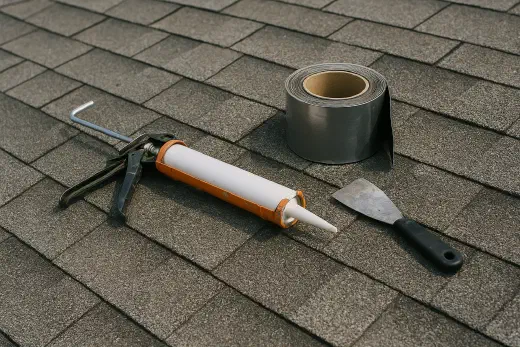
A temporary patch like a tarp or sealant can buy you a few days, but it rarely fixes the real entry point. Most leaks start at flashing or hidden seams, and a surface patch can trap moisture behind it. A professional diagnosis finds the actual source.
How long does a roof repair take once I call?
Most repairs take 1 to 4 hours on site. Scheduling is usually within 1 to 2 weeks, though post-storm backlogs can stretch that to several weeks. A free inspection gets the process started without commitment.
Will a roof leak always cause mold?
Not always, but the risk rises sharply after 48 hours of wetness. If the leak is small and the area dries quickly, mold may not develop. The problem is that hidden leaks often stay wet for weeks before anyone notices, and that’s when mold becomes likely.
What if I only see a small water spot on the ceiling?
A small spot often means a larger wet area above the drywall. The visible stain is just the lowest point where water finally pooled. Even a dime-sized mark can hide rotted decking or soaked insulation, so it’s worth an inspection.