

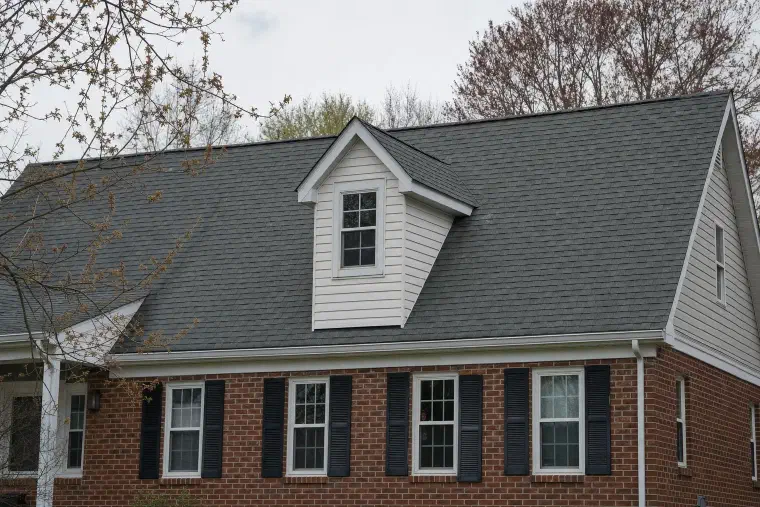
A dormer is a small structure that sticks out of a sloped roof, usually with a window in the front and a little roof of its own. It brings light and headroom into an attic or upper floor. It also adds several joints to your roof, and joints are where roofs leak.
The short version
- A dormer is a window box built out of the roof slope, with its own small roof and side walls.
- The common types are gabled (peaked), shed (one slope), hipped and eyebrow (curved).
- Every dormer adds corners and wall joints where water can get in.
- The side walls, the bottom corners and the spot where the dormer roof meets the main roof fail first.
- A leak there is usually a flashing job, not a shingle job.
What is a dormer?
It is a window box that stands up out of the slope. This Old House defines a dormer as a small structure that extends outward (opens in a new tab) from a sloped roof and typically includes a window. A Washington, D.C. planning guide describes the same thing as a window or vent and a small roof (opens in a new tab).
The point of one is room. A dormer adds usable space and headroom, often in an attic or upper floor, while bringing in light and ventilation (opens in a new tab). You can spot one from the street: it is the part of the roofline that pops forward from the slope.
What are the types of dormer?
The type is named for the shape of its little roof. The D.C. guide says dormers are typically capped in gable, hipped, shed, or round (opens in a new tab) shapes.
| Type | What it looks like |
|---|---|
| Gabled | A peaked roof with a slope on each side. This Old House calls it the most common type (opens in a new tab) |
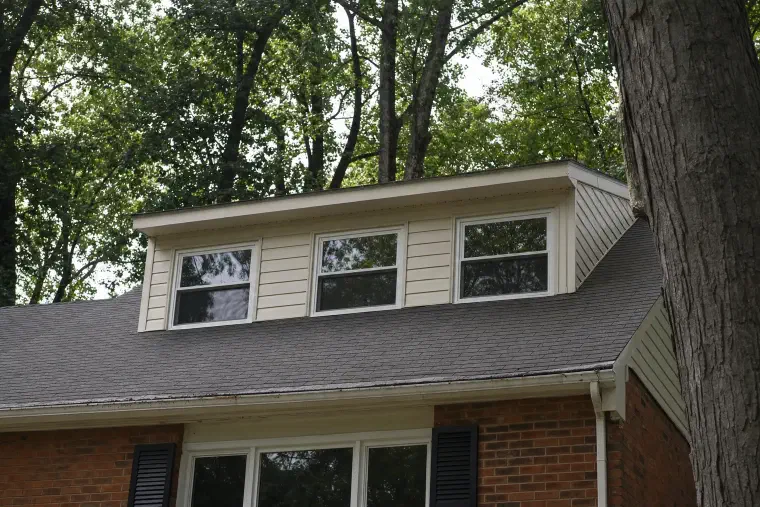
| Shed | One slope, set at a gentler angle than the main roof, often wide with several windows |
| Hipped | A roof that slopes back on all three sides, including the front |
| Eyebrow | A low, curved roof that rolls over the window like a lid |
Why do dormers leak?
Because a dormer is a second roof joined to the first, and every joint is a place water can find. An open slope has none of that. A dormer has two side walls, a front, a roof of its own and a line where that roof meets the main one.
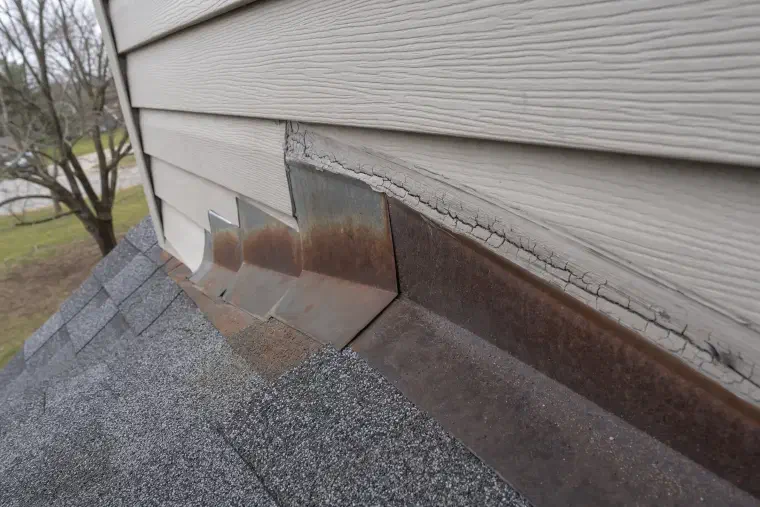
Water runs down the main slope, hits the side wall of the dormer and needs somewhere to go. What stops it is flashing, the metal that seals the joints on a roof. The side walls are sealed with step flashing, which is small bent pieces of metal woven in with each row of shingles. This Old House notes that step flashing done right keeps water running out on top of the shingles (opens in a new tab) and away from the building.
When it goes wrong it is rarely the shingles. Flashing is where roofs actually leak, and we find the same shortcuts again and again: pieces reused from the old roof, and a thick line of caulk standing in for metal.
Where on a dormer does the leak start?
Usually at one of three spots, and the first one is the most common.
- The side walls. Both sides of the dormer need step flashing all the way up. The Building America Solution Center says to extend it at least 4 inches up the wall (opens in a new tab) from the roof deck.
- The bottom corners. Where the wall ends at the roof edge or a gutter, a kickout piece throws water away from the wall. The same source says to install kick-out flashing to divert water away from the wall (opens in a new tab) and into gutters. When one is missing, the wall under the dormer gets soaked and you may never see it from the ground. We cover it in our article on kickout flashing.
- The top, where the dormer roof meets the main roof. Two roof planes meet here at different slopes. Water that comes off the main slope has to be sent around the dormer, and a joint shingled over without metal will leak. Our piece on the roof valley shows how a joint like that is meant to work.
Can caulk fix a leaking dormer?
For a short while. Caulk is a consumable with a 5 to 10 year life, so any flashing detail that depends on it is a leak with a date on it. This Old House puts it plainly: caulk is not a substitute (opens in a new tab) for properly overlapped flashing materials.
A thick gray bead along the side of a dormer usually means somebody has already had a leak there and covered it up.
How do you know your dormer is leaking?
Look for a stain on the ceiling or the wall inside the dormer, especially after wind-driven rain. Outside, look for stained siding under the roof edge, rusty or lifted metal at the wall, and caulk where there should be metal. Most of the real evidence is under the shingles, so it takes someone on the roof to be sure.
Common questions
Does a dormer add to the cost of a roof repair?
The repair itself is usually flashing work, and step flashing repair typically runs $700 to $1,900. It climbs if the wood under the metal is wet or soft, because decking replacement is separate. Our roof flashing repair page covers what the work includes.
Can you reuse the old flashing on a dormer?
You can, and we don’t. Old pieces are bent, rusty at the edges and buried under shingles. On a roof replacement we put in new flashing at walls, chimneys, valleys, skylights and penetrations unless the quote says it is being reused. If a bid does not mention dormer walls, ask.
Is a dormer worth having on a roof?
For space and light, yes. The cost is more joints to keep sealed, so the work is in the flashing and in checking it. A dormer flashed with metal and looked at now and then does fine.
Who should look at a dormer I am worried about?
Someone who will walk the roof and lift the shingles at the wall. Our free roof inspection includes a walk on the roof and a look at the flashing.
What to do next
If you have a stain near a dormer, or caulk where metal should be, have it looked at before the wood behind it goes soft. We can find the bad piece and fix that, not the whole roof.


