

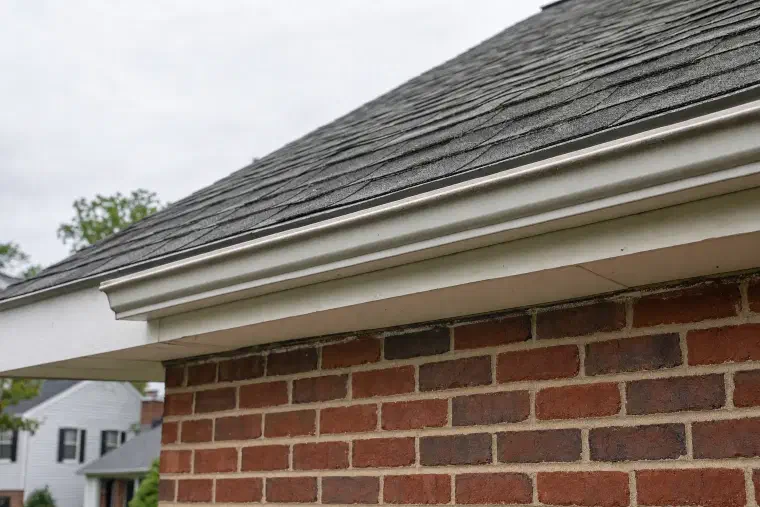
An eave is the lower edge of a roof, the part that hangs out past the walls of your house. It is the strip of roof you see from the yard, with the gutter along it. It shades the wall and sends rain away from it.
The short version
- An eave is the overhanging bottom edge of the roof, along the sides where the gutters hang.
- The sloped edges on the gable ends are called rakes, not eaves.
- Under the eave sit the fascia (the board across the front) and the soffit (the panel underneath).
- Eaves keep rain off your walls and let air into the attic.
- They rot quietly when a gutter overflows, and you can spot the early signs from the ground.
What is an eave on a roof?
It is the overhang. This Old House describes eaves as the entire overhanging edge (opens in a new tab) of the roof that extends beyond the exterior walls of a house. Stand next to your house and look up. Whatever sticks out past the wall at the bottom of the roof is the eave.
People use the word two ways. Some mean just the overhanging roof. Others mean the whole edge assembly, including the boards and panels under it. Roofers tend to mean the second one, because that is where the repairs happen.
What is the difference between an eave and a rake?
An eave runs along the bottom of a sloped roof, and a rake runs up the slope. On a simple gable roof, the long low edges are eaves and the two triangular ends have rakes, which climb from the eave to the peak.
That matters when you read an estimate. A roofer who writes “eave” is talking about the low edges with the gutters. A rake edge has no gutter, so it fails in different ways.
| Part | Where it is | What it does |
|---|---|---|
| Eave | Bottom edge, over the gutters | Sheds water away from the wall |
| Rake | Sloped edge at a gable end | Closes the roof edge against wind |
| Fascia | Board across the end of the rafters | Holds the gutter |
| Soffit | Panel under the overhang | Closes the underside, lets air in |
Roofers use these names on every estimate, so it helps to know them.
What is under an eave?
Two things you can see and a few you can’t. The fascia is the board along the front edge, and the soffit is the panel on the underside. This Old House says soffits are the panels installed underneath the fascia (opens in a new tab), enclosing the underside of the overhang. The same page says the fascia helps support the gutters (opens in a new tab) that carry rainwater off.
Behind them, out of sight, are the ends of the rafters (the sloped beams that hold up the roof), the first few inches of roof decking, and the starter row of shingles with a strip of metal called drip edge. If the difference between fascia and soffit is still fuzzy, we cover it in soffit vs fascia.
Why do eaves matter to your roof?
They do three jobs. They throw rain away from the wall, they hold the gutter, and they let the attic breathe. The Asphalt Roofing Manufacturers Association says natural airflow comes from intake vents at the eaves, soffit or lower portion (opens in a new tab) of the roof or attic. Air goes in low, warm air leaves high, and the attic stays dry.
An unvented attic cooks shingles from underneath and can cut a roof’s life nearly in half. We see roofs with a ridge vent installed and the soffit never cut open, so the air has nowhere to come in.
The eave is also where ice builds up. North Dakota State University Extension explains that heat loss from the home into the attic (opens in a new tab) is the major cause of snowmelt on the roof, which freezes again as it reaches the cooler eaves. The same page says to make sure insulation does not block the airflow (opens in a new tab) from the soffits.
How does an eave rot?
Water gets behind the gutter and stays there. A gutter full of leaves holds standing water, and a gutter with no apron behind it lets water wick back onto the wood. The fascia goes first. Then the rafter ends, then the first few inches of decking.
The annoying part is that none of it shows from inside. We’ve found that eave rot is invisible from both the attic and the ground until it is well along. It is a real structural repair by the time anyone notices. A full gutter also gives an ice dam something to build on.
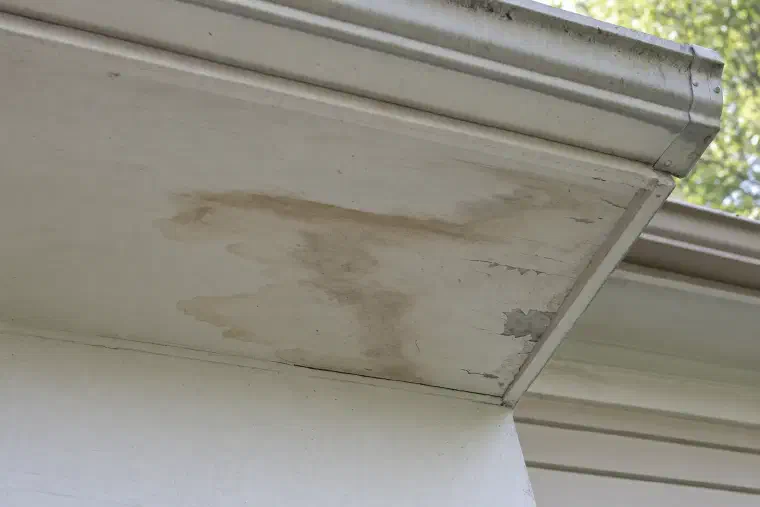
The slow version of this is wood that stays damp, and our piece on why a fascia board rots goes through it in detail.
What can you see from the ground?
Plenty, and binoculars help. Walk the edge of the house on a dry day and look up. The signs we’d flag are:
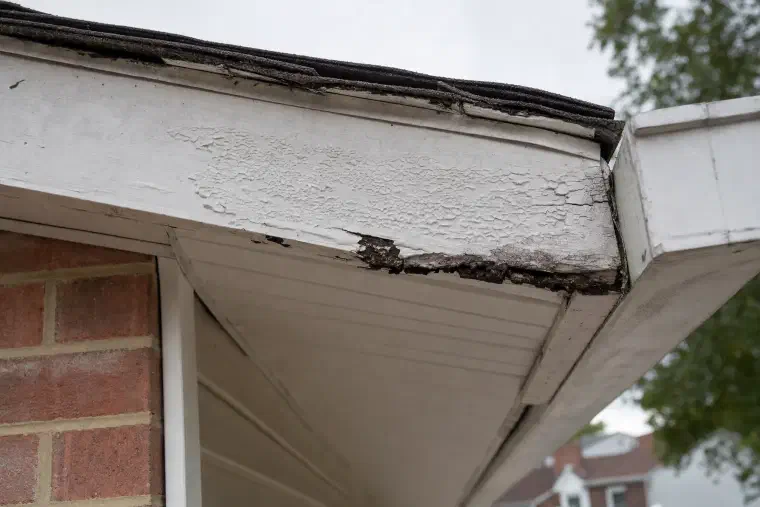
- paint that is bubbling, peeling or flaking on the board behind the gutter
- a dark stain on the soffit panel, especially near a downspout
- a gutter that sags or has pulled away from the board
- a soft or crumbling spot where you can see bare wood
- moss or stains on the shingles right at the edge
- birds or wasps going in and out of a gap
Stay off the ladder if the board feels soft. The wood under it may not hold you.
What does it take to fix a rotted eave?
It depends how far the rot went, and that is why it needs a look first. Replacing the rotted piece of fascia or soffit is a small job. If the rafter ends or decking are soft too, the crew cuts out the bad wood and rebuilds the edge before new shingles or gutters go back on.
On a new roof, fascia, soffit and trim carpentry is not part of the standard price. Rotted wood is billed as time and materials or left out, so ask about it before you sign. Our roof repair work covers the edge of the roof, and a repair is scoped to one location. Any other problems we find are a separate estimate.
How do you keep an eave healthy?
Keep water moving and air flowing. Clear the gutters, fix any that sag or leak at the seams, and check that the gutter has a metal apron behind it. Our article on drip edge vs gutter apron explains the metal strip that keeps water off the wood. Make sure nothing, such as insulation, blocks the soffit vents.
Common questions
Is the eave the same as the overhang?
Mostly, yes. The overhang is the part that sticks out, and the eave is that edge of the roof. In everyday talk the two words mean the same thing.
Are eaves and gutters the same thing?
No. The eave is part of the roof, and the gutter is a channel that hangs from the board along it. A gutter can leak or fall off without the eave being damaged, but a failing gutter is the usual reason the eave rots.
Can a house have no eaves?
Yes. Some modern and flat roofs end at the wall with little or no overhang. Those walls get wetter, because nothing shades them from rain. Most pitched roofs around Ellicott City have eaves.
How far should an eave stick out?
It varies by house and style, and we haven’t found a single number a homeowner should aim for. What matters more is that the edge is dry, solid and vented. Anyone who tells you there is one right overhang for every house is guessing.
What to do next
If you’ve spotted peeling paint, a stain under the overhang or a sagging gutter, have the edge looked at before the wood behind it goes soft. A free roof inspection includes the gutters and the attic when we can reach it, and there is no obligation to book work.


