

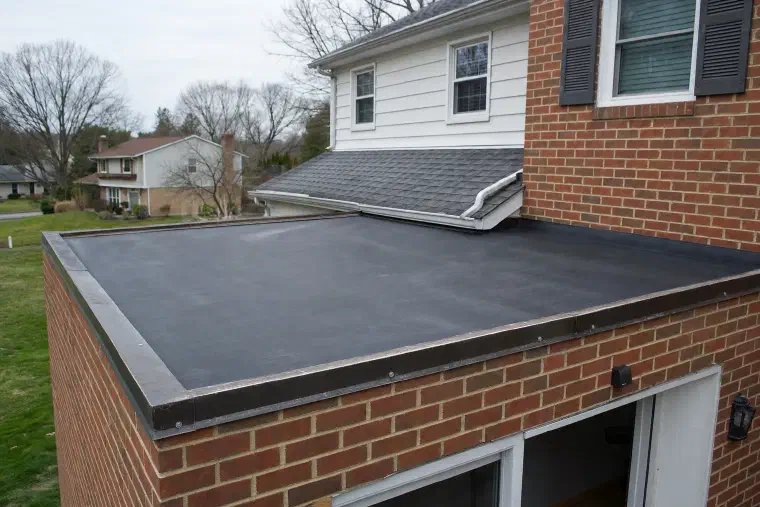
An EPDM roof is a flat or low-slope roof covered with a large sheet of black synthetic rubber. EPDM stands for ethylene propylene diene M-class, which is the name of the rubber. People often call it a rubber roof, and it is made for roofs too flat for shingles.
The short version
- EPDM is a synthetic rubber sheet that comes in wide rolls, so a small roof can have few seams.
- It is usually black, though white and coated versions exist.
- The sheet is held down with fasteners, glue or ballast, which is stone or pavers laid on top.
- It takes scuffs well but is not puncture-proof.
- When one leaks, the trouble is almost always a seam, an edge or something poking through, not the middle of the sheet.
What is an EPDM roof made of?
EPDM is a rubber membrane, meaning one factory-made layer instead of many layers of tar and gravel. The Insurance Institute for Business & Home Safety says thermoset membranes are compounded from rubber polymers (opens in a new tab) and that the most commonly used polymer is EPDM. Thermoset means the rubber is cured for good, so heat cannot melt two edges back together the way it can with a plastic membrane.
That one fact explains why the seams are handled differently, which we get to below. The same guide says these membranes have proven they can withstand sunlight and most common roof chemicals, which is why they have been on flat roofs for so long.
Where does an EPDM roof go on a house?
It goes on flat and low-slope roofs: a garage, a porch, a bedroom addition, a rear extension. These are the parts of a house that cannot take shingles. Shingles cannot legally go on a section flatter than 2/12, so a low porch roof joined to a steep main roof needs a membrane, modified bitumen or standing seam metal instead. That kind of job is often subcontracted at a minimum of $2,500 to $5,000, which is a typical range for work around Ellicott City, not a quote.
Even a flat roof needs a fall so water can leave. The building code asks single-ply membranes for a design slope of not less than 1/4:12 (opens in a new tab), a quarter inch of drop for every 12 inches. If you are not sure what slope yours has, our article on how to find the pitch of your roof shows how to measure it.
How is an EPDM roof put on?
The sheet is rolled out over the roof and held in one of three ways. The Department of Energy lists the options for single-ply membranes: mechanical fasteners, chemical adhesives, or ballast (opens in a new tab). Fasteners are screws and plates, adhesive is glue across the whole surface, and ballast is stone or pavers whose weight holds the sheet down.
Glue has a catch with the calendar. The same guide notes that membranes attached with adhesives must reach a minimum temperature (opens in a new tab) to bond properly. A glued roof laid on a freezing December morning is a gamble, so ask when the work will be scheduled and what the crew does when the weather turns.
How do the seams work?
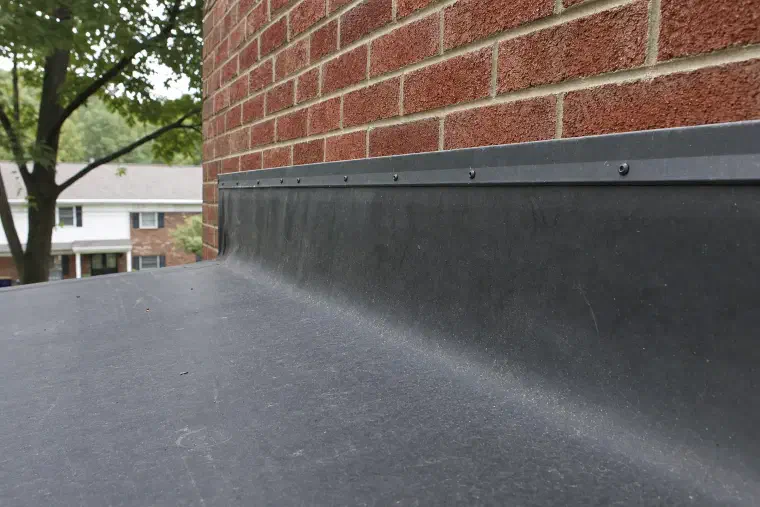
Large sheets mean fewer seams, and that is the main selling point. This Old House says EPDM is installed in large sheets, which reduces the number of seams (opens in a new tab) where leaks can develop. Where two sheets do meet, the seam is sealed with adhesive or tape.
The annoying part is that adhesive ages. The same guide warns that seams rely on adhesives that may degrade over time (opens in a new tab) if the roof is not maintained. A seam someone looks at every year or two is fine. A seam nobody has seen in a decade is where we would start hunting for a leak.
How long does an EPDM roof last?
This Old House says EPDM roofs often have the longest lifespan of the common flat roof types, up to 50 years (opens in a new tab). Treat that as the top of the range, not a promise. A roof that has pooled water, heavy foot traffic or a neglected seam will not get there.
Water gets into a flat roof at the edges, the seams and anything that pokes through, such as vents, pipes and skylights. The metal and rubber strips that seal those spots are called flashing, and they wear out well before the sheet does. Caulk used on them is a consumable, with a life of about 5 to 10 years, so a flat roof that gets a new bead of sealant every summer is telling you something.
What are the downsides of an EPDM roof?
There are three, and they are all manageable. This Old House lists them:
| Downside | What it means for you |
|---|---|
| Black absorbs heat | Standard black membranes absorb heat (opens in a new tab) and may raise cooling costs in hot climates. You will notice it over a bedroom addition more than over a garage. |
| Seams rely on adhesive | They need a look now and then, as above. |
| It can be punctured | Sharp tools or debris can puncture (opens in a new tab) the membrane if the roof is walked on often. |
The Department of Energy adds that EPDM is black but can also be made in white (opens in a new tab) or cool colors. That fix has a price, so ask about it if heat matters to you.
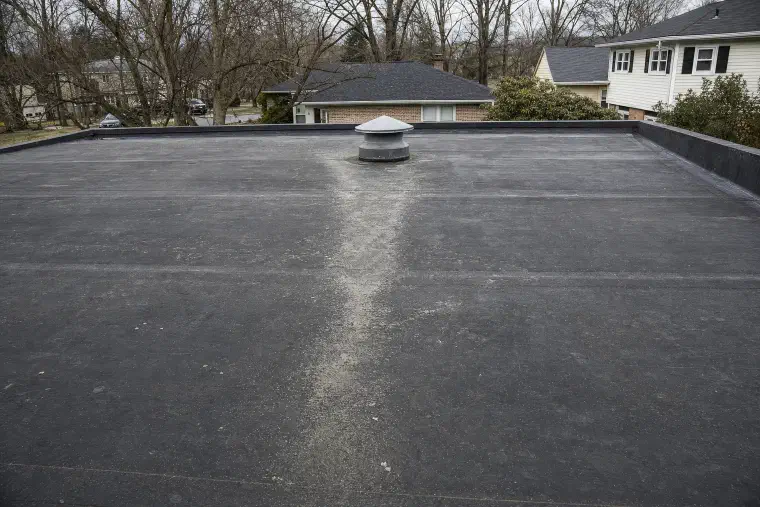
Foot traffic is the one we see most. Every HVAC tech, satellite installer and gutter cleaner who walks a roof leaves a scuff, and on a hot day a boot can crack the surface. If someone has to go up often, a walkway pad or a different membrane is worth a conversation.
Common questions
Is an EPDM roof the same as a rubber roof?
Yes. EPDM is a synthetic rubber, so “rubber roof” and “EPDM roof” mean the same thing. It is usually black.
Can an EPDM roof be repaired?
Often, yes. If the sheet is sound and the trouble is one seam or edge, a repair can keep the roof going. A low-slope membrane repair typically runs $2,500 to $6,000 in our area, a typical range and not a quote. If the roof has leaked in several places, we will say so. Our flat roof repair page covers where flat roofs fail.
How does EPDM compare with TPO?
TPO is a white plastic-based sheet with welded seams, and EPDM is a black rubber sheet with glued or taped ones. Our article on TPO vs EPDM roofing sets them side by side.
What to do next
If you have a flat roof going bad, or a low section the shingles cannot cover, call us and we will walk it and tell you what we see. The free roof inspection includes a walk on the roof and a written report with photos. When it is time for a new one, our flat roof installation page explains the work.


