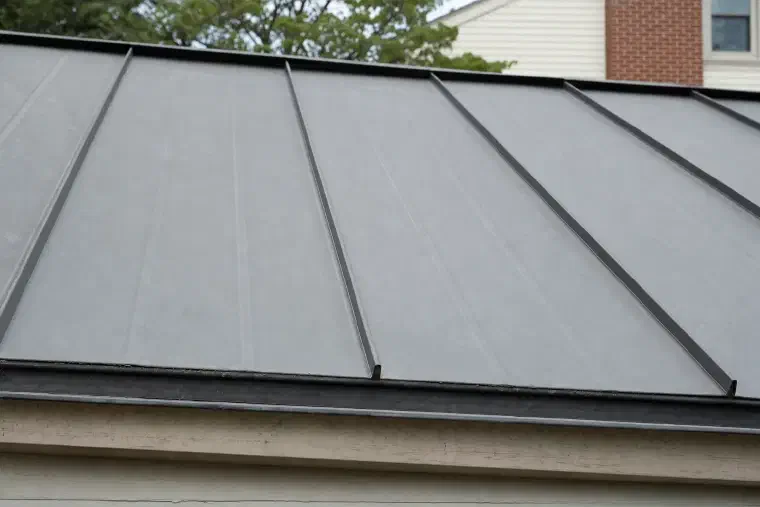
Oil canning is a visible waviness in the flat part of a metal roof panel. The panel looks rippled or dimpled, especially when the sun hits it at an angle. It is a looks problem, not a leak problem, and it is more common than most people expect.
The short version
- Oil canning is a wavy or buckled look in the flat areas of metal panels.
- The National Roofing Contractors Association says it does not hurt the metal’s strength or its ability to keep water out.
- It comes from stress left in the metal, plus things like an uneven deck or tight clips.
- Heavier metal, ribs in the panel and a low-gloss finish make it less noticeable.
- It can be reduced but not always avoided, so ask about it before you sign.
Why is it called oil canning?
The name comes from the old thin-walled oil can, whose flat sides popped in and out when you pressed on them. The same thing can happen to a metal panel. NRCA says oil canning also describes the popping sound made when pressure is applied (opens in a new tab) to a deformed sheet and pushes it the other way.
On a roof you will rarely hear it. What you see is a soft, uneven shimmer across a panel that should look flat. Light is the giveaway. The same roof can look perfect at noon and rippled at 5 p.m.
Is oil canning a defect?
No. NRCA does not consider it a reason to reject a roof, because it has no adverse effect on structural integrity or waterproofing (opens in a new tab). The same article says oil canning is inherent to some degree on all metal surfaces.
A public building spec from Texas State University says the same in plain terms: on light-gauge panels with wide flat areas, some oil canning may be present (opens in a new tab) and it does not affect the finish or structure.
That does not make it welcome. If you are paying for a clean, flat-looking roof, a wavy one is a fair thing to be annoyed about. The honest answer is that the water stays out and the looks may not match what you pictured.
What causes oil canning on a metal roof?
It starts with stress inside the metal. NRCA says all the causes come down to stresses that remain in a solid material (opens in a new tab) after the thing that put them there is gone.
Those stresses can come from:
- making the coil of metal, and cutting it into narrower strips
- running the metal through the roll-forming machine that shapes the panels
- temperature swings once the roof is installed
- an uneven deck or framing under the panel
- structural movement, or clips that are not lined up
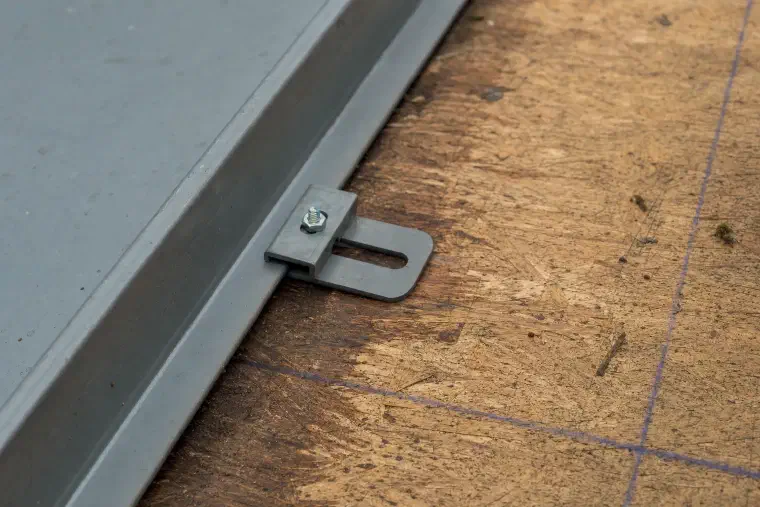
The deck one is the part a homeowner can ask about. Metal is thin, and it takes the shape of whatever it lies on. If the plywood below has humps, ridges or proud nail heads, the panel can show them.
Which metal roofs oil can the most?
Wide, flat, thin panels with a shiny finish show it the most. NRCA says careful thought has to go into a panel’s width, thickness, profile, color and gloss (opens in a new tab) if you want to limit it.
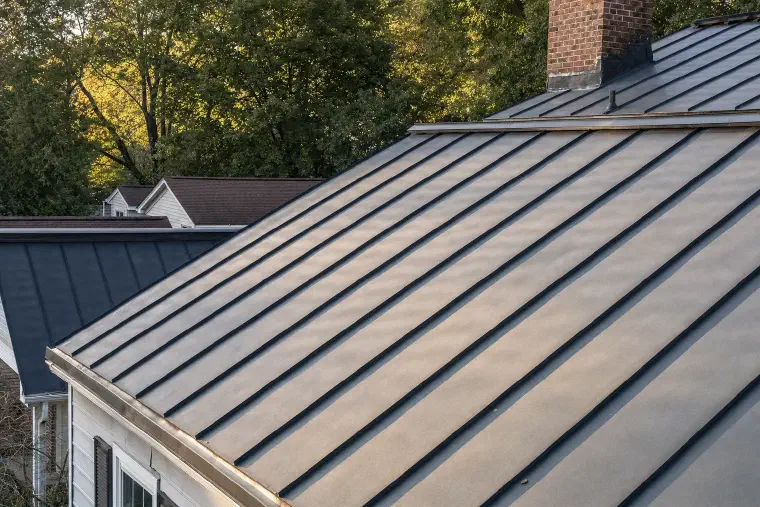
A standing seam roof has long flat pans between the seams, so it has plenty of room for waviness. A corrugated or ribbed panel has its waves built in, which hides small ripples. We compare the two in corrugated vs standing seam metal roofs, and explain the standing seam type in what a standing seam metal roof is.
| Makes it less visible | Makes it more visible |
|---|---|
| Heavier-gauge (thicker) metal | Thin, light-gauge metal |
| Ribs or stripes in the flat part | Wide, smooth flat pans |
| Low-gloss or textured finish | Bright, shiny finish |
| Clips that allow the panel to slide | Clips that hold the panel tight |
| A flat, even deck | A bumpy deck |
Can you prevent oil canning?
You can lower the odds, but nobody can promise a roof with none. NRCA’s list for designers includes tension-leveled coil (opens in a new tab), which is metal stretched slightly so it lies flat, along with thicker metal, expansion clips instead of fixed ones, and low-gloss or textured finishes.
NRCA also suggests adding minor ribs or other breaks to limit the size of the flat face (opens in a new tab). The Texas State spec asks for stiffening ribs in the flat of the panel (opens in a new tab) for the same reason.
One of NRCA’s own pages says oil canning can never be totally eliminated, it can be controlled (opens in a new tab). So the right question for a contractor is not “will it oil can?” It is “what are you doing to keep it down?”
Can you fix oil canning once the roof is on?
Not easily. Once the panels are formed and fastened, there is no simple way to flatten them. A roof with mild waviness is usually left alone, since it still sheds water and wind the way it should.
If a roof looks much worse than it should, the cause may be a deck problem or clips that were set wrong. That is worth having looked at. Our free roof inspection includes a walk on the roof and a written report, and we will tell you plainly what we see.
Common questions
Does oil canning mean my metal roof will leak?
No. NRCA says it has no adverse effect on waterproofing. A leak on a metal roof is far more likely to come from a loose fastener, a seam or a flashing detail than from waviness in the flat part of a panel.
Does oil canning get worse over time?
It can change with the seasons and the light, because temperature swings move the metal. We have no solid data to say it always gets worse, so look at it in different light before you worry.
Is oil canning covered by a roof warranty?
Check your paperwork. We have not seen your terms, and they differ by maker. Ask the manufacturer whether cosmetic waviness is covered, and ask before the roof goes on.
What to do next
If you are thinking about a metal roof, bring up oil canning at the start. Ask about the metal’s thickness, the panel profile, the finish and the clips. Our metal roofing installation page explains where a metal roof makes sense, and we will give you a straight answer on whether it suits your house.