There is no single best material for a flat roof, but for most houses it is a single-ply membrane (EPDM or TPO) or modified bitumen. Standing seam metal also works on very low slopes. The right pick depends on the size of the roof, what sits on it and who puts it on.
The short version
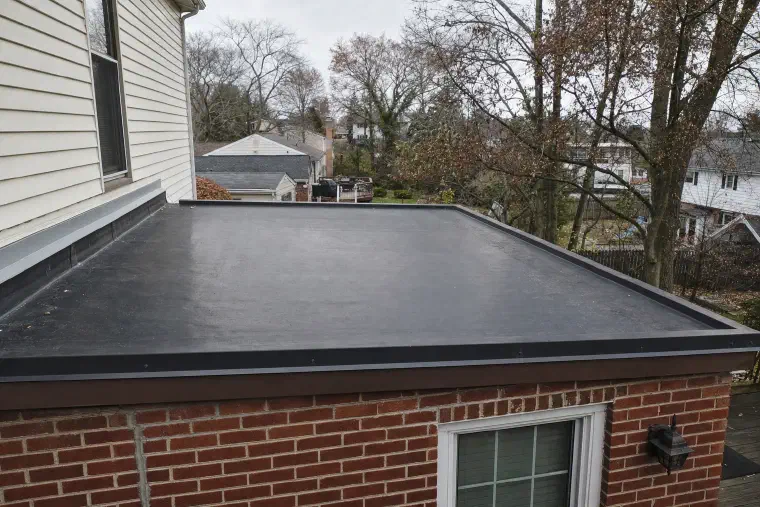
- EPDM is black rubber and often has the longest life of the common flat roof materials.
- TPO is a white membrane with heat-welded seams.
- Modified bitumen is layered asphalt roofing, flexible but less tear-resistant than rubber.
- Standing seam metal can go on a low slope, and it costs the most.
- Whatever you pick, leaks start at seams, edges and anything that pokes through the roof.
Why is a flat roof different from a shingle roof?
A flat roof has to keep out water that sits on it, not only water that runs off. A shingle roof sheds rain downhill and relies on overlap. A flat roof has almost no hill, so the material has to be sealed as one skin.
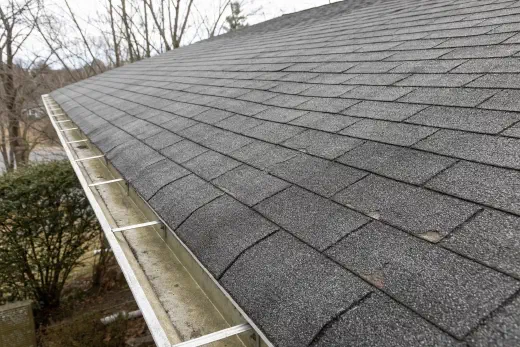
That is why shingles stop being allowed on a section flatter than 2/12. Below that pitch, the options are modified bitumen, TPO or standing seam metal. We see that on low porch roofs and additions, and the work is often subcontracted at a minimum of $2,500 to $5,000, which is a typical range for the area, not a quote.
What flat roof materials can you choose from?
The common choices are rubber (EPDM), plastic-based membrane (TPO), modified bitumen, built-up roofing and metal. This table covers the ones we are asked about most.
| Material | What it is | Watch for |
|---|---|---|
| EPDM | One large rubber sheet, usually black | Black absorbs heat; sharp debris can puncture it |
| TPO | White plastic-based sheet, seams welded with heat | Quality depends on the welds |
| Modified bitumen | Layers of asphalt roofing with added polymers | Less scuff-resistant; torch-on method is a fire risk |
| Built-up roof | Alternating layers of asphalt and fabric, topped with gravel | Heavy; messy, smelly install |
| Standing seam metal | Metal panels with raised seams | Costs the most; penetrations need care |
Which flat roof material lasts longest?
EPDM often lasts longest. This Old House says EPDM roofs often have the longest lifespan at up to 50 years (opens in a new tab), with built-up roofing and modified bitumen at 20 to 30 years. Keep in mind that “up to” is doing a lot of work in that sentence. A roof only gets near the top of the range when the seams and edges are done well and nobody punches holes in it.
In our area, shingles realistically last 18 to 25 years, and a flat roof is no different in one respect: the installer decides more than the label does. Longer life comes from sealed details, not from picking the fanciest product.
Is EPDM or TPO better for a flat roof?
Neither wins everywhere, because they trade different strengths. EPDM is rubber, and the same This Old House guide says it is highly resistant to scuffs, tears and punctures (opens in a new tab). Its standard black color absorbs heat, which can raise cooling costs.
TPO goes the other way. The Department of Energy says TPO and PVC membranes are usually white (opens in a new tab) and reflective, while EPDM is black but can also be made white. TPO’s seams are welded with heat, and the Insurance Institute for Business & Home Safety says these seams are strong (opens in a new tab) because they are formed using heat or chemical welding. We cover the details in our article on what a TPO roof is.
Is modified bitumen a good choice for a flat roof?
It can be. Modified bitumen is asphalt roofing with added polymers, built up in layers. This Old House lists its pros as an easier installation than traditional built-up roofs (opens in a new tab) and a flexible material that handles temperature swings.
It is less resistant to scuffs and tears than rubber, and torch-down application can pose a fire risk if not handled carefully. It can also be laid with cold adhesive or peel-and-stick sheets. If your flat roof is a spot where a technician or a satellite installer walks a lot, ask about that before you choose.
Can standing seam metal go on a flat roof?
On a low slope, yes. The building code lets standing seam metal go down to 1/4 inch of fall per foot (opens in a new tab), about a 2% slope. Single-ply membranes have the same floor. The IBHS says they need a design slope of not less than 1/4:12 (opens in a new tab), so a flat roof is never truly flat.
Standing seam costs more. We work from a rule of thumb that standing seam metal runs 2 to 2.5 times the price of asphalt shingles, which is why it is rarely the first pick for a small porch roof. Our article on how much a metal roof costs goes into that. The IBHS also warns that penetrations that cut through a seam (opens in a new tab) are a potential source of leaks, so a skylight or vent on a metal flat roof needs a plan.
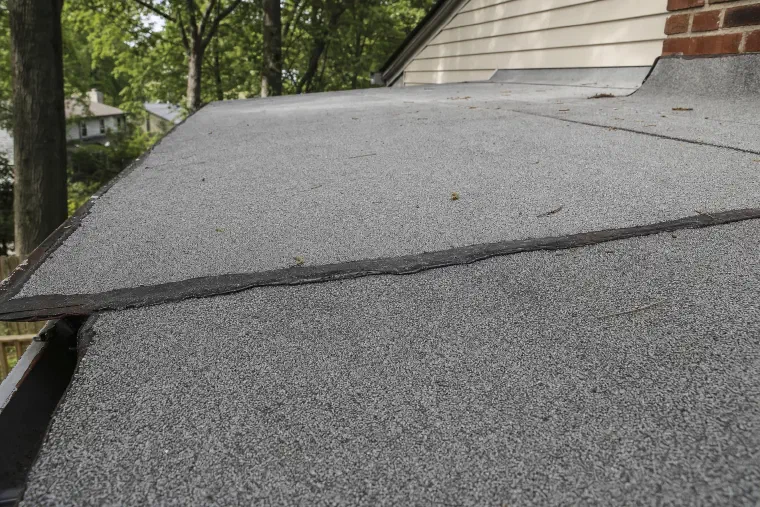
Where do flat roofs leak, whatever the material?
Seams, edges and penetrations. The big open sheet in the middle is rarely the problem. Pipes, vents, skylights and the line where the roof meets a wall are where water gets in, and each one depends on flashing, the metal or membrane strips that seal a joint.
We also treat caulk on a flat roof as a scheduled leak. Sealant has a life of about 5 to 10 years, so a roof patched with a tube of it every summer is telling you something. A low-slope membrane repair typically runs $2,500 to $6,000 in our area, again as a range and not a quote. Our flat roof repair page covers where flat roofs fail and how we fix them.
Common questions
What is the cheapest flat roof material?
Of the main options, modified bitumen and built-up roofing are usually the lower-cost ones, and standing seam metal costs the most. This Old House puts both asphalt-based types (opens in a new tab) in the same price band in its guide. Cheapest to put on and cheapest to own over 20 years are different questions, so price the repair history too.
Can I put shingles on a flat roof?
Not on a section flatter than 2/12. Shingles need slope to shed water. A low section needs modified bitumen, TPO or standing seam metal instead.
Should I repair or replace a flat roof?
If the membrane is sound and the trouble is one seam or edge, a repair can keep it going for years. If it has leaked in several places, we tell you so. We would rather repair and save you money than sell a roof you do not need yet.
What to do next
If you are choosing a material, the best first step is to have someone walk the roof. Our free roof inspection includes a boots-on-the-roof look and a written report with photos and a measured square count. When it is time for a new one, our flat roof installation page explains what we put on and where.